Turntables, Arms & Cartridges

Sort By: Post DateTitle Publish Date
Review: Adam Smith, Lab: Paul Miller  |  Nov 17, 2023
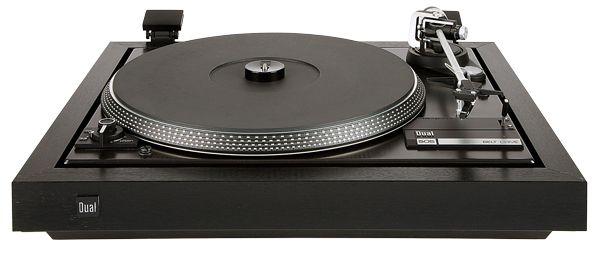
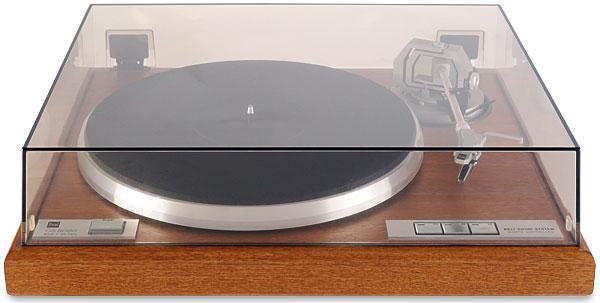
hfnvintageSurprisingly advanced yet appealingly affordable, this semi-automatic flagship deck from 1985 sought to unseat Rega's market-leader. How does it sound today?

Vinyl fans in the early '80s were well catered for when it came to affordable turntables. If your budget was tight, the capable NAD 5120 made a fine starting point. But if you could stretch your funds a little further then there was only one choice: the Dual CS 505 [HFN Feb '13]. First introduced in 1981, it proved to be a robust and reliable performer at its bargain price of £75.

Review: Ken Kessler, Lab: Paul Miller  |  Jul 16, 2019
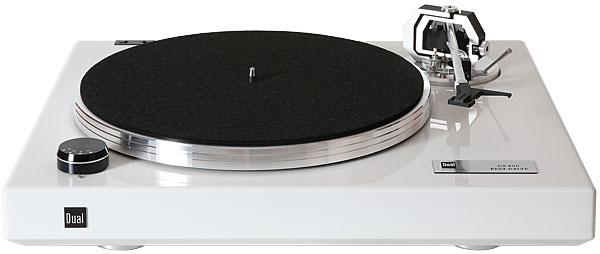
hfnedchoiceAffordable German turntables are looking set to repeat their dominance of the market they owned 50 years ago. Can Dual's top-of-the-range CS 600 raise the stakes?
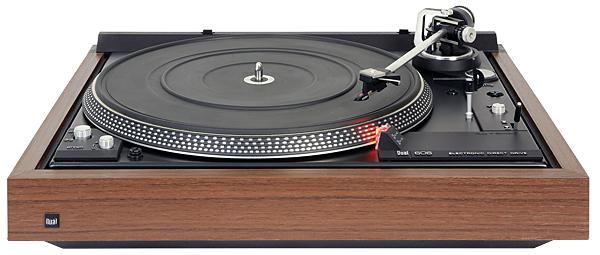
A tough review for me to write, at least objectively: I'm rooting for the CS 600 to be something special because my first turntable was a Dual and I recall it with fondness. I want the CS 600 to be a champ like the all-conquering '505 was back in the days of the NAD 3020-based systems. But this new deck costs £1199 in black, or another £200 in gloss black or white (as reviewed), and the competition for turntables with tonearms is fierce around this price point.

Review: Tim Jarman, Lab: Paul Miller  |  Mar 21, 2022
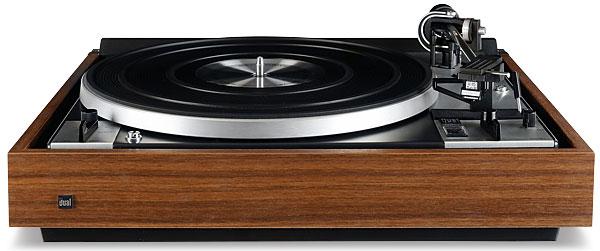
hfnvintageIn 1975 one of the leading makers of budget turntables unveiled a fully automatic mid-priced deck with mighty ambitions. How will the package shape up today?

Any mention of Dual turntables usually brings one of the many incarnations of the company's CS 505 to mind. The original '505 was a typical Dual design, taking its cue from the basic turntables that had been around since the 1950s by being built on a sprung-steel plate. It was a budget deck, which sold mainly to those looking to take their first step on the audiophile ladder. But Dual made more ambitious models too.

Review: David Price, Lab: Paul Miller  |  Dec 26, 2019
hfnvintageWith its ultra low mass arm and cartridge system, the CS 606 was one of a trio of decks that was finally able to claw back sales from the Japanese. How does it perform today?

The fact that Dual couldn't achieve serious success in the middle sector of the British turntable market back in the late '70s was testament to how fast the hi-fi world had changed. That part of the market was becoming the province of Japanese companies such as Pioneer, Sony and Technics, which were making complex, technologically advanced turntables packed with modern, user-friendly features that people wanted to buy.

Hi-Fi News Staff  |  Dec 22, 2014
If you were just taking your first steps into the world of hi-fi in the early 1980s you’d give serious consideration to the Dual CS505. Often partnered with a NAD 3020 amp by the canny hi-fi buyer on a budget, these two components started many listeners on a path that would bring countless hours of enjoyment. In the 1960s and ’70s Dual occupied a similar place in the German market to BSR and Garrard in the UK, producing turntable units for music centres and combination units. Yet it retained audiophile credibility for the quality of its separate belt-drives, which sold well across Europe.
Steve Harris and Paul Miller  |  Nov 30, 2009
Outstanding hi-fi products have never been designed by committee. They nearly always originate in the mind of one very gifted individual, like the late Dr Noboru Tominari. Dr Tominari was a professor of engineering at Tokyo State University when he launched the Dynavector company in 1975. He developed the first successful high-output moving-coil, which did not need a special step-up device but worked with the moving-magnet phono input that was then standard on every hi-fi amplifier.
Review: Ken Kessler, Lab: Paul Miller  |  Aug 13, 2020
hfnoutstandingDespite shedding all 'non-essential cosmetic adornments' EAT's B-Sharp still cuts a dash in the world of plug-and-play turntable solutions. Does it sound as slick as it looks?
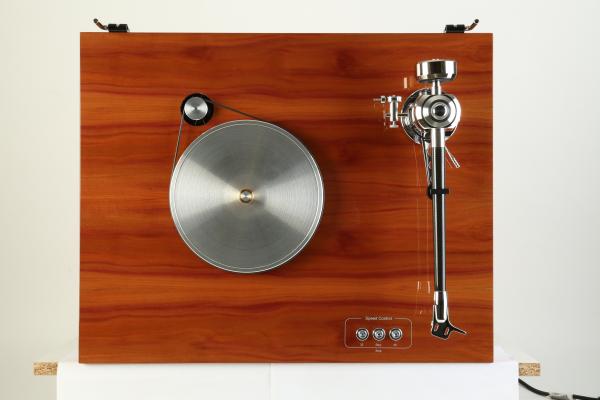
Conditioning has, I believe, led the cynics among us to assume that 'plug 'n' play' is a sexy euphemism for 'lowest common denominator' or 'user-friendly-enough for anyone to appreciate'. After all, this is what freed normal souls from going crazy with pre-USB computer peripherals. Today, it welcomes newcomers to vinyl, referring almost exclusively, in a hi-fi context, to turnkey turntable/arm/cartridge packages, because every other audio source has always been plug 'n' play.

Review: Ken Kessler, Lab: Paul Miller  |  Jul 18, 2024
hfnoutstandingEvery product range has its sweet spot and the combination of EAT’s C-Dur deck with C-Note tonearm and optional Jo No5 moving-coil pick-up makes it the ‘plum’ choice

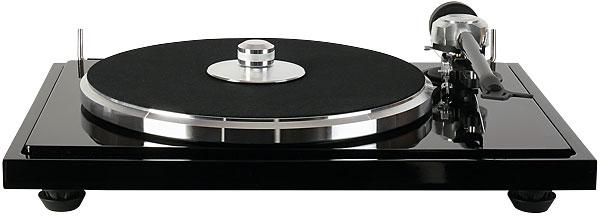
Just below the mid-price point of European Audio Team’s (EAT) nine-model range, the C-Dur belt-drive deck looks likely to identify a new price/ performance benchmark. We have been flooded with decks at the £10,000-£12,000 mark to designate entry to the scary high-end, and companies such as MoFi, Thorens and Pro-Ject have numerous models from £500-£3000, but something was needed in between from, say, £3000 and £5000. At £3500 with arm, EAT’s C-Dur – German for C major – fits the bill.

Paul Miller  |  Jan 14, 2012
EAT revives an old idea from NAD in the 1980s, but with a modern execution. Welcome the E-Flat belt-drive turntable with its, er, flat carbon fibre tonearm The wife of Pro-Ject’s CEO Heinz Lichtenegger, Jozefina, is one of the gutsiest individuals in hi-fi today. Not only does she insist that the turntables under her EAT Forté banner are high-end, while hubby’s Pro-Ject concentrates on the affordable, she’s had the sheer guts to revive a much reviled form. Flat tonearms are as old as hi-fi itself, the E-Flat’s arm following Connoisseur’s CS1, the wooden Grace G-714, an early Grado, the back half of the ‘hinged’ Dynavector DV-507 and many others.
Review: Jamie Biesemans  |  Nov 10, 2025  |  First Published: Nov 01, 2025
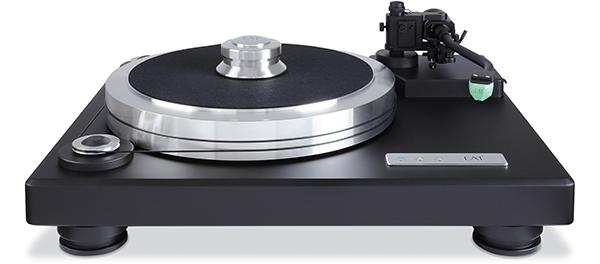
hfnoutstandingInspired by EAT’s longstanding Forte S turntable, the new F-Dur shares the two-motor drive concept but in a more elegant, technically evolved form. And the arm has a laser!

To some hi-fi enthusiasts, European Audio Team (EAT) is the classy sister company of turntable giant Pro-Ject. That’s not entirely the case, though, as owner/CEO Jozefina Lichtenegger categorically puts her own spin on turntable designs – all invariably luxurious, high performance and upmarket. The F-Dur is the firm’s latest creation, based upon the pricier, chunkier and notably senior Forte S [HFN Dec ’10].

Review: Ken Kessler, Lab: Paul Miller  |  Apr 26, 2025  |  First Published: Nov 01, 2024
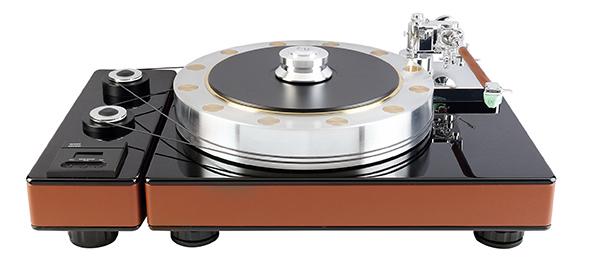
hfnoutstandingHigh style meets high mass in EAT’s flagship turntable, coupled here with one of the most flexible tonearm solutions ever seen – the F-Note even includes an alignment laser!

If anyone doubts we are treated to as much, if not more novelty than back in the day when LPs ruled, EAT’s Fortissimo turntable and F-Note tonearm will put paid to that. Like TechDAS’s vacuum hold-down and air bearing [HFN Jun ’19], or the Reed deck [HFN Apr ’24] available in idler- and belt-drive versions, this EAT combination bursts with clever features.

Review: Ken Kessler, Lab: Paul Miller  |  Dec 01, 2018
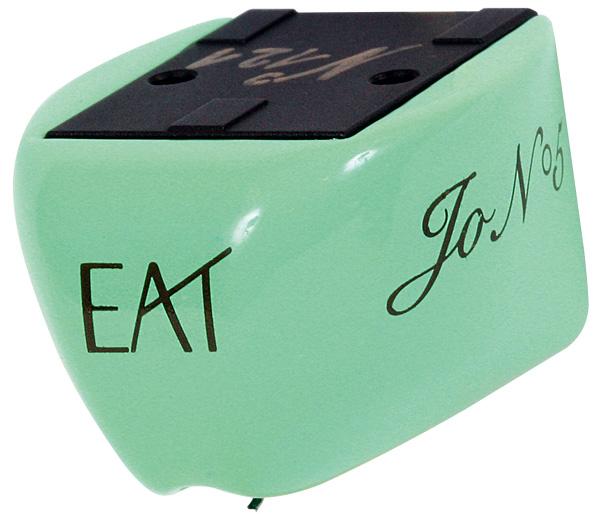
hfnoutstanding.pngFollowing its ever-descending prices for its high-value turntables, EAT (European Audio Team) has issued the Jo No5 moving-coil cartridge to do the same for phono pick-ups

As if to answer my continued pleas for sane price tags, and my continued dismay at the fees charged for some MC cartridges, the inclusively named European Audio Team (EAT) has delivered what may be a game-changer. It was the talk of 2018's High End Show in Munich, not least because it looks unlike nearly any cartridge ever seen before. And another thing: the EAT Jo No5 sells for £999.

Review: Ken Kessler, Lab: Paul Miller  |  Feb 17, 2020
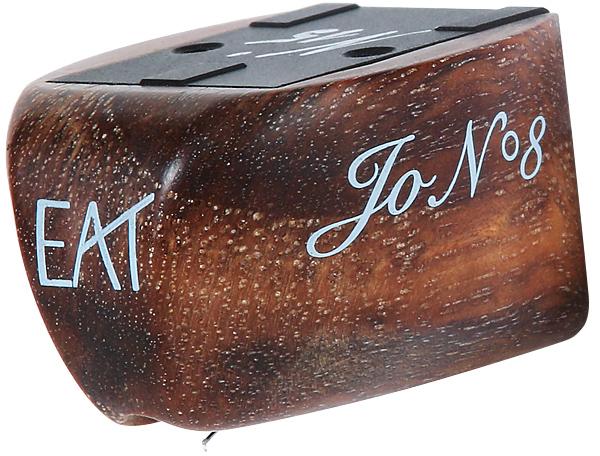
hfnoutstandingAfter wowing the audio community with the Jo No5 moving-coil cartridge, EAT has unleashed the second in the family – the Jo No8. And it's an even bigger knock-out

Having previously dipped its toe in the water with the Yosegi moving-coil cartridge [HFN Mar '12] – effectively a rebodied-in-wood Japanese design – EAT stunned us last year with the Jo No5 [HFN Dec '18], selling at a sane £799. There's no shortage of amazing moving-coil cartridges on the market, but this was blatantly head-and-shoulders above the pack. It heralded a new range of MCs to complement EAT's expanding catalogue of turntables, arms, phono stages and its recently-unveiled integrated amplifier.

Review: Adam Smith, Lab: Paul Miller  |  Jun 01, 2018
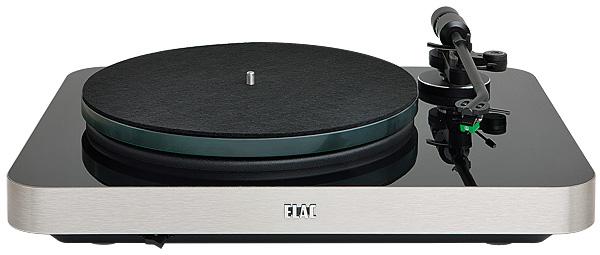
hfncommended.pngAfter returning to making turntables two years ago, the company is now back with a more affordable package that includes a pre-fitted arm and cartridge, all ready to go
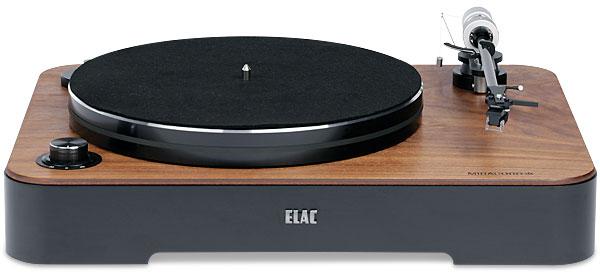
Vinyl’s renaissance has resulted in some thought-provoking developments, particularly when it comes to turntable manufacturers. Naturally, well-established brands such as Rega and Pro-Ject have seen their output rise dramatically and, unsurprisingly, more than a few new names have appeared on the scene. What is fascinating, however, is to see manufacturers that made turntables in the past return to their vinyl roots once more.

Review: Jamie Biesemans  |  Mar 13, 2023
hfncommendedELAC revived the Miracord name for its 90th anniversary with a brand-new turntable – a celebratory model now trickled-down into the new Miracord 80, complete with MM

When ELAC relaunched its turntable lineup in 2017, earning an EISA Award along the way for the Miracord 90 Anniversary, it wasn't at first clear the German audio brand actually intended a concerted push into this back-from-the-dead product category. After all, there was a lot going on at the company and this turntable was presented as a celebration of ELAC's distinguished history.

Pages

X