Loudspeakers

Sort By: Post DateTitle Publish Date
Review: Andrew Everard, Lab: Paul Miller  |  Aug 14, 2025  |  First Published: Aug 01, 2025
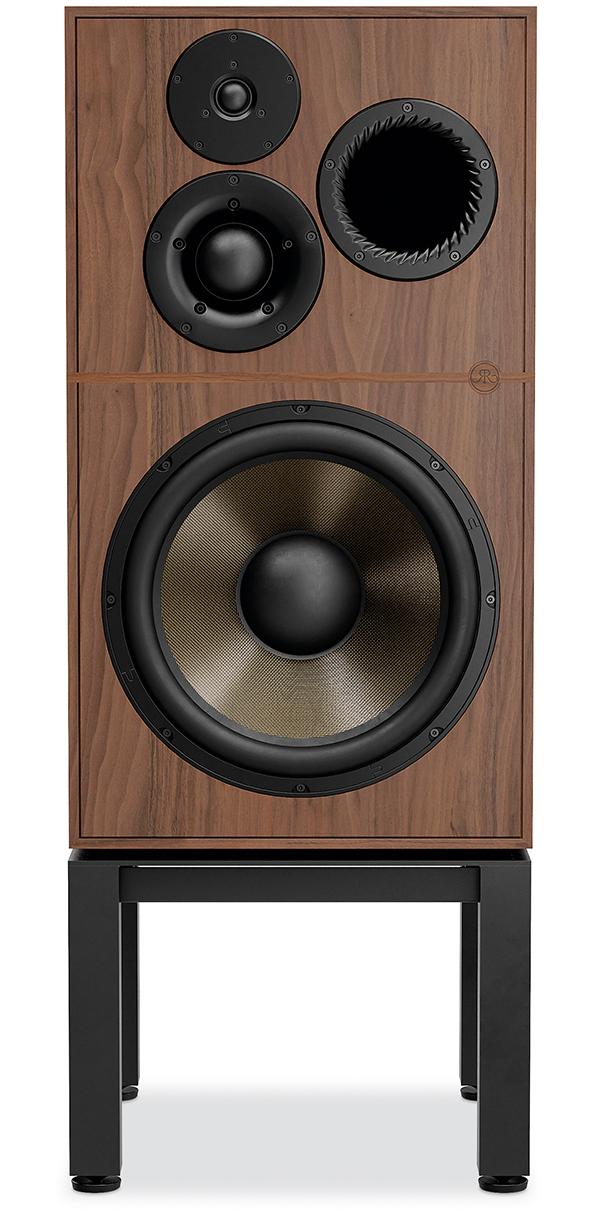
hfncommendedBig, bluff and promising plenty of bass from its 38cm woofer, the flagship of the French speaker company’s range combines an imposing presence with old-world charm

Standmount? Or floorstander? It’s a question faced by many hi-fi enthusiasts. On one hand there’s the potential for a tight, clean sound from a smaller enclosure, albeit with the need for a stand to bring the speaker up to listening height and stabilise it. Meanwhile, the argument for floorstanding speaker designs involves the possibility of a bigger, more forceful presentation, often taking up no more floorspace than that smaller speaker on its stand. Then again, which design is more aesthetically pleasing is very much a matter of taste...

John Atkinson  |  Feb 23, 2021
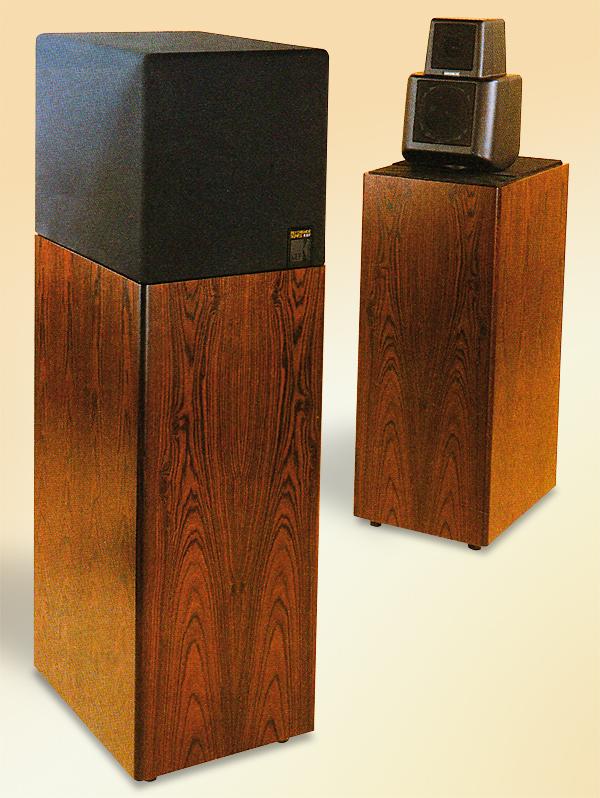
hfnvintageJohn Atkinson lives with the KEF R107, its new range-topping contender

An understated revolution in loudspeaker design has been taking place in Kent. KEF's Technical Director Laurie Fincham has put together a team of engineers who have been quietly but thoroughly examining the fundamentals of moving-coil, box loudspeaker behaviour, spinning off a regular series of products, starting with the original R105 nearly a decade ago.

Review: Mark Craven, Lab: Paul Miller  |  Jan 05, 2026  |  First Published: Jan 01, 2026
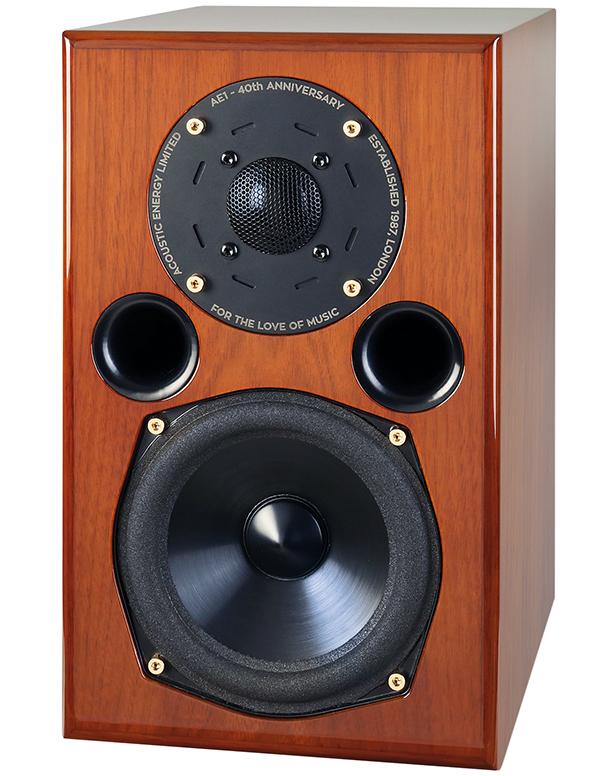
hfnoutstandingSome 40 years after its debut standmount was conceived – but before the brand was officially launched – Acoustic Energy has reimagined an ’80s icon and produced a classic

If you’re looking at the legend on the tweeter surround of Acoustic Energy’s new loudspeaker and wondering how a brand that was established in 1987 can launch a 40th Anniversary Edition model in 2025, the answer is simple. When Acoustic Energy founder Phil Jones began work on his original AE1 design [HFN Jan ’89], seeking an ‘accurate monitor’ for his recording studio, he certainly wasn’t intending to launch a consumer audio company. But the speaker, a compact two-way that was groundbreaking in its use of metal diaphragms for both bass/mid and treble drive units, caught the eye and ear of audiophiles. And now it’s back...

Ken Kessler and Keith Howard  |  Mar 25, 2009
Has it really been more than 20 years since Acoustic Energy bridged the worlds of professional studio monitoring and domestic audio? Back in ’88, the former regarded the latter in the way that, say, Labour regards fiscal responsibility. AE was having none of it, and produced a classy, compact two-way monitor of true studio merit, sort of a UK answer to Wilson’s WATT. Given its diminuitive stature, most noteworthy was the AE1’s prodigious bass. Rear-ported and boasting a still-radical metal mid/bass driver, it begged to be positioned away from walls on solid 24in stands.
Review: Mark Craven, Lab: Paul Miller  |  Mar 11, 2026  |  First Published: Apr 01, 2026
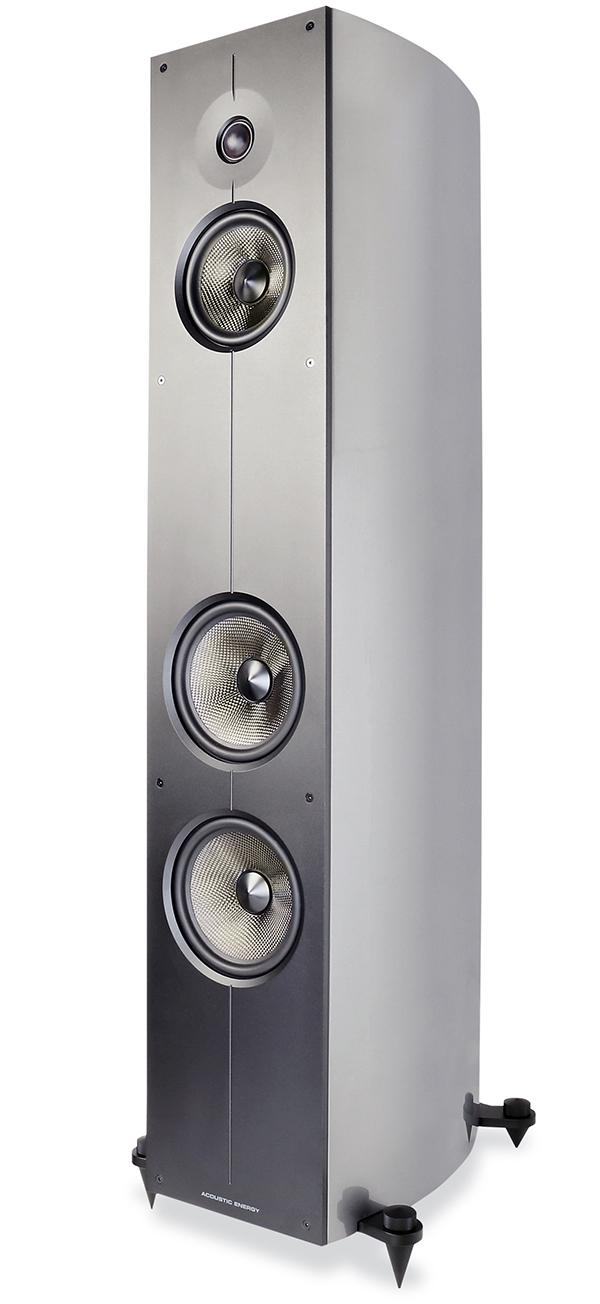
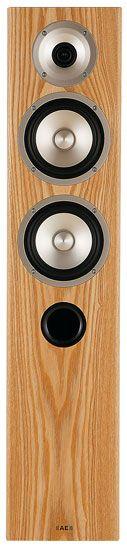
hfncommendedSeen here in its new pearlescent Midnight Silver finish, AE’s flagship floorstander aims at a sub/sat system in a single box

Acoustic Energy's flagship Corinium floorstander stands out from the rest of the manufacturer's range, and not simply in the matter of its pricing. In place of AE's familiar numerical system (AE500, AE300, etc), there's that one-of-a-kind title – Corinium being the Roman name for Cirencester, Gloucestershire, where the brand is based. There are new colourways too, plus a freshly curved cabinet design. And if that wasn't enough, AE claims the loudspeaker was three years in development.The result is a three-way, four-driver floorstander intended to act as a calling card for the company.

Hi-Fi News Staff  |  Oct 16, 2014
Sitting just below the Reference models in Acoustic Energy’s line-up, its Radiance Series is intended to offer a good proportion of their abilities at a lower price. The Radiance 2 occupies the centre of the three-strong range of stereo designs [a matching subwoofer and centre channel are also available] and utilises three drive units in a two-and-a-half-way configuration. The two main drivers are 130mm in diameter and consist of a pressed alloy cone with matching conical dust cap, allied to a rubber surround. Voice-coils are wound with aluminium wire for lightness; each driver has its own enclosure with separate port tuning.
Keith Howard  |  Sep 02, 2011
The high-end hi-fi industry is perhaps unique – certainly unusual – in that it continually holds the present to account, against its past. Many audiophiles, often not with nostalgia foremost among their motivations, wilfully divest themselves of the ‘benefi ts’ of modern technology, preferring vinyl to digital, vacuum electronics to solid state and full-range drive units to the meticulously developed multidriver speakers that purport to represent the state of the art. If we think of this as a spectrum of design approaches rather than Montagues versus Capulets, the Aurousal VSx – the new, improved version of the VS that won our group test in HFN Aug ’10 – is certainly not at the extreme occupied by single-ended triodes and re-entrant horns. Although the VSx does turn the clock backwards somewhat: in eschewing multiple drivers knitted together with a crossover network in favour of a pair of full-range drivers supplemented by a dome tweeter.
Review: Adam Smith, Lab: Paul Miller  |  Mar 16, 2023
hfncommendedDo your speakers make the earth move? If not then Alta Audio may have the answer with its XTL bass loading...

Alta Audio, likely a new name to most UK hi-fi enthusiasts, was created with the idea of finding new solutions to old problems. Founded over 30 years ago in New York, USA, its £10,000 Alec floorstanders are the central models in its Statement series, above the standmount Alyssa and below the magnificently monikered Adam.

Paul Miller and Keith Howard  |  Jun 08, 2011
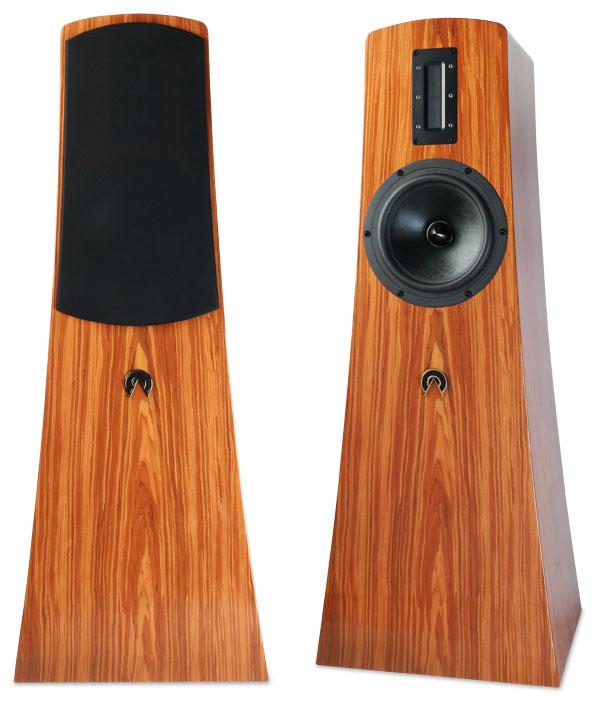
A large panel speaker, certainly, but the Omega is not a dopplegänger from audio’s past Apogees, surely, risen from audio’s graveyard of well-intentioned but utterly impractical ideas? That’ll be the first thought of every red-bloodied audiophile who glances at these pages. But despite the astonishing resemblance in shape, distribution of drivers and slate grey colour of these door-sized dipoles to Apogee’s long-mourned full-range ribbons, they’d be mistaken. Indeed, under the skin Analysis Audio’s Omega loudspeakers have little in common with their erstwhile lookalikes. Sure enough, they employ a long ribbon mid/treble driver down the inside edge of the large flat MDF baffle but the trapezoidal bass panel is a planar-magnetic design, far closer in execution to that of Magneplanar’s current crop [HFN, Mar ’11].
Review: Andrew Everard, Lab: Keith Howard  |  Jun 28, 2019
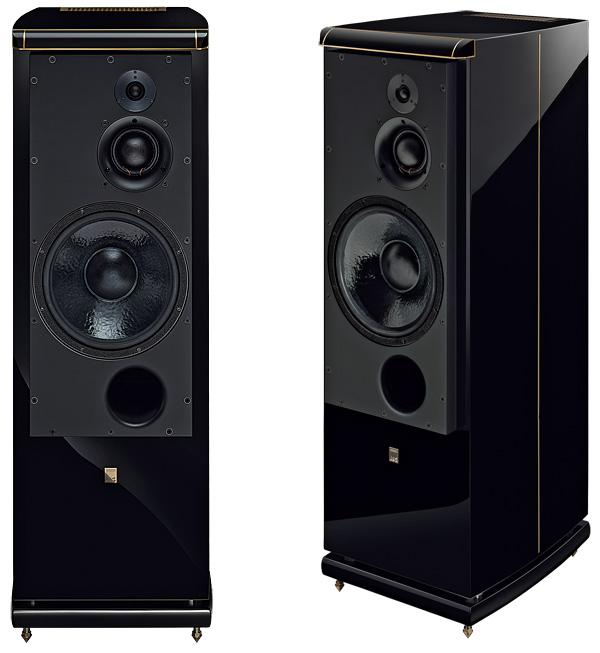
hfncommendedThe Special Edition version of these big active ATCs is not exactly a great beauty, but its sound is highly revealing

Well they're not exactly what you'd call pretty… The imposing ATC floorstanders you see here may be a 'Special Edition' model, selling for just over £36,000 in this active version, but in the piano black and nickel/gold inlay finish of the review pair they have a look best described as 'purposeful'.

Ed Selley  |  Oct 29, 2011
The professional heritage of the brand is present and correct in the SCMII You know the deal when you buy an ATC, whatever its price tag. A flat frequency response and tight pair matching are assured together with low coloration and low distortion from ATC’s own meticulously designed drive units. Forget metal dome tweeters or metal-coned bass units – ATC prefers more traditional diaphragm materials, with doping applied to quell resonances. And in its smaller speakers it has always preferred closed box to reflex bass loading, in further rejection of fashion.
Ed Selley  |  Jan 14, 2012
Audel gets down to basics with a speaker that combines contemporary design with traditional craftsmanship Italy has a prized reputation for flamboyant and uniquely styled luxury goods. The nation’s passion for design is woven into the very fabric of its culture. That’s why the country’s cars look like Ferrari Enzos rather than Ford Cortinas and why the men driving them are probably wearing Gucci loafers, rather than grubby sneakers. For a new high-end hi-fi company to be launched and get noticed is no easy task, especially in the loudspeaker market, where, to some, looks can be as important as sound, and where rivals include exotic brands such as Sonus faber and Zingali.
Keith Howard  |  Jun 25, 2009
Although German speaker manufacturer Audio Physic has had a low profile in the UK for some years, its name still has cachet here among those who remember its products with affection. Now back with a new distributor, C-Tech Audio, it is aiming to re-establish old friendships and forge new ones. Its three-driver, two-and-a-half-way Sitara is the new base member of its three-model High End range and does battle in the competitive market for £2000 floorstanders. The Sitara’s key visual feature is its tall, narrow cabinet which leans backwards at seven degrees to provide time delay compensation for the displaced acoustic centres of the tweeter and bass-mid driver.
Keith Howard  |  Aug 24, 2009
Like Audio Physic’s Sitara model recently reviewed in these pages [see HFN June ’09], the latest incarnation of the Audio Physic Tempo – the sixth, no less – catches the eye by being notably slim, deep and tilted back at 7º to provide time alignment of its small midrange driver and soft-dome tweeter. As the grilles on either side of the cabinet hint, a pair of opposed bass drivers handle the low frequencies, an arrangement which facilitates the narrow front baffle and reduces vibration through cancellation of their magnet reaction forces. The only puzzle is why Audio Physic didn’t take the opportunity to mount the two bass units at the bottom of the cabinet, a disposition pioneered by Roy Allison to help reduce low frequency power output variations caused by interaction with the room boundaries. Its narrow footprint makes the Tempo cabinet relatively unstable, so Audio Physic provides aluminium outriggers which screw to the bottom of the cabinet to carry spikes outboard of the base at either side.
Keith Howard  |  Sep 25, 2009
Perhaps because Audioplan is more than just a loudspeaker manufacturer – it makes cables, Sicomin isolation and damping products, and mains conditioners as well – the German company offers just three models of speaker. Each is a two-way design, although the costliest Konzert III incorporates three drivers: two forward-facing and a second bass-mid driver firing rearwards from the back of the cabinet. The bottom of the range Kontrapunkt IV B, on review here, has no such elaboration but still sports some unusual features. First of these to catch the eye is its – for want of a better term – cabinet stand.

Pages

X