Vintage

Sort By: Post DateTitle Publish Date
Hi-Fi News Staff  |  Dec 22, 2014
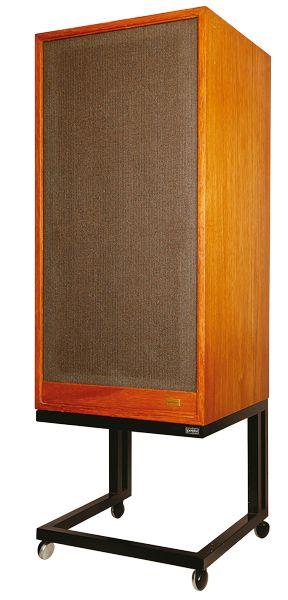
When the BC III was launched in 1973, Spendor’s ads described it as ‘An extension and refinement of theBC I and BC II’, while Thomas Heinitz, doyen of hi-fi consultants in those days, could not resist using the headline‘Hey, big Spendor’. The BC III was rooted in Spencer Hughes’ work at the BBC: he was part of the legendary BBC research team, working under both D E L Shorter and H D Harwood. It had an 8in driver with 40mm voice-coil, working in its own sealed chamber as a midrange unit while the 12in bass unit was reflex-loaded by a carefully designed port. The crossover point was 700Hz.
Review: Tim Jarman, Lab: Paul Miller  |  Dec 01, 2017
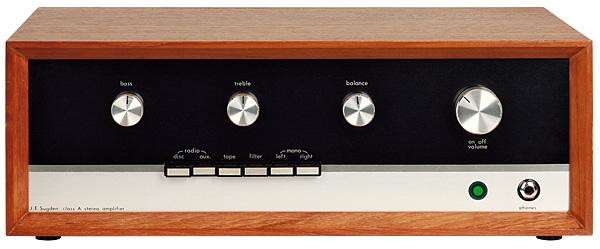
hfnvintage.pngDesigned by James Sugden in collaboration with Richard Allan, is the second iteration of this milestone Class A transistorised amp the one to buy? It's time to check it out...
The late '60s provide an interesting choice of equipment for the vintage hi-fi enthusiast. The rapid development of high-quality transistor amplifiers during the period resulted in some intriguing models and the Sugden A21 is a fine example. Why? Because it was the first successful domestic hi-fi amp on the UK market to offer a fully transistorised implementation of Class A.

Review: Tim Jarman, Lab: Paul Miller  |  Feb 17, 2021
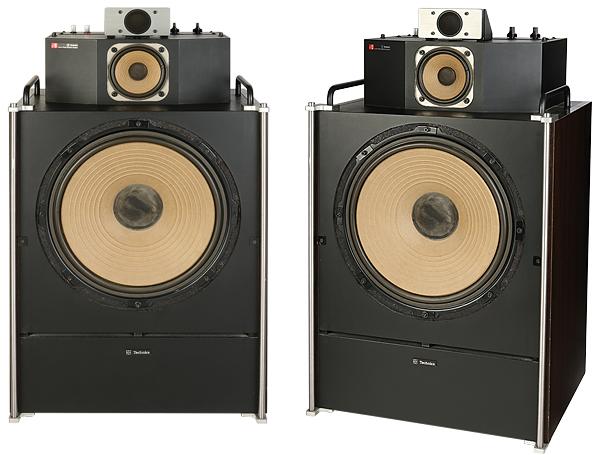
hfnvintageBass-heavy behemoth or technical tour de force? We hear a range-topping speaker first launched in 1975 that promised 'true waveform fidelity'. How will it shape up?

Although the Japanese dominated much of the hi-fi scene during the 1970s, there was one important area where their reach was more limited. That was the loudspeaker market. Yes, the companies' catalogues may have been full of glittering arrays of tempting models, but dealers outside of Japan seldom had that many in stock for interested buyers either to see or hear.

Review: Tim Jarman, Lab: Paul Miller  |  Oct 28, 2024
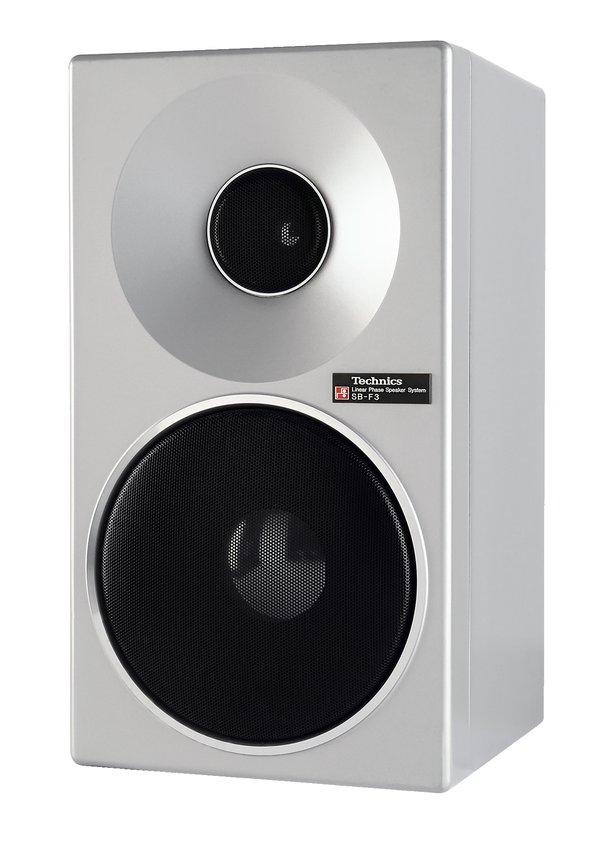
hfnvintageLargest of a trio of bookshelf speakers featuring diecast alloy cabinets and horn-loaded tweeters, Technics’ SB-F3 was a true high-tech compact. How does it fare today?
The smallest speaker in Technics' three-strong F series has already featured in our Vintage Review section . It was a popular product and sold in decent numbers for something that could have easily been mistaken for a mere novelty. Less well remembered were the larger members of the same family, the SB-F2 and SB-F3. Neither of these was exactly 'large', but the SB-F3 was certainly too big to be considered a miniature model like the SB-F1. It was, instead, in the class of conventional compact loudspeakers intended for shelf or stand placement, a sector where the number of competing models was far greater.

Review: Tim Jarman, Lab: Paul Miller  |  Jun 28, 2019
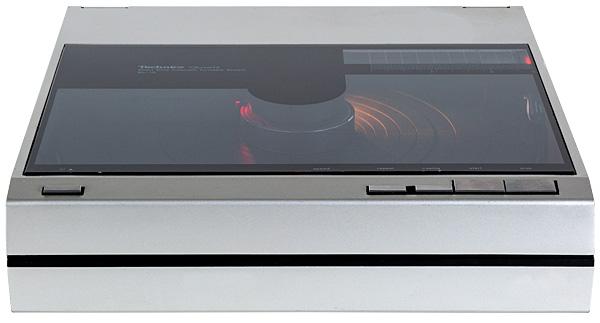
hfnvintageParallel tracking, optical position sensing and all in a slick package no larger than an LP sleeve. It dazzled in its day, but how does this '70s direct-drive deck sound now?

There is an argument which says that to recover maximum information from any recording the playback system should be as similar as possible to the arrangement with which it was made. For example, a tape deck identical to the one used in the studio should replay the original master tapes with the highest achievable accuracy.

Review: Tim Jarman, Lab: Paul Miller  |  Jul 10, 2020
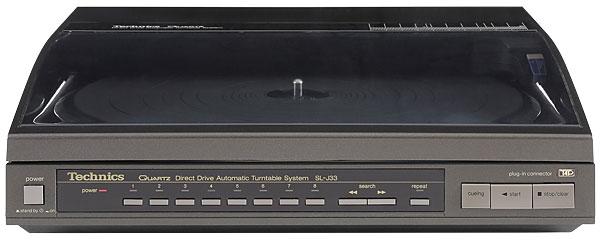
hfnvintageA mid '80s deck designed to boost vinyl replay at a time when the convenience of CD was making all the news. Did it succeed, and how does it compare today?

The products we usually seek to feature in our Vintage Review pages are those that were among the first to introduce a new format, function, level of performance or design theme. However, this month our subject is the Technics SL-J33 turntable of 1986, one of the last in a series that had a footprint the size of an LP sleeve, which began with the SL-10 [HFN Apr '19].

Review: Tim Jarman, Lab: Paul Miller  |  Oct 19, 2022
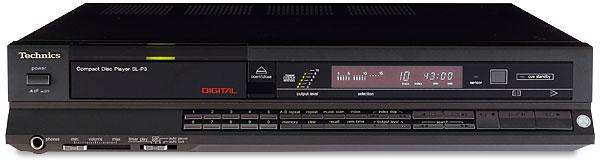
hfnvintageThe first CD player from the Japanese brand to boast real 'kerb appeal', this mid-'80s machine also inherited key technology from previous models. How does it sound today?

Any early Compact Disc player from Matsushita (Panasonic/Technics) holds a particular fascination. The company was excluded from the top table when the CD format was created, in spite of (or perhaps due to) its pre-eminent position as the world's largest producer of electronic consumer goods.

Review: Tim Jarman, Lab: Paul Miller  |  Jan 01, 2018
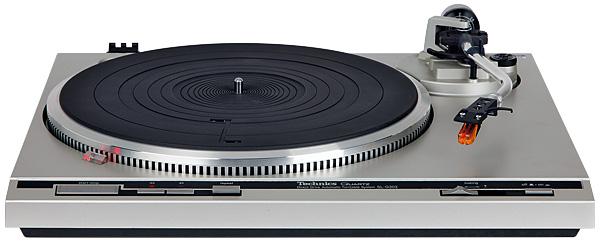
hfnvintage.pngWhen launched, this turntable was just one of over a dozen Technics decks offered. Is it now the pick of the radial-tracking pack? Time to take it to the test bench...

Think of direct-drive turntables and the chances are that one brand will spring to mind: Technics. What's more, its SL-1200 turntable will be the model most people think of first. This famous deck casts a long shadow over the others in the company's range and yet there were many to choose from. In fact, when the SL-Q303 seen here was launched in the UK in 1982 it was part of a 13-model lineup – a series that went from the professional-spec SP-10 MkII right down to moulded plastic belt-drive budget models such as the SL-B202.

Review: Tim Jarman, Lab: Paul Miller  |  Dec 14, 2022
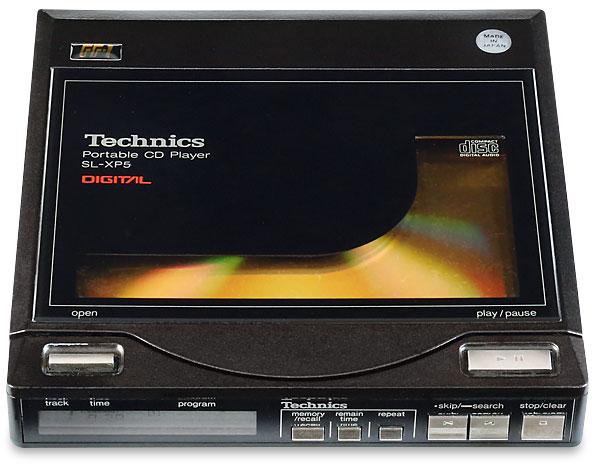
hfnvintageBelieving portables to be as good as their full-sized rivals, many music lovers sought out the smallest – and this CD player was a compact king. How does it sound today?

Think about portable CD players and the chances are that the Sony Discman [HFN Jul '19] will come to mind. The company's ability to produce enchanting and compelling miniature versions of existing products has been pretty much unequalled, and 'the world's smallest' is a phrase that can often be seen in Sony's vintage catalogues. In comparison, the company's larger models were frequently bland and derivative.

Review: Tim Jarman, Lab: Paul Miller  |  Aug 01, 2018
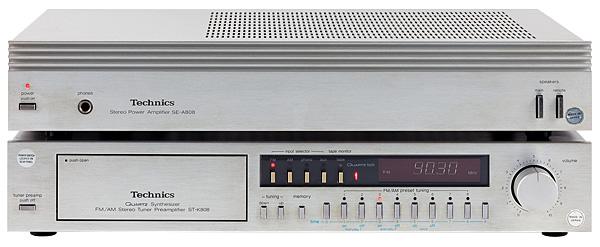
hfnvintage.pngLaunched in 1980, these slimline separates proved just the tonic for those seeking sophisticated sonics wrapped in eye-catching casework. How do they sound today?

Who buys top quality hi-fi equipment? First there is the audiophile, who is willing to devote considerable resources in the pursuit of components that deliver what he or she regards as the best sound quality for a given budget. There was once also a largely non-technical group who had equally high musical expectations. Wealthy and design conscious, they wanted complete systems that not only sounded good but looked good too, and included all the latest technological refinements.

Review: Tim Jarman, Lab: Paul Miller  |  Sep 14, 2025  |  First Published: Sep 01, 2025
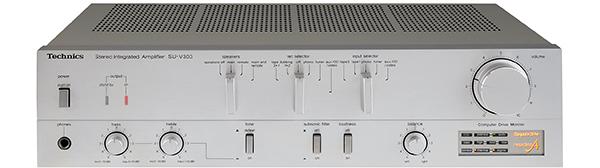
hfnvintageThe 1980s saw the pursuit of low-distortion amplifiers reach its peak. The big brands all had skin in the game but Technics was vying to be market leader with its ‘New Class A’

Consumer Electronics products are traditionally marketed on the basis of progress and technological improvement, and the hi-fi scene is no exception. Amplifiers were already a mature technology in the early 1980s, following big advances in low noise circuitry, robust complementary power transistors, DC coupling and high-speed operation. With these fundamentals in place the larger manufacturers turned their attention to exotic power supplies, remote controls and system integration, equalisers and frequency spectrum displays, special inputs for CD players and, of course, ever more output power to entice customers to upgrade.

Mike Barnes  |  Aug 03, 2022
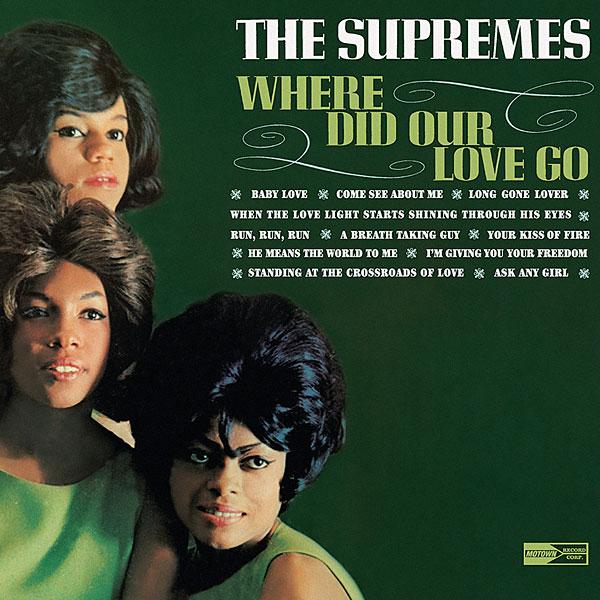
Even though its title track was initially written for a rival group, the sophomore album from Diana Ross, Florence Ballard and Mary Wilson transformed them from Billboard also-rans to international superstars – and helped define the Motown sound

By 1955 Berry Gordy Jnr [HFN Nov '17] had been a professional boxer, served in the US army, made an unsuccessful attempt at running a jazz record shop, and was working for the Ford Motor Company on its Detroit production line. But his real love was music.

Review: Tim Jarman, Lab: Paul Miller  |  Jul 05, 2023
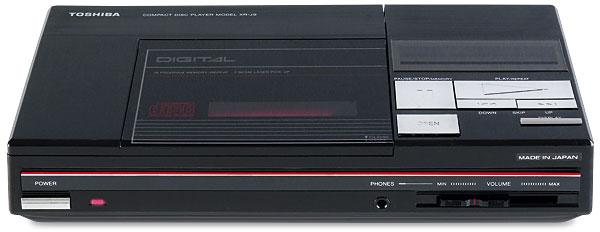
hfnvintageCompact, clever and priced to entice, this quirky little late-'80s machine caught the imagination of those buying into digital for the first time. How does it shape up today?

When Toshiba unveiled its lineup of new CD players in 1986 it was clear the format had come of age. Just three years after the first machines were launched onto the European market they'd gone from being exotic and expensive to something so accessible there was little point in any keen listener not owning one.

Tim Jarman, Lab: Paul Miller  |  Sep 09, 2024
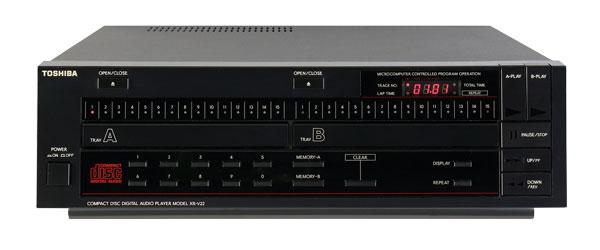
hfnvintageGimmick or grand plan as Toshiba looks to spice up the mid-’80s CD scene with a dual-disc player offering over two hours of continuous music. How does it fare today?

Anumber of our recent Vintage Reviews have featured CD players designed to broaden the appeal of the format by making the hardware available at progressively lower price points. This was one way to maintain sales, but another approach was to add additional features at little or no extra cost.

Review: Tim Jarman, Lab: Paul Miller  |  Mar 09, 2020
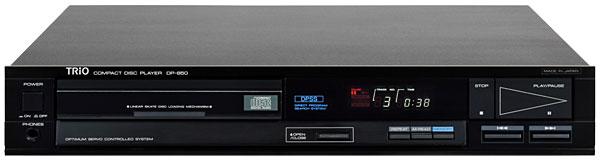
hfnvintageBased on Sony's second-gen 16-bit/2x oversampled chipset, the DP-850 established a toehold in the CD scene for the Trio-Kenwood Corp. How does it shape up today?

While not a name often associated with early CD players, Kenwood was not lacking in ambition with its first entry into the field. Rather than test the market with a quiet offering buried deep in the backwaters of its catalogue, in 1983 the company added the L-03DP CD player to its range of top-line components.

Pages

X