Beethoven Violin Concerto
More than a century of recordings (in both date and number) present radically different versions of this spiritual testament. Peter Quantrill picks his favourites
The Everest of violin concertos. That’s the cliché often applied to this work composed by Beethoven in 1806. Yet however tired or misleading they are, most clichés hold at least a grain of truth. Length is not the issue at stake, even though the Concerto exceeds 40 minutes in performance – at least ten minutes longer than Mozart’s teenage quintet of works, for example. And in fact Franz Clement, the violinist-composer who gave the modestly received premiere of Beethoven’s work, had written his own concerto, in the same key of D major and on a comparable scale.
Pairing the two concertos on record [Cedille], Rachel Barton Pine at least demonstrates how far Beethoven exceeded his model. Clement trades in circular musical clichés of his own, with neat four-bar sections going nowhere very fast and noodly little countermelodies, all falling gratefully into place for the soloist. Beethoven, however, had learnt both violin and viola as a child, and played in the court orchestra in Bonn for several years before his first move to Vienna in 1792. He knew for himself what would lie well under the fingers.
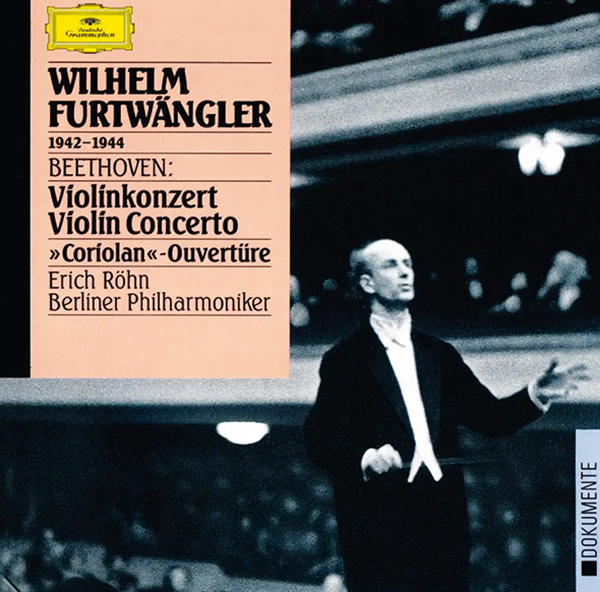
Above: ‘Bouncing on his heels’: Röhn’s 1944 recording of the Violin Concerto, under Wilhelm Furtwängler, was issued on CD in 1989 by Deutsche Grammophon
Rather, the ‘Everest’ tag seems to apply to the expressive challenges of the Violin Concerto. Unlike in his later music, these are not challenges shared by the listener. A newcomer to the work might even wonder what all the fuss is about. The breadth of the first movement is intensified by its relative placidity, in terms of harmonic incident. With one striking exception at the heart of the movement, the music barely deviates from the home key of D major. The five-note opening drum-tap underpins so much of what follows that the Romantic sense of the concerto as a journey, or a landscape to be conquered by the soloist, holds little relevance here. Rather, we find ourselves in a state of grace – or a place of serenity, further intensified by the central Larghetto and the untroubled country-dance of the Rondo finale.
Invoking the spirit
Such serenity is a far cry from the violent contrasts and distant harmonic regions explored by Beethoven in his two previous major pieces, the third ‘Razumovsky’ quartet and the Fourth Symphony. However, it does establish a precedent for the remarkably untroubled diatonic groundplan of the ‘Pastoral’ Symphony. And when performed with the necessary devotion and concentration, both works embody a spiritual drama of transcendence anticipating the Missa solemnis. Not for nothing, I think, does Beethoven make the Missa’s point of ultimate serenity, the Benedictus, into a violin-concerto slow movement, thereby invoking the spirit of his earlier achievement in the genre.
Thomas Zehetmair [Philips] brings the Concerto out of that semi-sacred space with quick tempi and roughened-up tone. This doesn’t feel right to me, but neither does pouring legato honey over the whole piece, exemplified by Itzhak Perlman [EMI/Warner]. And while the opening drum-tap motif demands acoustic space to make itself properly heard, the ‘Allegro’ part of Beethoven’s ‘Allegro ma non troppo’ marking for the first movement is underplayed by many violinists such as Barton Pine.
Observing a spiritual atmosphere doesn’t entail treating every bar of the piece as holy writ. Violinists in the first half of the last century played their part with an improvisational freedom – not in terms of actual notes, but articulation and phrasing – that became lost in the stereo era. The outstanding pre-war recording comes from Bronislaw Huberman, with the Vienna Philharmonic under George Szell. At 38 minutes, it breathes freely and easily.
Given that Huberman had studied with Joseph Joachim, who composed cadenzas for the Concerto which are still in standard use today, and then astounded Brahms by playing his Concerto (not so easy to do, even at the age of 14), perhaps he represents an authentically ‘Romantic’ performing style for Beethoven. Trained in a contrasting tradition, Erich Röhn also plays the opening phrase as if bouncing on his heels, in his wartime performance with Wilhelm Furtwängler.
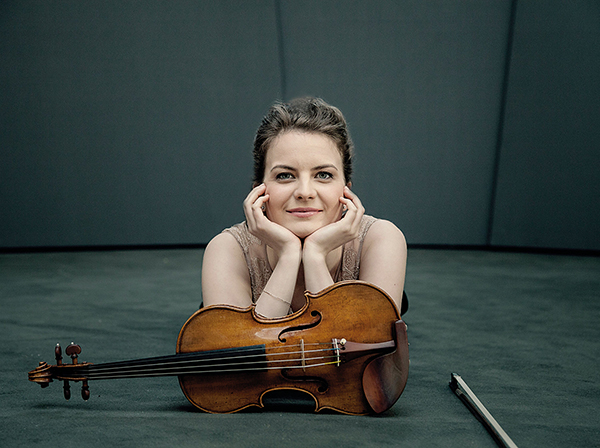
Above: Veronika Eberle teamed with Simon Rattle for a 2023 recording at LSO St Luke’s
Rising to the challenge
Crucially, both performances home in on the first movement’s G minor episode, directly before the recapitulation, as the point of highest transcendence or most inward communion. Here the orchestral bassoonist takes a starring role – much as they do in the Fourth Symphony directly preceding the Concerto. Conductors and producers who take care of the interplay to this episode raise themselves above the competition.
The scale of the Violin Concerto demands its soloists enter into unusually active, quasi-symphonic partnership with the conductor, who must grip the form without squeezing too tightly, as Beethoven would go on to require in the Fifth Piano Concerto. For all their imagination, Vilde Frang [Warner] and Anne-Sophie Mutter [Deutsche Grammophon] are too forwardly balanced to feel in dialogue with the orchestra. Heifetz, Milstein, Ricci and Ferras are likewise all marvellously recognisable as themselves, supreme exponents of their instrument.
Beethoven (I find) takes second fiddle. However, recordings led from the violin by Lisa Batiashvili and Leonidas Kavakos [both Sony] miss the guiding hand of a partner.
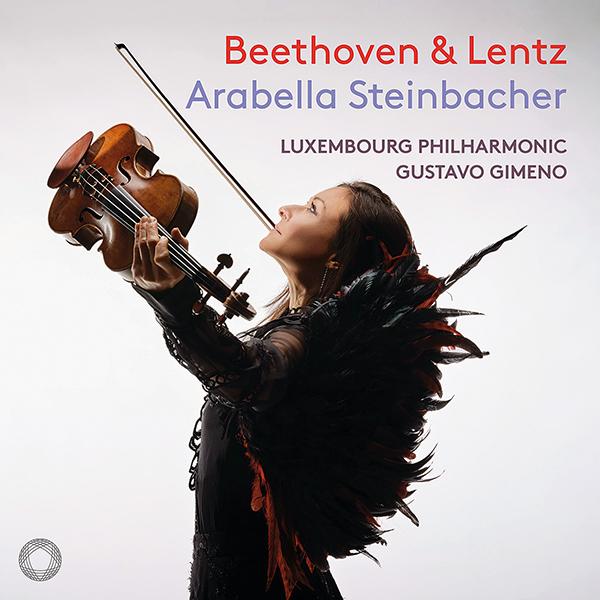
Arabella Steinbacher’s second recording [see Essential Recordings, below] is a marked improvement on her first, not least due to the more active partnership of Gustavo Gimeno. Her tone is more luscious, her phrasing broader, but she too locates a still and prayer-like quality to the whole Concerto. For the Naïve label, Patricia Kopatchinskaja chases flights of fancy which her conductor, Philippe Herreweghe, does not always follow. By contrast, the most striking aspects of Viktoria Mullova’s second recording [Philips] emerge from the orchestra, under Sir John Eliot Gardiner.
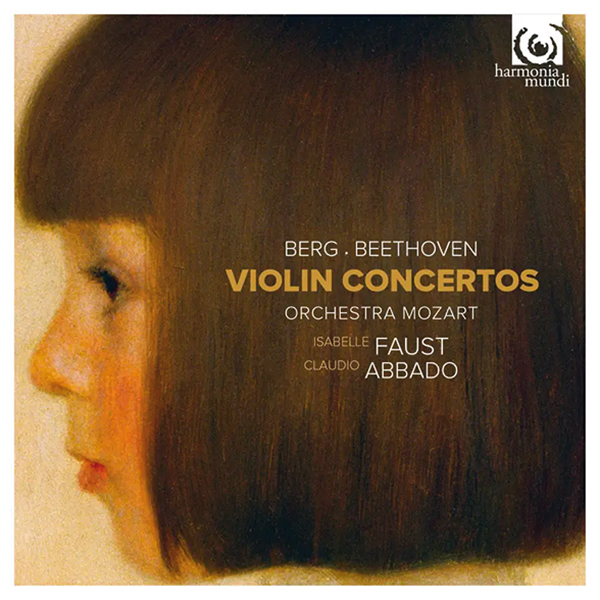
Above: On this 2012 CD and vinyl release from Harmonia Mundi, Isabelle Faust tackles Alban Berg’s 1935 Violin Concerto as well as Beethoven
Living dangerously
The most raptly sustained account I have heard live was given by Veronika Eberle, accompanied by the LSO and Sir Simon Rattle. Their later recording recaptures most of the magic of that concert, but it also includes long and idiosyncratic cadenzas (from Jörg Widmann) which make Alfred Schnittke’s interventions in the piece sound almost vanilla by comparison.
Isabelle Faust lives dangerously with Beethoven’s Concerto, not eccentric in Kopatchinskaja’s manner but bringing freshness and dynamism to every gesture, backed by Claudio Abbado’s typically masterful ‘late’ shaping of the orchestral texture.
Other listeners will have their favourites, of course, from Arthur Grumiaux to Christian Tetzlaff; musicians of every generation come to the Concerto in their own way.
Essential Recordings
Veronika Eberle, LSO/Rattle
LSO Live LSO5094
Beethoven’s early draft for a C major violin concerto is the unusual ‘filler’. As illuminating in its way as Jörg Widmann’s cadenzas.
Isabelle Faust, Orchestra Mozart/Abbado
Harmonia Mundi HMC902105
Alban Berg’s concerto makes a comparatively conventional and generous coupling, with violinist and accompanists on inspired form.
Arabella Steinbacher, Luxembourg/Gimeno
Pentatone PTC5187240
A remarkable new concerto by Australian composer Georges Lentz is a compelling coupling for a radiantly sung account.
Wolfgang Schneiderhan, BPO/Jochum
DG 4474032
This adopts the cadenza written by Beethoven for his piano arrangement of the concerto. A quirky feature of an otherwise classic version.
Erich Röhn, BPO/Furtwängler
DG 4277802
Expensive when acquired in the BPO’s box of the conductor’s wartime recordings, but DG’s older remastering is perfectly serviceable.
Bronislaw Huberman, VPO/Szell
Naxos 8110903 or Warner Classics 9029589516
Authentic as in true to the spirit as well as the sound of the score, flowing like a molten river in the outer movements.






 SPONSORED VIDEO






| Equipment Reviews |  |
Music Reviews Awards | |
Latest News Features | |
Resources Newsletters | |
Subscriptions |
WHERE TECHNOLOGY BECOMES ENTERTAINMENT
 © 2026 Hi-Fi News
AVTech Media Ltd
All rights reserved