Bernstein Candide
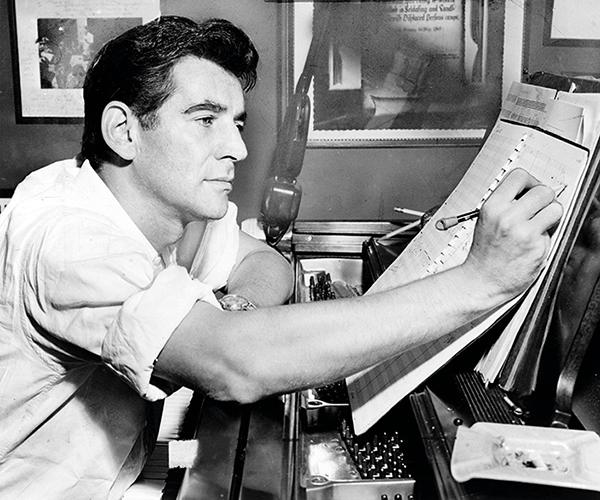
An American opera buffa, a hot political satire, a show too big for 1956 Broadway... Leonard Bernstein’s take on Voltaire is all these things and more, says Peter Quantrill
The year 1956 was a thin one for major premieres. Britten was in between operas, and Lennox Berkeley raised barely more than a localised ripple with Ruth. Likewise Carlisle Floyd with Susannah in Tallahassee, and Frank Martin with Der Sturm in Vienna. Hans Werner Henze’s opera, König Hirsch, went on to acquire several restagings and revisions, but its history is nothing like as storied, or complex, as the last major premiere of the year, which took place in Boston on October 29: Candide, with music by Leonard Bernstein, to a libretto by Lillian Hellman, after the satire by Voltaire.
Beaten by Broadway
In anticipation of a chilly reception, director Tyrone Guthrie actually addressed the audience pre-show: ‘Keep your peckers up’. They didn’t. Neither did New Yorkers at the Martin Beck Theater for the premiere proper on December 1. The show closed in early February, far from the lucrative Broadway hit of Bernstein’s dreams for his two-act ‘comic operetta’. In fact Candide had already come a long way. Bernstein conceived it as a ‘big three-act opera with chorus and ballet’, rather in the way that Wagner had cooked up Tristan as a simple-to-stage money-earner which would keep his creditors at bay while he worked on completing the Ring. It did not turn out like that.
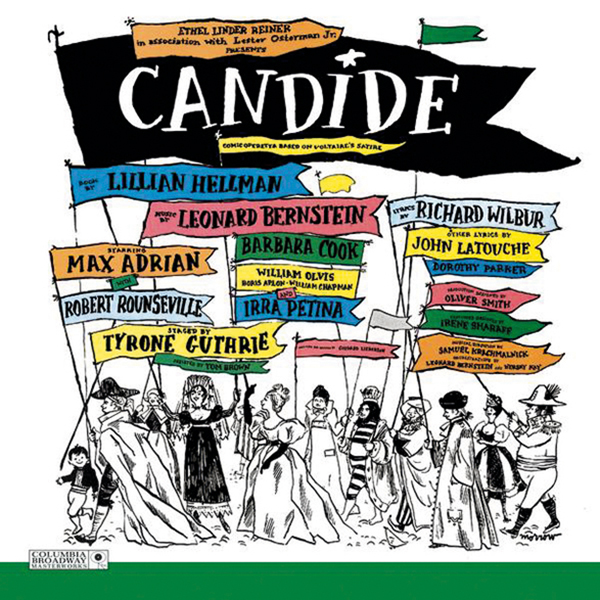
Above: Sony’s reissue of the 1956 original cast recording, conducted by Samuel Krachmalnick
The idea of adapting Voltaire in the first place had come from Hellman, early in 1953. The playwright had already been blacklisted by US Senator Joseph McCarthy’s infamous commission into ‘Un-American activities’. Bernstein ran into his own problems with the anti-Communist purge in the summer of ’53 when the State Department refused to renew his passport. One grilling later, and $3500 poorer, Bernstein had his passport returned. ‘That’s what it costs these days to be a free American citizen’, he said.
Just as the setting of Seville had presented itself to Mozart (in Figaro) and then Beethoven (Fidelio) as sufficiently distant to escape censure for their biting commentary on political affairs at home, so Bernstein and Hellman found in Voltaire the voice of protest they wanted, wrapped up in a cynical chuckle.
Hellman was no da Ponte, however, and while the public lapped up Bernstein’s tunes – as they have done ever since – they found the satire heavy-handed. The composer himself had remarked in 1953 that ‘we are not living in experimental times’. Audiences wanted cheering up, not challenging, so ‘let’s be amusing, or pretty, or diverting’.
A quest for the truth
For a condensed synopsis, I can’t improve on Humphrey Burton’s introduction to the BBC’s broadcast of Scottish Opera’s 1988 production, which is invaluably preserved on YouTube. ‘Voltaire’s satire is a quest for the truth of human existence’, says Burton. ‘Candide is taught by Dr Pangloss that everything in this world is for the best: part of God’s universal plan. But when he is subjected to a terrible series of disasters [he] is forced to put his tutor’s theories to the test.’
In between times, many other hands had stirred Candide’s broth. Harold Prince directed and John Mauceri conducted the one-act, off-Broadway version from 1974, with a new book by Hugh Wheeler and revised lyrics by Richard Wilbur, Stephen Sondheim and John Latouche. Prince and Mauceri then masterminded the next major revision, into a two-act opera, for the New York City Opera in 1982. For the Scottish Opera six years later, Mauceri brought in John Wells (he of Dear Bill fame), and Bernstein then adapted this version for his own LSO concerts the following year. All these versions were recorded, at least in part: see the ‘Essential Recordings’ boxout opposite.
There has never been a ‘definitive’ Candide, then, and there never will be.
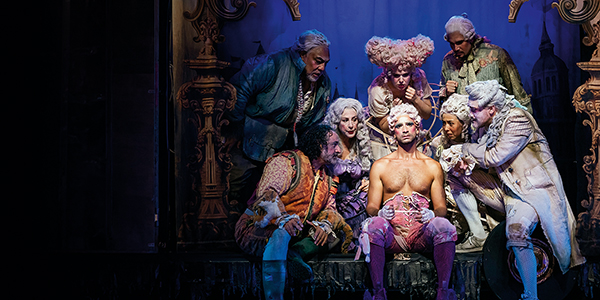
Above: Candide down under – an Opera Australia performance at the Sydney Opera House’s Joan Sutherland Theatre
As one unversed in musical theatre, I can’t reconcile the criticism of Hellman’s original libretto with the equally steadfast enthusiasm for the Original Cast Recording, conducted by Samuel Krachmalnick. The star here is Barbara Cook’s Cunegonde, taking her place alongside more experienced operatic singers such as Robert Rounseville, as Candide, who had sung Tom Rakewell in the premiere of The Rake’s Progress.
The knowledge
Cook was faltering at her audition, until she suggested that she could sing Butterfly’s entrance from Puccini’s opera, but she didn’t have the score with her. No problem, said Bernstein, who promptly sat down at the piano and played it through while singing all the other parts. And the score of Candide owes much of its magic and charm to this completely assimilated knowledge of the operatic canon. ‘Glitter And Be Gay’, Cunegonde’s showpiece, is every bit a sequel to the show-stopping soprano numbers perfected by Johann Strauss and Lehar. Candide’s ‘Nothing More Than This’ soliloquy would have surely won Puccini’s approval.
All the same, letting most opera singers loose on Candide has proved a mistake, never more so than in the composer’s latter-day DG recording, where the music is loved to death. According to Mauceri himself, ‘Candide belongs to Krachmalnick’, and he notes that Bernstein conducted and recorded it when he and most of the cast were ill. ‘Bernstein laid down the orchestral tracks and the singers came into the studio later – without his being present – to record their vocals.’ For this reason alone, despite the obvious vocal shortcomings, I prefer the concert film over the CD.
The show must go on
But Mauceri is being modest here; the history of Bernstein’s operetta since its premiere in Boston 70 years ago belongs to him more than anyone else. However, in common practice for musical theatre translated to record, the studio versions present disconnected musical numbers which remind me of those once-popular highlights albums of operas. Even concert performances of something approaching the full Candide score, such as those Marin Alsop directed in London [LSO Live] and New York [Shout Factory Blu-ray], lack the wit and the greasepaint on which it thrives. The show’s the thing.
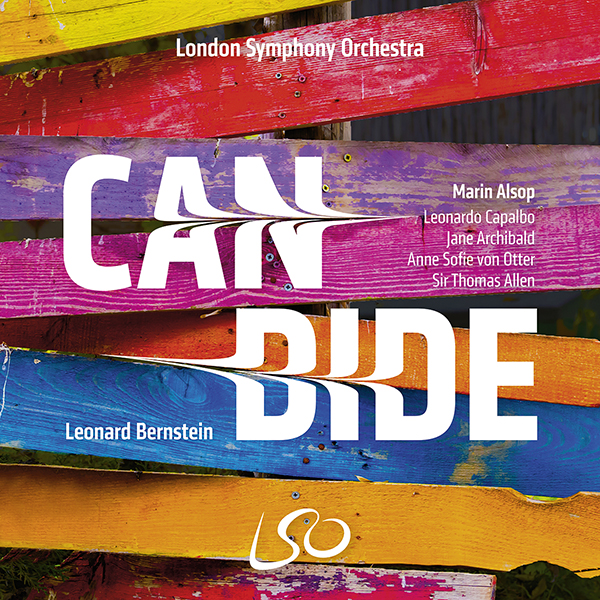
Above: Marin Alsop’s 2021 recording, with the London Symphony Orchestra at the Barbican Hall, is available on double-SACD and DSD64-512/DXD download [HFN Feb ’22]
Many of the Scottish Opera cast had experience in Gilbert & Sullivan, and the resulting ‘English’ flavour to ensembles such as ‘What’s The Use?’ harmonises surprisingly well with both text and music. However, the National Theatre’s 1999 staging – with Simon Russell Beale at its centre as Dr Pangloss – persuasively reasserted Candide’s identity as a Broadway show, first and foremost. Uniquely on record, the funny, immaculately timed, whip-smart delivery survives the scrutiny of the studio. The payoff comes in the slimmed-down band. As Candide himself finds out the hard way, you can’t have everything.
Essential Recordings
Original Broadway Cast/Krachmalnick
Sony SK 86859 or Beulah 1PS33
The original, and for many still the best, but very much a studio production of excerpts and showing its age in any remastering.
New Broadway Cast/Mauceri
Sony/RCA G010002024490L (download only)
Heavy on dialogue, and dryly recorded, documenting a pivotal moment in the complex history of Candide on both stage and record.
Scottish Opera/Mauceri
TER CDTER1156
The most ingenious synthesis of both editions and styles, fusing the grandeur of operatic delivery with the snap of Broadway.
Royal National Theatre/Dorrell
First Night CASTCD75
A condensed but action-packed modern studio recording of a true musical-theatre approach – ‘the best of all possible worlds’?
London Symphony Orchestra/Bernstein
DG 4798419 (2CD/DVD)
Definitive in one obvious sense, flawed in several others. Get the film (if you can find it) for the unvarnished record of the event.
London Symphony Orchestra/Alsop
LSO Live LSO0834 (2xSACD)
The best-recorded of modern operatic approaches to Candide, showing both the pros and cons of recording live in concert.








 SPONSORED VIDEO






| Equipment Reviews |  |
Music Reviews Awards | |
Latest News Features | |
Resources Newsletters | |
Subscriptions |
WHERE TECHNOLOGY BECOMES ENTERTAINMENT
 © 2026 Hi-Fi News
AVTech Media Ltd
All rights reserved