Tchaikovsky Symphony No.6, ‘Pathétique’
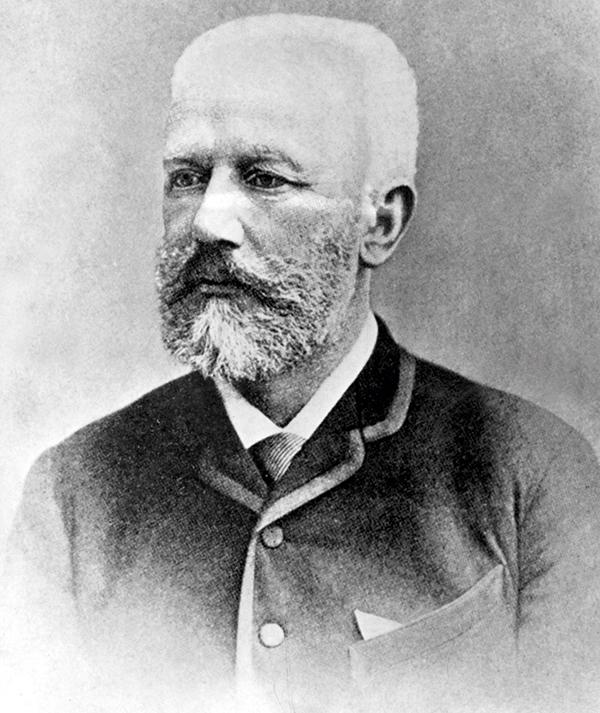
A huge field of options on record leaves Peter Quantrill searching for those versions which embrace the violence and volatility of the composer’s ‘farewell symphony’
Tchaikovsky was hardly the first composer to end a symphony with a slow lament. The mythology around the end of his life – cholera or suicide? Or both? – has been largely dispelled, even if we’ll never know for sure why the composer died on 6 November 1893, three weeks after conducting the first performance of the Pathétique.
Embrace the extreme
We don’t need the back story to hear for ourselves how Tchaikovsky’s Pathétique is a symphony of extremes, from the notorious pppppp bassoon solo (mostly reassigned to the bass clarinet to make it playable as such) to the hysterical acceleration of the march – one of several aspects to the piece which made their mark on Mahler, and on his own self-designated farewell to the symphony, the Ninth. Indeed, attempts to make the Pathétique fit the mould of previous symphonies – whether by Tchaikovsky or others – denature it. The extremes are there to be embraced, possibly even heightened, in performance.
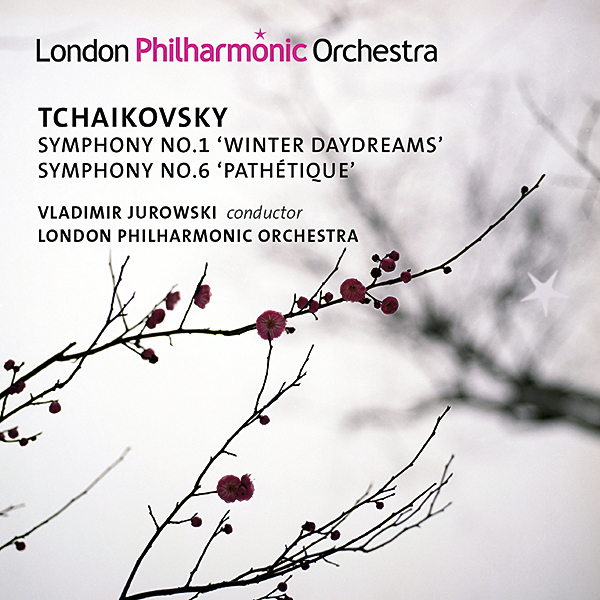
Above: Vladimir Jurowski, with the LPO, recorded Tchaikovsky’s first and last symphonies at London’s Royal Festival Hall in 2008
For example, at a 1997 concert in Rome, I remember a wild storm of applause greeting the end of the march, at which Myung-Whun Chung bid the Santa Cecilia orchestra to stand and acknowledge the ovation before getting on with the finale. This felt as right, and as weird and dislocating, as Vladimir Jurowski stilling such enthusiasm with a dismissive flick of the hand before launching straight into the Adagio, in a 2019 performance at the Royal Festival Hall that remains uniquely devastating in my memory.
Any response to this most personal of symphonies will, of its own nature, be especially intimate – from the perspective of both performers and listeners. To begin with, an admission: Mravinsky leaves me cold. The Russian conductor’s Deutsche Grammophon recording of the symphony [DG 2721 184] is often held up as exemplary, on account of the meticulously coached specifics of phrase and gesture, the huge dynamic range coupled with expressive restraint, all faithfully conveyed by the musicians of the Leningrad Philharmonic Orchestra.
By the same token, I can’t get on with ‘classic’ recordings conducted by Fritz Reiner and George Szell. Just to focus on the Adagio Lamentoso finale, all three of them bring to it a nobility and a kind of elevated literalism. They undermine or at least underplay the recitative-like form of those overlapping downward sighs which gradually rise in both pitch and intensity with a very operatic – by which I mean ‘sung’ – turn of expression.
Artful roger
For all the reduced tone and smaller dynamic envelope of his Stuttgart strings, Sir Roger Norrington [Hänssler Classic] grasps this form, in one of the still surprisingly few recordings to attempt some kind of period-style engagement with the soundworld Tchaikovsky himself might have known. I also like his approach to the march, light and balletic from the outset, in a work where it often pays not to show all your cards at the beginning of each movement.
All the same, there are many gripping and less iconoclastic alternatives. Among the earliest of them, Arturo Toscanini must stand out – precisely for showing that the perfectionist control exercised by Mravinsky and Szell need not of itself bring out a chilly objectivity. Especially in his October 1938 NBC broadcast version, Toscanini gets the strings to sing as if they were all Violetta in La Traviata.
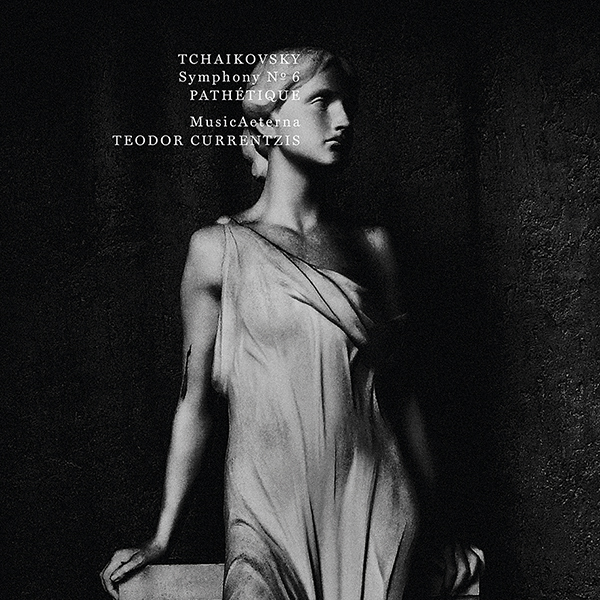
Above: ‘The depth of the sound comes into its own’ – Teodor Currentzis’s 2017 recording, captured at Berlin’s Funkhaus Nalepastraße studios
From the same year, Wilhelm Furtwängler conducted a Pathétique which still counts among his most successful studio productions. He approaches the symphony from a diametrically opposed angle, as an apotheosis of ‘purely’ symphonic discourse, as if to reject the continuation of that tradition in the music of Mahler, which both he and Toscanini deprecated.
Even so, the maxim of ‘live is best’ with Furtwängler holds here too, and the 1951 recording from Cairo attains a peak of intensity in the finale comparable with the best of his Bruckner. LP collectors will want to look out for the old transfer on DG’s ‘Historisch’ imprint, which reprints a photo of the conductor wearing a fez, aboard a camel, near the pyramids of Giza.
Peak performance
The trenchancy and Brahmsian sweep which Furtwängler brings to the inner movements of the Pathétique can’t fully compensate for a lack of both precision and momentum. For that, plus something of both Toscanini’s pleading legato and Furtwängler’s symphonic grandeur, turn to Leonard Bernstein in New York. I have a soft spot for the very late (1986) and very slow DG version, especially at the monumental peak of the first movement with the implacable descent of its trombone motif. Too much, for some, no doubt, in which case the 1964 CBS/Sony studio recording makes a safer recommendation without being in any way a cautious performance.
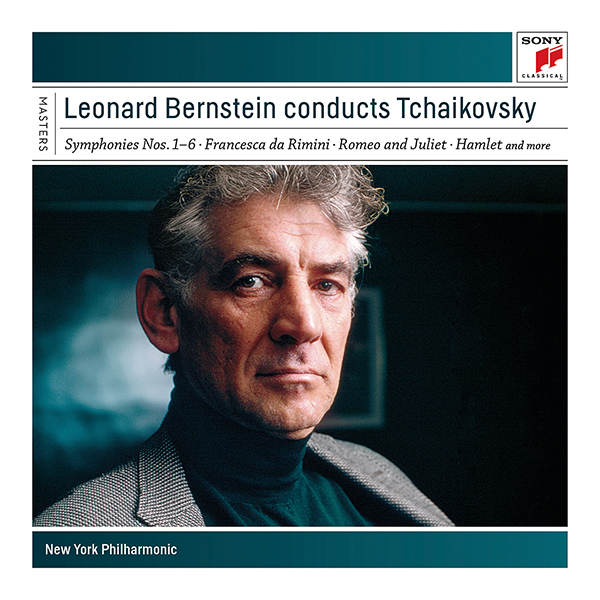
Above: One of three Bernstein recordings of the Pathétique, from 1964 with the New York Phil., is included on Sony Classical’s 5CD boxset
That Bernstein had the measure of the piece from early on is also evident from his 1953 DG recording and illuminating lecture.
Among Pathétique interpreters of our own time, Valery Gergiev lays it on thick in his typically capable but (I would say) skin-deep way. Semyon Bychkov, ditto. The promise of Mariss Jansons’ white-hot but orchestrally lightweight early Oslo PO recording [Chandos] was not developed in his subsequent live versions with more deluxe ensembles.
From Claudio Abbado and Riccardo Muti we likewise never quite got the Pathétique that we and they deserved, their studio recordings not matching the volatility of their concert performances. However, Toscanini’s legacy of an Italianate Pathétique has been impressively continued by Antonio Pappano [EMI] and Gianandrea Noseda [LSO Live].
Snapping the wires
Even this highly selective and personal survey can’t omit some honourable mentions, from the mono and early stereo eras, to Guido Cantelli, Dimitri Mitropoulos, Ferenc Fricsay and Antal Doráti – all of them ferociously taut, almost snapping the wires of the outer movements. Igor Markevitch follows suit, enhanced by the London Symphony Orchestra on top form and the ideally spacious Philips sound.
Between Jurowski, Petrenko and Currentzis, however – see the Essential Recordings below – I find a breadth of response, a musicianship and sensitivity, that renders older versions ‘nice to have’ but not, indeed, essential. All three go to extremes in their own way, not least by making something specific and individual out of each phrase.
Essential Recordings
London Philharmonic/Vladimir Jurowski
LPO Live LPO0039 (2CDs)
This 2008 concert is a little dry for audiophile nirvana but more ‘balanced’ than Currentzis and more quirky than Petrenko.
Berliner Philharmoniker/Kirill Petrenko
BPO BPHR190261
Unsparing in its expression, yet intensely alive to the score’s gentle and pliable moments, and eerily silent in atmosphere.
MusicAeterna/Teodor Currentzis
Sony 88985404352
The most scrupulously engineered of all, especially effective on headphones, where the depth of the studio sound comes into its own.
New York Philharmonic/Leonard Bernstein
Sony 19439709652 or DG 419 604-2
Something of a cheat: the same, compelling vision underpins both 1964 and 1986 versions despite their superficial differences of timing.
London Symphony Orch./Igor Markevitch
Philips/Decca 4268482
Towering violence and percussive attack – the Pathétique as a prefiguring of Stravinsky’s Rite, and top-notch analogue sound.
NBCSO/Arturo Toscanini
Naxos 811025
If this 1938 concert is hard to come by, Music & Arts’ 1947 version is even more hard driven, albeit with a slightly more desiccated sound.













 SPONSORED VIDEO






| Equipment Reviews |  |
Music Reviews Awards | |
Latest News Features | |
Resources Newsletters | |
Subscriptions |
WHERE TECHNOLOGY BECOMES ENTERTAINMENT
 © 2026 Hi-Fi News
AVTech Media Ltd
All rights reserved