Alfred Brendel Pianistic wit and wisdom
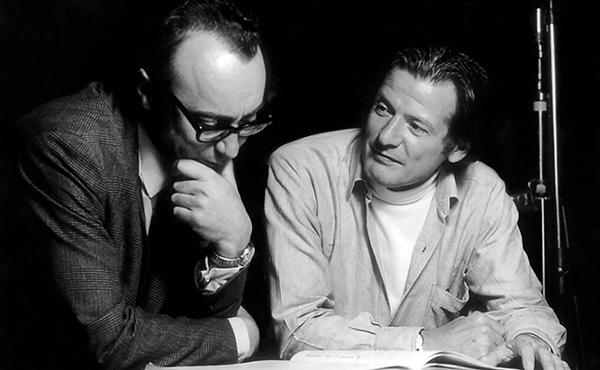
Peter Quantrill pays tribute to the memory of a musician celebrated for his insight, and equally underrated for his emotional connection to the classics
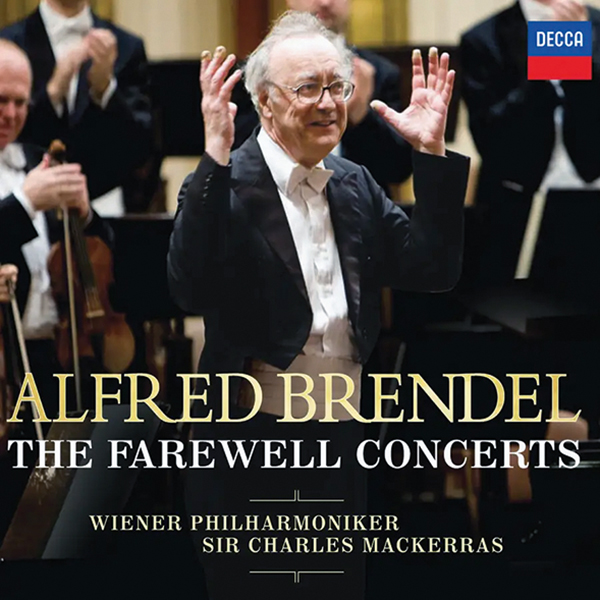
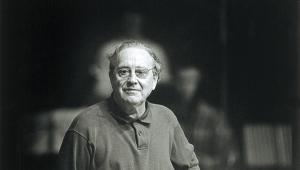
Alfred Brendel [above left] left the stage of the Musikverein in Vienna after giving one final performance of his favourite Mozart concerto, K.271, the ‘Jeunehomme’, in 2008. Captured for posterity by Philips, the occasion made a fitting envoi to a career spanning almost 60 years.
Brendel continued to give lectures and to write. He also coached and encouraged younger musicians, and many of them shared their happy memories of the musician after his death in June 2025. They recalled convivial dinners, occasional outrages such as snipping the wire to an intrusive loudspeaker in a restaurant, and most of all the hours and hours spent together over scores: listening, thinking, talking.
Personal take
My own ‘Brendel story’ is laughably modest by comparison. I was 17 years old when I saw him play the Second Concerto by Brahms at the BBC Proms in 1991, with the Berlin Philharmonic conducted by Claudio Abbado. The recordings of both Brahms concertos he made with them around the same time capture his ‘late style’ at its most imperious, I think, but the live performance brought with it an extra element of risk, something rugged and combative, that feels true to the nature of the Second but rarely comes off in a studio setting.
A few months after the Prom, I was leaving the National Gallery in London when I spied Brendel entering, on the other side of the foyer. He was also by himself – perhaps he had just come to look at some pictures, like me – and so I screwed up my courage and went over. I had very little to offer him beyond my impressions of the Brahms, seared into my memory, but he was entirely gracious in response.
When I told him I had been standing six feet away, he hoped that it had not been too noisy! And yes, Brendel at close quarters was quite a grunter and a groaner, like Rattle and others. These noises off were not only a by-product of the physical exertion involved (not to be underestimated in Brahms) but also an expression of total involvement and identification with the music.
Later, some of my equally unforgettable live encounters with Brendel in concert included his farewell Prom – Beethoven’s Emperor Concerto with the Philharmonia and Ernst von Dohnanyi – and a late-night Winterreise at the Edinburgh Festival with Matthias Goerne, for which again the Decca recording supplies a precious but partial echo of memory.
In those encounters with Alfred Brendel, I perceived the piano as an extension of his body, the way I do with Anne-Sophie Mutter and the violin. They leave no gap between musician and instrument, there is no room for faulty translation between the musical idea in the mind and its realisation. Which is not to say that they give ‘perfect’ performances, but that the artist’s personality and the means of realising a score become indistinguishable in the moment of recreation.
The case against
For all that Brendel’s recent passing, aged 94, has inspired tributes from his fellow musicians as heartfelt, personal and diverse as any I can remember, there have always been listeners for whom his playing leaves them cold. That’s up to them, but one perennial charge which cannot be left unchallenged is that Brendel was too ‘intellectual’ a pianist, especially in his address to Romantic music.
But what does the phrase mean? That he was more invested in the detail of the score than its expression? One surely emerges from the other. I also wonder if the criticism stems from a pervasively English spirit of anti-intellectualism. Such detractors have also pointed to Brendel’s fastidious management of his image, and of his recorded legacy, as if this were not entirely his right. My father couldn’t bear the faces Brendel pulled while playing. If that bothers you too, maybe stick to Arturo Michelangeli…
In any case, close listening to any of the albums listed in my selection of Brendel’s ‘Essential Recordings’ below should sweep away such reservations. Who could doubt, listening to the live Hammerklavier from 1982, that Brendel is on fire, living the music in the moment of its recreation as fully as, say, Bernstein in Mahler’s Ninth? They could only achieve this total identification through knowing the score from inside out, it’s true, but also through a curiosity about art, literature, human history, and other people.
Vox flops
Brendel himself has repudiated many of the albums he had made for Vox Records, early in his career in Vienna, and subsequently widely reissued by the Brilliant Classics label and others. We’re hardly obliged to agree with him – some pianophiles have taken delight in preferring them to his later Philips career – but I can see how, for him, the Beethoven recordings in particular were akin to ‘works in progress’, relatively undefined in concept as well as execution.
It became almost a cliché to refer to the twinkle in Brendel’s eye, which is the defining mark of his oblique and sometimes heavy-handed poetry (even he couldn’t excel at everything). His sense of humour found its match and its most sublime expression in Beethoven’s Diabelli Variations. Even here, his phrasing could be rough and often violent but never coarse. This is how and where he found common ground with Dietrich Fischer-Dieskau and Goerne as Lieder partners, and with Neville Marriner in a still-classic set of Mozart concertos. None of them found ugliness interesting.
Master musician
A signature element of the Brendel style is his approach to cadences: unfailingly rounded off, in a multitude of subtle variations which attest to the core of his musical personality as a Viennese classicist. As the conductor of Brendel’s last and most penetrating cycle of Beethoven concertos, Simon Rattle remarked that he learned most from Brendel about ‘how to turn harmonic corners more eloquently’. This is the art of transition, and it’s also what sets apart Wilhelm Furtwängler and Abbado, Adolf Busch and Emanuel Feuermann.
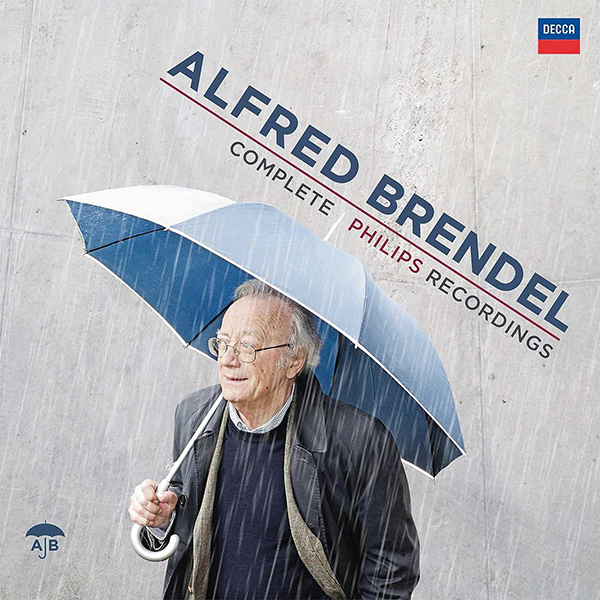
Brendel completists will already have the 114CD set of his Philips catalogue, which given its length is relatively circumscribed in terms of repertoire. A man’s gotta know his limitations, he might reply, and he left the ‘crocodile tears’ of Tchaikovsky and Rachmaninoff to others. The absence of a Well-Tempered Clavier is a particular loss to his legacy on record. Still, with sporadic excursions into later repertoire such as Schoenberg, Brendel found sufficient material for a lifetime’s active contemplation in the pianistic lineage from Haydn to Brahms and Liszt, and who can blame him for that?
Essential Recordings
Schubert: Impromptus (1972)
Philips 4208402
A model of songful poetry, his first recording of the Impromptus is more spontaneous-sounding than the digital-era remake.
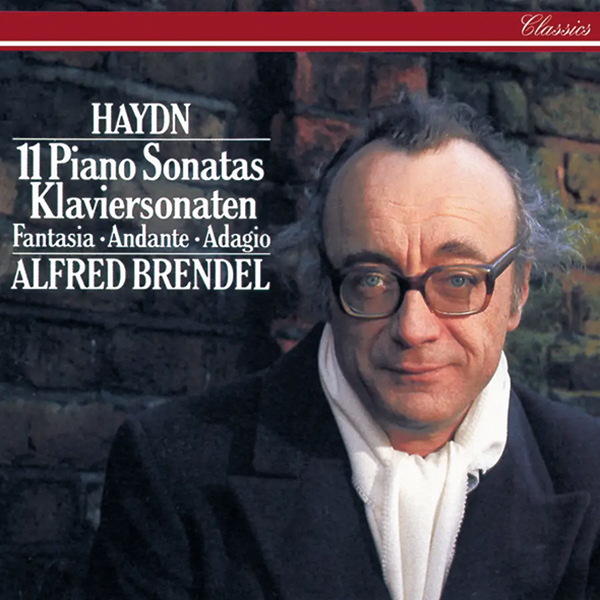
Haydn: Piano Sonatas (1979-84)
Philips 4166432
The best of Brendel in the studio, illuminating 11 sonatas and the Andante con Variazioni with countless happy turns of phrase.
Beethoven: Hammerklavier Sonata (1982)
Philips 4127232
A one-off concert from the Queen Elizabeth Hall in London, when the stars aligned and captured Brendel at his most incandescent.
Brahms: Piano Concerto No.2 (1991)
Philips 4329752
Leaner, more detailed and grainy than earlier versions, thanks to Abbado and the Berlin Philharmonic at their most responsive.
Schumann: Concerto, Fantasy (1997)
Philips 4623212
Puckish wit, heroic ardour, forensically detailed articulation and close rapport from Michael Sanderling and the Philharmonia.
The Farewell Concerts (2008)
Decca 4782116 (2CD)
Mozart with Mackerras in Vienna, and a Hamburg radio version of Schubert’s final sonata, no less fitting as a farewell.








 SPONSORED VIDEO






| Equipment Reviews |  |
Music Reviews Awards | |
Latest News Features | |
Resources Newsletters | |
Subscriptions |
WHERE TECHNOLOGY BECOMES ENTERTAINMENT
 © 2026 Hi-Fi News
AVTech Media Ltd
All rights reserved