Schumann Cello Concerto
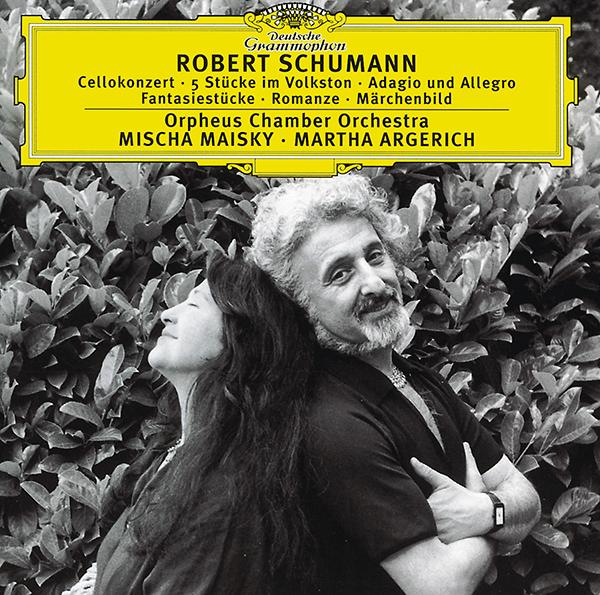
According to an eminent cellist (perhaps you can guess which one...), pianist Martha Argerich’s favourite concerto is this one – not any landmark piece of the piano literature, but the Cello Concerto which Robert Schumann wrote, in a typically inspired frenzy, during two weeks of October 1850.
My interviewee did not confide any reasons given for Argerich’s enthusiasm. We could speculate for ourselves that a piece so given to sudden flights of caprice as well as equally unpredictable descents into melancholic introspection might speak directly to a musician well known for those qualities in her own playing. As a teenage cellist, it was the concerto I most wanted to get my hands on. So much for that: the outer movements were way beyond me, and I had to content myself with playing through the central Langsam, imagining the principal of the BPO duetting with me…
Widow’s pique
Either way, recognition has been a long time in coming for the Cello Concerto. Why should that be? Having to wait until after Schumann’s death for its first performance in 1860 might be one answer, and his widow Clara never attached herself to it with the passion she invested in playing and promoting the composer’s earlier music. Instead, it was boxed up and sidelined as a product of his late and supposedly failing creative muse.
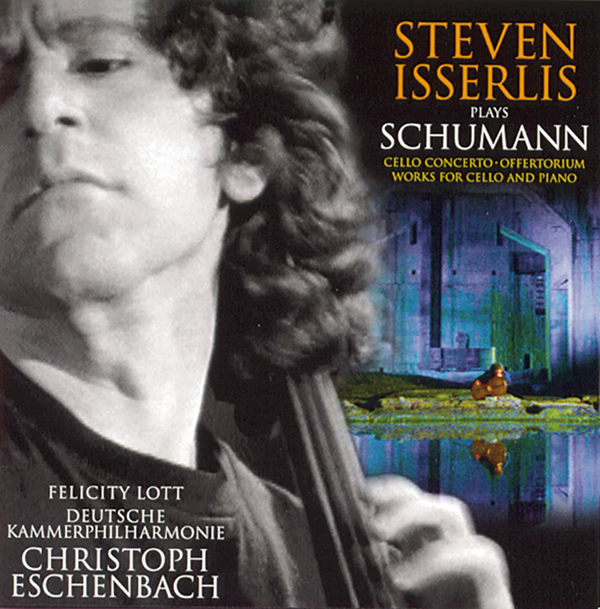
Above: On Sony/RCA’s 1997 release, British cellist Steven Isserlis brings his eloquent playing to a quintet of Schumann compositions
Even then, Schumann’s Concerto had no cellist version of Ferdinand David or Joseph Joachim to take it on. The notion of a ‘star cellist’ hardly existed until Pablo Casals in the 1890s. And as if in acknowledgment of this, Schumann titled the piece as a ‘Concertstück’ – concert piece – in the style of similar concerto-like pieces he had lately written for piano and for a quartet of horns.
This original version of the score has been re-edited and recorded by Josephine Knight, the details and differences minor but absorbing for anyone familiar with the piece.
Spirit of introspection
While the Concerto’s solo part bristles with challenges, as I found out for myself, it does not behave as a conventional vehicle for display. Rather, to deploy the standard demarcation of character in Schumann’s music according to his self-identified personality split, Eusebius prevails over Florestan, even in the long opening movement which occupies around half the Concerto’s overall length.
In turn, this spirit of introspection is both sensitively aligned with the nature and sound of the cello itself, and resistant to the kind of extrovert temperament which makes soloists out of musicians in the first place. While it’s true that Schumann himself transcribed the Cello Concerto for violin in 1853, apparently in the vain hope that Joachim would take it up, Anthony Marwood’s perfectly cultivated recording [Hyperion] only goes to show that hoisting the solo part up an octave compromises the very identity of the piece.
So, with equally sincere motives in mind, does Shostakovich’s wholesale reworking from 1963. This not only adds timpani rolls, harp twinkles and pizzicato punctuation, but rephrases the solo part in a way that responds more readily to a Rostropovich-friendly brand of cellistic heroism, and enables it to hold its own against steely, Soviet-era orchestral textures.
Alexander Ivashkin recorded Shostakovich’s arrangement for Chandos, whereas Rostropovich himself taped something closer to Schumann’s original version on several occasions. The most idiomatic of them is probably the first, led by Sir Malcolm Sargent [EMI/Warner]. It’s really not his piece, as you can tell from the lugubrious opening solo, though the finale is less laboured and four-square than in his later recordings.
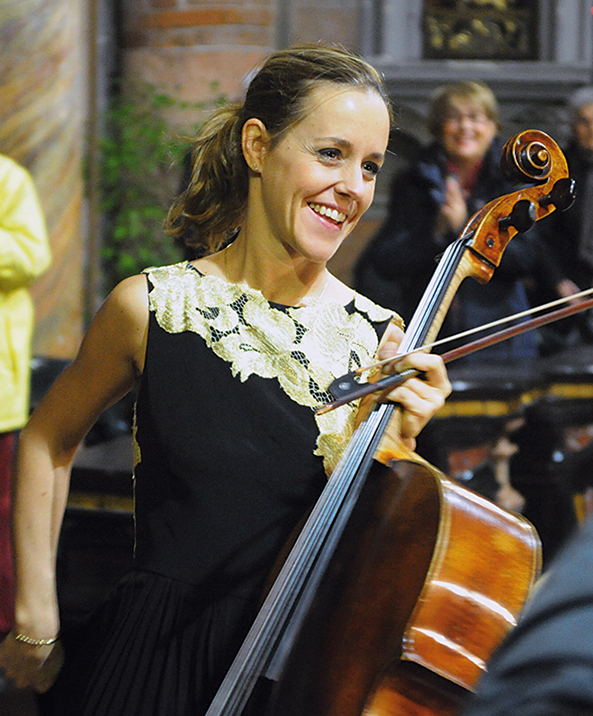
Above: Argentine cellist Sol Gabetta recorded the Cello Concerto, with the Basel Chamber Orchestra, for Sony Music’s Schumann release in 2018
Somewhat predictably, if controversially in the eyes of those for whom the English cellist could do no wrong, Jacqueline du Pré is equally miscast on EMI/Warner’s 1968 recording. The soaring, pleading tone, the massive rhetorical flourishes, the linger over this note and that accent in almost every phrase... it’s all so extra.
Hitting the mark
Orchestral and concerto approaches to Schumann have undergone a sea-change in the last half-century. Much more than before, they breathe and pause and surge with the flexible line and phrasing of solo pianists and singers. Alfred Cortot and Argerich herself, Elisabeth Schumann and Christian Gerhaher: these are the models I have in mind for a cellist to hit the mark in the Concerto.
In the opening phrases, the vulnerability of this music is written into its rise and fall, its pauses for thought and quizzical hesitations before a sudden mustering of courage. Or so it becomes clear in the hands of Steven Isserlis and Sol Gabetta.
All of which isn’t to discard any pre-1980 recording. Paul Tortelier channels (or curbs) his inner Don Quixote admirably [EMI/Warner], but does stretch the finale out of shape with his own lengthy and self-indulgent cadenza. Gregor Piatigorsky, a frequent partner of Cortot in chamber music, brings a wonderfully playful spirit of fantasy to the finale (accompanied by Sir John Barbirolli, also on EMI/Warner). The drawbacks are the boxy mono sound and the cellist’s unnecessary tweaks to his part for added ‘effect’. Schumann really did know best.
Pierre Fournier is more faithful in this sense, but his projection is too even-tempered on his several recordings. It takes the conducting of Hans Rosbaud [SWR-Classic] to draw out more variation of timbre and gesture. More ‘modern’ in this sense is another ‘aristocrat of the cello’, Leonard Rose, whose CBS recording with Leonard Bernstein stands as both a testament to his elegant musicianship and as a solid analogue-era recommendation.
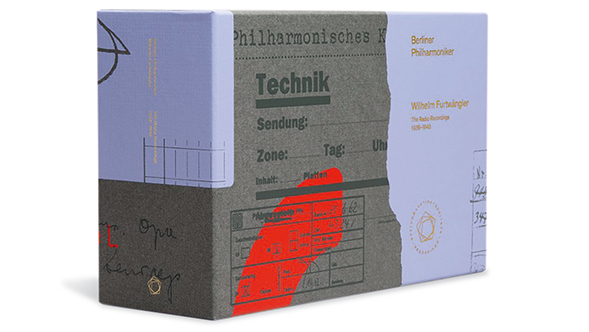
Above: Spanning 22 SACDs, the BPO’s Furtwängler set covers Schumann, Handel, Brahms, Schubert and many more
Then there’s the nervous intensity of Tibor de Machula, whose searing legato and drive through the finale (wolf notes and all) belong inevitably to their time and place: Berlin, 1942, in one of those priceless mid-war Furtwängler concerts.
In the end, however, it is modern and essentially songful interpretations which feel most true to the spirit of the Cello Concerto. The period-instrument set-up for Jean-Guihen Queyras [Harmonia Mundi] is illuminating, but more germane is the chamber-style rapport between soloist and orchestra. The sense of give and take is also what sets apart Gabetta and Isserlis, with their chamber-orchestral accompaniments.
All three of these dance their way through the finale, making a mockery of the critics who found it heavy-going and repetitious. We can now celebrate Schumann at his most instrumentally inspired, recovering the sensitivity to mood and melancholy which makes him a pivotal figure of the Romantic age.
Essential Recordings
Sol Gabetta, Basel Chamber Orch/Antonini
Sony 88985352272
A balance heavily favouring the soloist, but otherwise an inspired performance, set in the context of Schumann’s other cello music.
Steven Isserlis, Deutsche KP/Eschenbach
RCA/Sony 090266880027
No one has done more than Isserlis to revise and update our understanding of Schumann, and his playing is as eloquent as his prose.
Mischa Maisky
DG 4196042 or 4695242
Maisky’s unique and generous tone shines, whether led by Bernstein or in company with the Orpheus Chamber Orchestra.
Leonard Rose, NYPO/Bernstein
CBS/Sony G0100039065943
Not so easy to find on CD, but this 1960 recording doesn’t suffer from the boxy sound of later CBS/New York Philharmonic albums.
Tibor de Machula, BPO/Furtwängler
Berliner Philharmoniker BPHR180182
Presence and clarity abound in this unmissable 22-disc SACD box set of the conductor’s wartime concerts.
Josephine Knight, Royal Northern Sinfonia
Dutton CDLX7371
Knight and conductor Martin Yates’s ‘world premiere recording’ of Schumann’s original ‘Concertstück’ sparkles on Dutton’s SACD.








 SPONSORED VIDEO






| Equipment Reviews |  |
Music Reviews Awards | |
Latest News Features | |
Resources Newsletters | |
Subscriptions |
WHERE TECHNOLOGY BECOMES ENTERTAINMENT
 © 2026 Hi-Fi News
AVTech Media Ltd
All rights reserved