London Decca Reference II cartridge
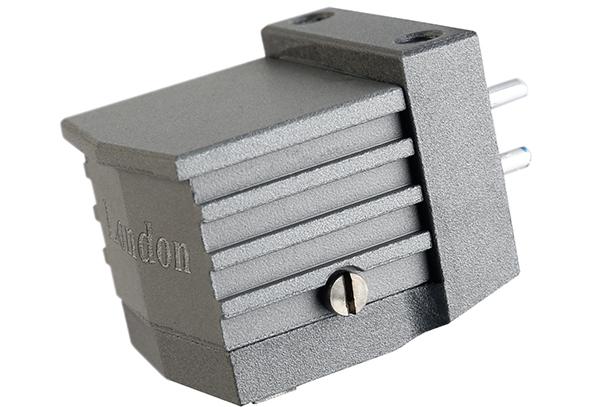

For a Decca worshipper of 47 years, its return via the London Decca Reference Type II (£7702) is miraculous. Reviving these oddball cartridges has involved a tortuous learning curve as the last generation of craftsmen transferred the ‘technology’ to the firm’s new owners. Even securing the name required negotiation, as the Decca record label has also recently returned.
This new model is a direct descendant of Decca’s original 1950s mono cartridges, which were revamped for stereo replay toward the end of that decade. Standing for ‘Full Frequency Stereo Sound’, those early ‘ffss’ cartridges were huge lumps that worked best in Decca’s dedicated unipivot arms.
Positive thinking
Appearing in the mid-’60s, the Mk IV with its elliptical stylus [HFN Dec ’68] would lower the cartridge bodyweight as well as its recommended tracking force. Crucially for commercial viability, it also provided universal spacing for two screws so it could fit easily into any tonearm or headshell.
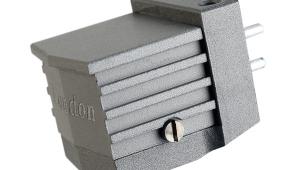
Around 1974, the familiar Decca pointy ‘tin can’ body arrived, with flimsy red plastic bracket – an element the later Jubilee cartridge [HFN Dec ’79] eliminated. Inside was the original Decca ‘positive scanning’ design [see boxout] with unique ‘upside-down L-shaped’ cantilever, or ‘stylus carrier’ as it is otherwise known.
As with its predecessors (including the still much-adored C4E models) born to play mono 78s but which evolved into the era of stereo microgroove LPs, the 1970s-onward London cartridges were offered with a variety of styli, denoted by body colour. They included the spherical styli Blue (and Grey for export), the improved Maroon (mono and stereo), and the elliptical stylus Gold, the last with a tracking force of just 1.8g. The Super Gold [HFN Jul ’86] followed with modified body and Van den Hul stylus.
Unexpectedly, a Decca cult arose. Devotees were inspired by the American ‘underground’ press, one writer advising readers that ‘those bitten by the Decca bug needed three cartridges: one in the arm, one spare and one in for repair’.
It was, from the outset, an ornery beast. Prone to hum, the London pick-ups were fitted with three pins rather than four – which didn’t help setup – and allegedly suffered inconsistency from sample to sample. Even as Decca was losing interest in manufacturing audio components, a market remained among those who adored a sound available from no other cartridge. And it was during this period that the London models became the subject of customisation from various specialists. Those tweaked by the late Garrott Brothers [HFN Apr/Dec ’84 & Jan ’85] remain much sought-after and near-mythical.
When manufacturing ceased in the 1980s, Decca engineer John Wright came to an agreement with Racal, Decca’s then-owner, to carry on producing and servicing the cartridges. At that time, global distribution was handled by the late Brian Smith of Presence Audio. The agreement with Decca expired in the early 1990s, Wright continuing under the London brand name, sans ‘Decca’, and introducing various refinements over the years.
Changing hands
In 1992, the Wright-designed London Jubilee was introduced [HFN Oct ’92]. The first Decca with an aluminium body, it used a line-contact stylus. In 2008, Wright launched the London Reference cartridge, an upgrade of the Jubilee, with a Paratrace stylus from the UK’s Expert Stylus Co.
By 2023, it was time for Wright to retire. Andy Whittle of Rogers and Audio Note had contacted Wright about servicing his Super Gold cartridge [HFN Apr ’01]. When he learned of Wright’s retirement, a deal was agreed to take over the business. Wright taught Whittle everything needed to continue production and servicing.
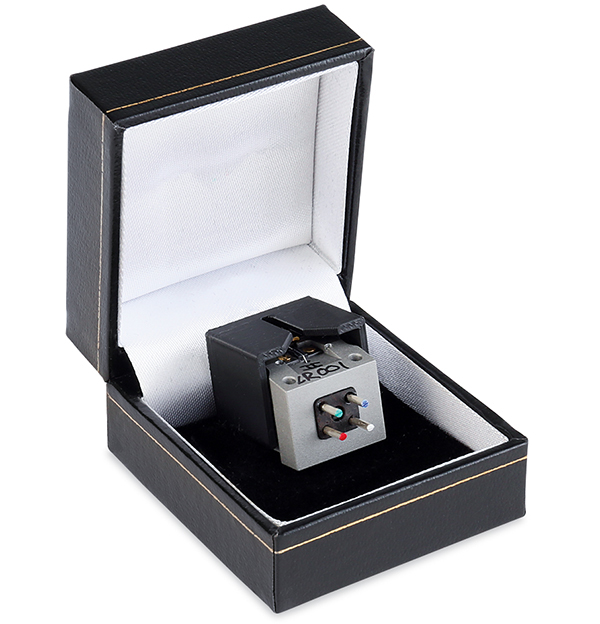
Operating under the registered name of ‘London Decca’, the new company has sales and marketing undertaken in the US by Stewart Suda, with Whittle overseeing manufacturing and servicing in the UK. Other models at lower price points will continue, with a dedicated phono amp and ‘luxury finish’ variants of the Reference Type II planned as well.
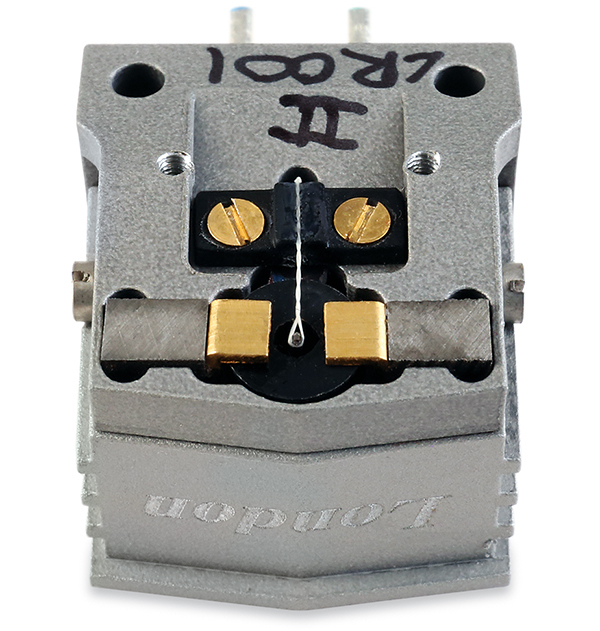
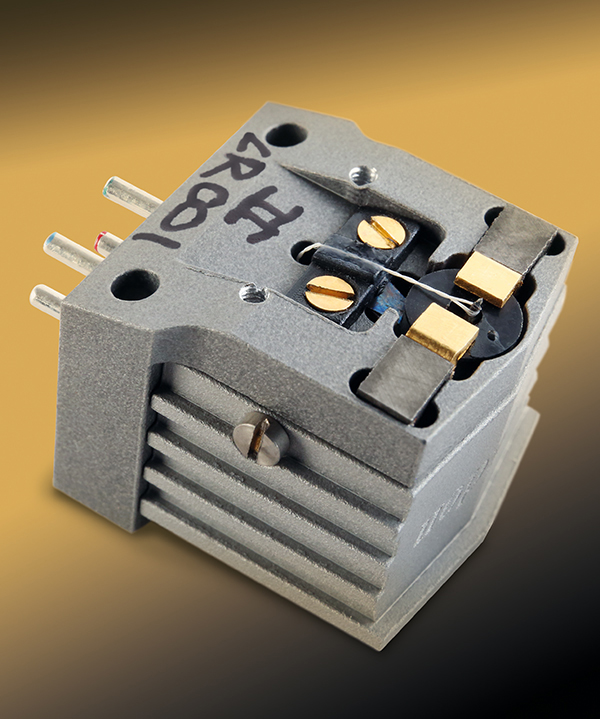
In his quest for specific improvements over the Mk I, Whittle has changed the stylus carrier from the hard-sprung steel to a thicker soft iron to improve vertical compliance and tracking ability [see PM's Lab Report]. Says Whittle, ‘Soft iron has a different permeability and gives a more natural sound, piano has more structure, sax more air’.
Also affecting replay performance is the change from powerful samarium cobalt magnets to AlNiCo 5, the latter yielding a lower output but a more linear ‘magnetic circuit’. The original mild steel lateral poles, now gold-plated, are changed to ‘radio metal 4550’ for the same reason.
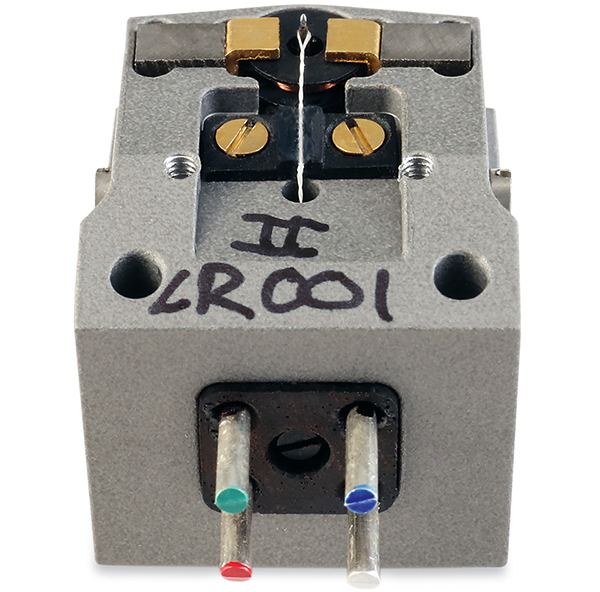
Completing the Type II’s structure, the four colour-coded terminal pins are solid 99.99% silver while all connections are made with silver solder. The rear terminal block is now fashioned from African hardwood to help damp any residual body resonances while its installation is now as easy as fitting any conventional MC or MM cartridge to your headshell of choice.
 London calling
Never without a Decca cartridge fitted to one of my turntables, I was able to do side-by-side comparisons, new versus old, if not Mk I vs Type II. I can tell you from the get-go that lower hum has been achieved over my older models and loading seems not so critical – I used the recommended 36kohm/270pF, but even a fixed 47kohm input sounded fine.
While getting to grips with the Reference Type II’s scope, I tried a series of mono LPs to avoid the need to deal with soundstage and imaging, focusing on detail, tonal quality and other non-spatial aspects. I wanted to hear if the new model had achieved rock-solid central imaging even if the mono button wasn’t pushed.
Would the Reference Type II herald an era when Decca users could eschew balance controls? Out burst The Butterfield Blues Band’s East-West [Mobile Fidelity MFSL 1-611] dead centre. And while I was taken by perfectly positioned sound, more remarkable was hearing how the cartridge separated Mike Bloomfield’s slide guitar from Paul Butterfield’s harmonica as they overlapped on ‘Walking Blues’.
Get a grip
Like a blast from my own hi-fi past, the absolute precision and clarity of Bloomfield’s lead guitar recalled how it was one of the instruments which made Decca Golds so riveting and so appealing. This Type II exhibited speed and attack such as I have never heard from any other cartridge, regardless of the type. For my money, there is nothing – nothing! – to approach a London Decca for its grip over transient detail.
Channel separation is not exceptional [see PM's Lab Report], but this does not seem to adversely impact the Type II’s soundstaging. A stereo album of undeniable greatness – Miles Davis’ Sketches Of Spain from 1960 [Mobile Fidelity One-Step UD1S 1038] – rewarded me with a dazzling picture so wide and convincing that I sighed with relief.
Right on track
Seemingly, this Reference Type II wilfully contradicts the numbers. Then again, Decca carts have always been wilful and contradictory. Possibly ensuring that I was hearing all that the grooves held, however, was how it tracked like a Shure cartridge from 1980 – quite unbelievable when those who decry Decca models do so by pointing to dubious groove security.
So lifelike is the sound of the Reference Type II, which proves to be a quieter, more refined take on the best of the Golds, that the castanets from Sketches Of Spain arrived from the lefthand speaker with a veracity that forced a double take. I had to start the LP again, just to confirm what I thought I had heard.
Castanets are, admittedly, hardly a test for almost anything beyond transient attack so it was more revealing to hear into the elegiac trumpet of Davis. All I could think of was how this cartridge was undermining every single myth attributed to Decca models in general. I had to turn to a Gold just to hear if the new Reference even sounded like a Decca. It did...
What happened next reassured me that even the earlier models barely deserved the criticisms that detractors applied to them. But if any quality makes this new Decca cart peerless, beyond speed and/or attack, it is the sense of space it creates. Not a trace of sibilance nor treble excess contaminated the LP I chose for both vocal purity and applause – the latter often sounding like Rice Krispies after the milk has been poured. Alison Krauss & Union Station’s Live album [Rounder CR00933] possesses all of the qualities of a well-recorded concert, and the Reference Type II respected it with a cavernous stage and real-sounding applause.
Free and full
Krauss’ voice enjoyed the clarity and liquidity which makes her irresistible. The cover of ‘Baby, Now That I’ve Found You’ managed to evoke intimacy despite it being a live rendition, while her violin was free of screech and full of texture.
Good grief! At times, the Reference Type II sounded like the offspring of a Garrott Decca Gold and the original Dynavector Karat Diamond [HFN Nov ’80], with the tiniest cantilever in history (which suggests the latter had more in common with Decca pick-ups than not). I was not being hyperbolic upon describing the return of London Decca as ‘miraculous’.
Hi-Fi News Verdict
To discover the London Decca Reference Type II exceeded all expectations was life-affirming. All those years proselytising for the oddest cartridges on earth? The Reference Type II joins a select group which forms my personal choice for both reviewing and listening pleasure, so life-like, authentic and gratifying is the sound. Come my Lotto win, this will precede the Bugatti. Miraculous? No: try ‘magnificent’.Sound Quality: 89%
 | |||||||||||

|
|
| |||||||||








 SPONSORED VIDEO






| Equipment Reviews | |
Music Reviews Awards | |
Latest News Features | |
Resources Newsletters | |
Subscriptions |
WHERE TECHNOLOGY BECOMES ENTERTAINMENT
 © 2026 Hi-Fi News
AVTech Media Ltd
All rights reserved