A year to remember
Christopher Breunig recalls more of the music that made an impact during 1956 – a year when 78rpm discs had given way to the 12in or 10in mono long-playing records soon to yield to stereo
With its 1949 recording of Stravinsky’s Petrushka, made in the Geneva concert hall with the Suisse Romande Orchestra under Ernest Ansermet (and last reissued in the fine six-disc box set The Birth Of High Fidelity), Decca set a high bar for recorded sound on LP.
Jumping forward to 1956, one LP – its release coinciding with the first publication date of Hi-Fi News – set new expectations of its interpreter. This was Beethoven’s Symphony No 3 on Columbia [33CX1346], now remastered at 192kHz/24-bit by Warner Classics.
A different approach
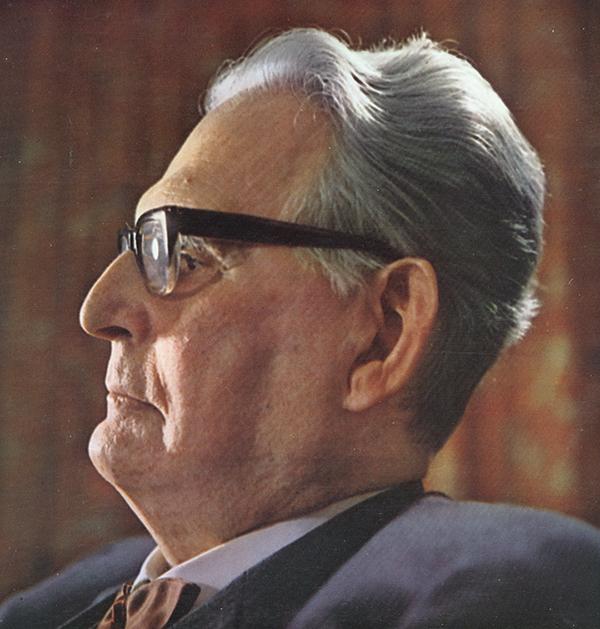
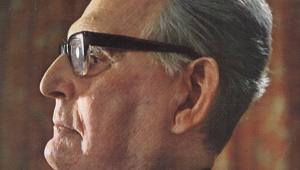
This was Otto Klemperer [pictured above], whom HMV label impresario Walter Legge had first recorded in two Mozart Symphonies, in late 1954, with his Philharmonia Orchestra. The next year saw the completion of Beethoven symphony recordings by the Philharmonia under Herbert von Karajan, including a Ninth done in Vienna where stereo duplicate tapes were later found and issued. Legge himself was not persuaded by stereo, but often his engineers would work as two separate teams.
By the end of 1956 we also had the Fifth and Seventh Symphonies, recorded together with No 3 by Klemperer at Kingsway Hall in sessions dated October/December 1955. So what expectations had he prompted? Well, his gruff manner, weight and sobriety just seemed – after Toscanini – more authoritative. But for Legge, when it came to the Pastoral the slow tempo for the scherzo was just too sober. ‘You’ll get used to it’, was the retort. The cycle was completed in 1957 when the Philharmonia Chorus made its debut.
‘A fiery compulsive little Austrian’ was how the Sackville-West/Shawe-Taylor Record Guide (authoritative forerunner to all those Penguins) saw Mahler in the 1950s, whose music was not particularly well represented in our anniversary year. Bruno Walter’s Das Lied Von Der Erde was in the Decca catalogue of course, and other recordings he made with Kathleen Ferrier, but his Mahler 4/5 shellacs with the New York Philharmonic had yet to be transferred to vinyl. The symphony cycles, Haitink and Bernstein neck and neck, then Kubelík and Solti, were still on the horizon and all in stereo.
Yet there was one very lovely 10in LP issued in ’56, and that was Mahler’s Kindertotenlieder song-cycle with Dietrich Fischer-Dieskau, Rudolf Kempe accompanying. We also had their very fine Brahms Requiem, with soprano Elisabeth Grümmer and the St Hedwig’s Cathedral Choir [now Naxos 8111300 and 8111342]. I have a rather soft spot for DG’s Beethoven Missa Solemnis under Karl Böhm, not well received when issued in June ’56 but having that illustrious St Hedwig’s Choir – soloists were Maria Stader, Marianna Radev, Anton Dermota and Joseph Greindl [now on two Presto CDs and as a 44.1kHz/16-bit download].
Highlights and oddities
Ferenc Fricsay’s Bartók Concerto For Orchestra and MSPC had yet to appear but we did have his Stravinsky Le Sacre Du Printemps newly out [now a Presto CD: DG 4454052]. Paul Hindemith conducting his Harmonie Der Welt was issued in June by DG. December brought Mravinsky’s Tchaikovsky Symphony No.5 with the Leningrad Philharmonic, a foretaste of the stereo Nos 4-6 which would become a library essential.
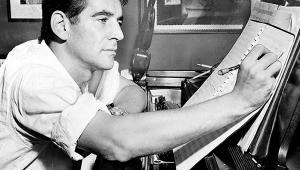
Carlo Maria Giulini’s first EMI recording, made in 1955 and issued in September 1956, was Vivaldi’s Four Seasons with Philharmonia leader Manoug Parikian – an atypical repertoire choice. And Leonard Bernstein? The Gramophone catalogues suggest his name would not appear for another four years: works by Gershwin and Shostakovich issued on the Philips label.









 SPONSORED VIDEO






| Equipment Reviews |  |
Music Reviews Awards | |
Latest News Features | |
Resources Newsletters | |
Subscriptions |
WHERE TECHNOLOGY BECOMES ENTERTAINMENT
 © 2026 Hi-Fi News
AVTech Media Ltd
All rights reserved