Micromega Stage 2 CD player


Although at the time of writing Micromega seems not to be available in the UK, it was once a well-known ambassador for French hi-fi, its CD players and DACs having a strong following in the 1990s. Micromega had a similar strategy to Meridian and others with its early models, utilising standard Philips parts and assemblies before making detail improvements – a popular approach with audiophiles looking for something more esoteric than the mainstream offerings.
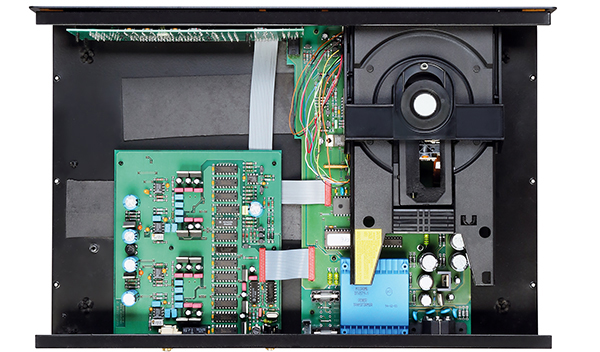
Models including the CDF1 transport [HFN May ’89] were heavily based on Philips chassis, such as the CD450 [HFN Aug ’14]. This generation of Micromega players used the Philips swing-arm mechanism but when this was superseded a new design was required. The Concept Series, of which the Stage 2 was a part, appeared in 1994 and was based on a new generation of Philips components, including the CDM12.4 transport with its linear sled, and the TDA1305 hybrid/bitstream DAC.
Setting the stage
There were five models in the original range, divided into two strands: Stage and Drive. Stage 1, 2 and 3 [HFN Nov ’94] were complete CD players with built-in DACs. The basic offering was the Stage 1, which used a single TDA1305 chip working in the conventional manner. The Stage 2 used two TDA1305s working in differential mode, reducing common-mode noise and distortion [see PM's Lab Report]. The Stage 3 was essentially the same machine but with separate PSUs for each channel. As the name implied, the players could be upgraded, by a Micromega dealer, from one ‘Stage’ to the next. When this was done the number in the display on the front was updated.
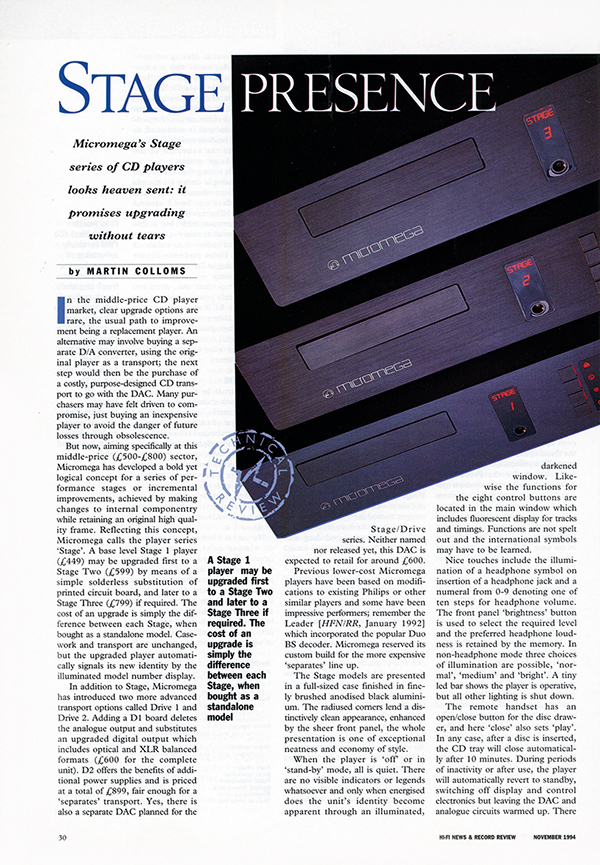
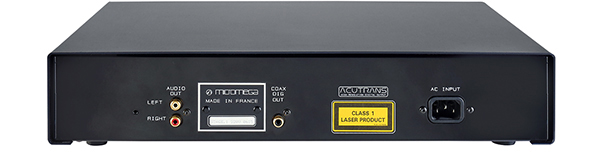
The Drive models were CD transports. Once again, the basic Drive 1 offered coaxial, AES/EBU and optical digital outputs and the Drive 2 offered the same but used a more complex digital buffer circuit with its own power supply. The matching Micromega DACs were the DAC 1 and DAC 2, the possible combinations giving a wide choice to the buyer. A range of tuners and amplifiers was also available to create a full stack of matching equipment.
Hit and hope
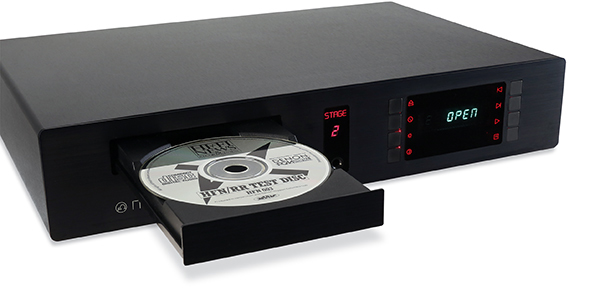
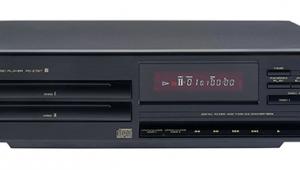
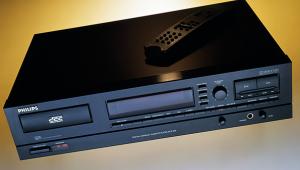
If you’ve ever driven an old French car then the quirky ergonomics of that same nation’s Micromega Stage 2 will be familiar. For example, there’s no power switch to turn the player on – to get it going you have to press one of the other keys (none of which are illuminated or have their legends visible at this point). It’s quite literally a stab in the dark!
Later versions were modified to comply with European regulations that required indication that AC power was still applied during standby – here the ‘Stage 2’ legend was permanently lit. All the Stages revert to standby after ten minutes but, in practice, there’s little difference in power consumption. With no proper mains switch, I’d strongly recommend unplugging the unit when it’s not in use. This was rectified in the later Concept models – Stage 4, 5 and 6 [HFN Sep ’96].
Once you have the Stage 2 powered up, the next hurdle comes in interpreting Micromega’s rather ‘novel’ graphic symbols. There are no written labels (not even in French) so you end up having to work out what each key does by trial and error. An amusing feature is the ability to play at double speed, to allow rapid transcription to cassette using a double speed recorder. Micromega claimed these were commonplace but I know of very few.
Philips, by contrast, firmly blocked any attempts to ruin the cassette’s universal compatibility with such devices even though the double speed option was part of its own TDA1305 DAC chip. Again, later Stages were modified, the function being deleted and the button repurposed to mute the S/PDIF digital output.
A final head scratcher involves the headphone socket. In use, this changes the display to show headphone volume level (0 to 9), and the level itself is set by pressing the display illumination key (normally used to choose between two brightness settings or a dark panel). With headphones connected a short press raises the level and a long press counts it back down. None of this is labelled or even hinted at.
Users should also be aware that the headphone level control also affects the main RCA line outputs to your partnering amplifier, but only when headphones are plugged in. This brings about the possibility of leaving headphones plugged into the Stage 2, switching on the main amplifier and adjusting the volume to a comfortable level, and then being suddenly deafened when the headphones are unplugged.
The in-house Micromega control/transport software works quite well but there are a few bugs. Pressing ‘skip back’ while playing Track 1 results in ‘err’ (error) being displayed for quite a long time, during which there is no sound. To replay a track from the beginning one must press Play (the same as on early Philips players) but, again, this is not labelled anywhere. The muting during track skips is not completely effective either.
Why wait?
Later versions of Micromega’s Stages included a two-minute delay after the connection of mains power before the machine could be used, this being indicated by the Stage light flashing. This was to give the internal voltage regulators (of which there are many) some time to stabilise, although why playback had to be blocked during this phase is unclear.
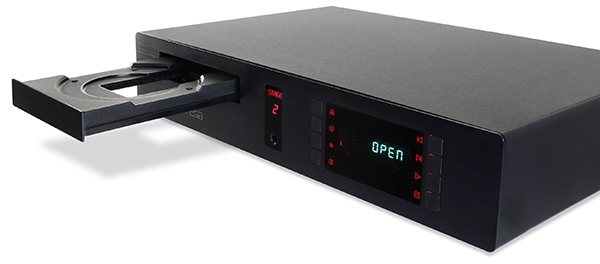
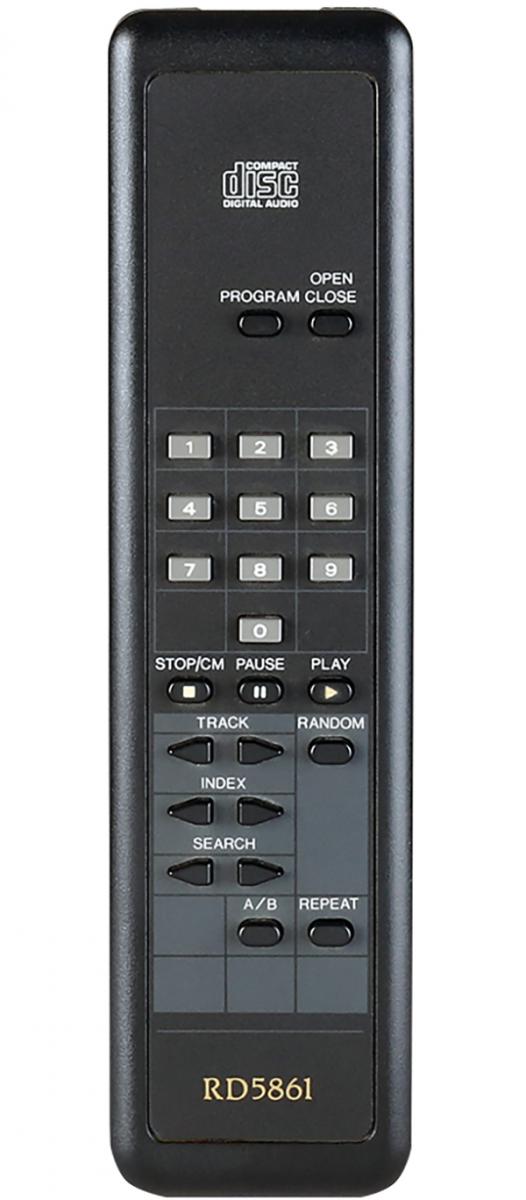
Otherwise the machine is at least well styled and quite well finished. The fascia and the bonnet, in black anodised alloy, look sleek and expensive. The generic plastic Philips remote control [p133] that comes with the player spoils the effect a little, but you can’t have everything. The drawer is also made of flimsy, bendy plastic but CDs are still loaded swiftly and the TOC is read within a couple of seconds.
 Tim listens
I have something of a love/hate relationship with Micromega CD players. Ownership is not without its frustrations but when they are up and running, they do sound good. It should come as no surprise that the Stage 2 has a characteristically ‘Philips’ sound, given its use of a Philips transport and DAC ICs. There are differences though, some of which are quite beneficial. The Stage 2 is a leaner and less overtly luxurious performer than the early, richer-sounding Philips units. Some recordings are revealed with a less congested mix as a result, although importantly the fluid and ‘musical’ nature of the better Philips hardware is still there.
What I had heard as the grey, lifeless sound of some of the early PWM bitstream players has been avoided, although, and despite its sophistication, the Stage 2 can’t match a really well-resolved 16-bit player like Marantz’s CD-94 [HFN Dec ’25] or a Philips CD960 [HFN Jul ’20]. For those who find the sound of CDs too hard, cold and mechanical the Stage 2 could prove to be a real tonic, for it is none of those things. It is just the ticket for a long evening of relaxed listening.
Micromega, via its website, now refers to itself as ‘Le Son de France’ (the sound of France) so what better way to hear the Stage 2 than with Claude Debussy’s ‘La Mer’? The recording I chose was played by the Berliner Philharmoniker in 1965 [Deutsche Grammophon 447-426-2], mastered using DG’s Original Image Bit Processing technique. While the Stage 2 does not give the vivid impression of listening from a front row seat, the performance was still dynamic and full of contrasts.
The mechanically silent Philips drive is really appreciated with a recording like this, for there is nothing quite like a clattering mechanism (for any format) to ruin the realism of a performance at home. The orchestra as a whole sounded rich and full-toned, although a little more sheen to the brass would have been nice. Even at a realistic concert volume, the sound remained smooth and well controlled.
Grace and flavour
The Stage 2’s differential DAC circuit is successful in creating a good sense of space, although the ability to exactly pinpoint the position of individual performers wasn’t quite as predictable as I’ve heard from other players. That said, the heavy basslines in ‘I’ve Seen That Face Before’ by Grace Jones [Nightclubbing; Island IMCD 17] were given the weight they require – my impression is that many CD players can sound a little too lean here.
Arguably, percussion might benefit from a little more sparkle as the Stage 2’s treble gives the (subjective) impression of being rolled off a fraction early. Vocal centre presence could be better too, despite Micromega’s ‘true time aligned differential mode’ DAC. These criticisms aside, I really like the way that the Stage 2 sounds. Small points of order are soon forgotten after the first few CDs are spun and enjoyed. The word I kept coming back to was ‘refinement’ – that’s what the Stage 2 is all about.
I’d love to see and hear the brand’s complete Concept Series system, although I suspect this might be a tall order outside France. Still, the Stage 2 is a very agreeable-sounding player – not as forensic as some but able to provide a realistic and satisfying musical experience. The various operational quirks are harder to live with, though – the Stage players could benefit from some Japanese logic, production engineering and attention to detail!
Buying secondhand
Seasoned audiophiles remember these Micromega models not only for their fine sound quality but also for concerns expressed by some at the time about long-term reliability. The precise reasons for this perception are unclear, especially as the components were broadly similar to those used in other Philips-based machines. Discussions on enthusiast forums indicate that reported faults may have affected some owners’ experiences of the Stage players, although the continued presence of working examples suggests that many units have proven durable over time.
The CDM12.4 laser was never especially long-lived (even Philips’ own designs), and although replacements are once again available they are mostly pattern copies varying greatly in quality. It may be necessary to buy several in order to find one which is completely satisfactory. Fitting a new optical block to the existing motor unit is an option but it is fiddly and prone to problems with tolerances. It is better to spend a little more and replace the complete transport.
The loading belt and gears are another weak point of the design, but they are at least easy to replace. More in-depth fault finding is difficult since Micromega did not make circuit diagrams available, but the modular nature of the construction means that swapping parts from a scrap donor machine is quick and straightforward – this is often the best approach to take.
 | |||||||||||

|
|
| |||||||||









 SPONSORED VIDEO






| Equipment Reviews | |
Music Reviews Awards | |
Latest News Features | |
Resources Newsletters | |
Subscriptions |
WHERE TECHNOLOGY BECOMES ENTERTAINMENT
 © 2026 Hi-Fi News
AVTech Media Ltd
All rights reserved