Elgar Symphony No.2
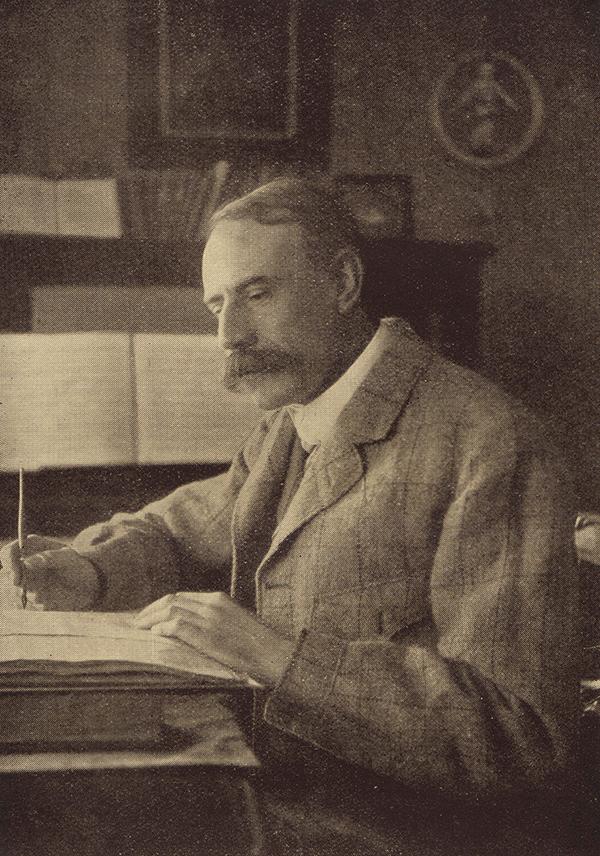
Elgar poured heart and soul into the Second, says Peter Quantrill, plus the technique to produce a creative summation that brings out the best in its interpreters on record
Several points of entry present themselves to Edward Elgar’s most complex work. We could start with the Violin Concerto, which won immediate acclaim at its premiere in November 1910, ushering in a new and more intricate, more introspective idiom in the composer’s evolving style.
Ever sensitive to both acclaim and criticism, Elgar then tapped a fresh vein of creative energy. Over the next two months, working at a furious rate, he returned to sketches made back in 1903-4, some of them conceived for a sequel to the Cockaigne Overture, under the working title of ‘City Of Dread Night’. By March 1911, the Second Symphony was complete.
‘I have written out my soul in the concerto, Sym II and the Ode and you know it... in these three works I have shewn myself.’ So he wrote to Alice Stuart-Wortley, his long-term friend/confidante/object of fruitfully frustrated infatuation. The composer even sent her sketches for what he termed ‘your symphony’.
In memoria
In counterpoint with the symphony’s life-force, set out in its leaping first theme, is the dedication ‘to the Memory of His late Majesty King Edward VII’. While the Larghetto slow movement stands as a noble elegy in the tradition of the Eroica’s funeral march, the musical idea for it came to Elgar after the death of his friend Alfred Rodewald in 1903.
Further complicating – or enriching – an understanding of Elgar’s Second is the inscription at the head of the score, taken from Shelley: ‘Rarely, rarely comest thou, Spirit of Delight’. Does the piece embody that spirit, or the repining for its absence? Shelley continues: ‘Wherefore hast thou left me now / Many a day and night? / Many a weary night and day / ’tis since thou art fled away’.

As for the score itself, just reading it is a white-knuckle ride. The first and third movements in particular move at a phenomenal pace of thought, making the likes of Mahler’s Fifth and Strauss’s Ein Heldenleben look at points like a Haydn symphony. To play it, especially for the strings, is a test of technique and concentration up there with Schoenberg’s Pelleas and Debussy’s Jeux. Perhaps no wonder that the audience at the premiere failed to satisfy the touchy composer in their muted enthusiasm.
Elgar had been an orchestral second violinist himself, an experience which seems to have led him to overwrite his scores with every last dot and comma of expressive punctuation. He meant well, but the scores do not always help interpreters who want to fulfil his ultimate desire, which was that his music be played ‘elastically and mystically and not squarely’.
London calling
Thus the composer’s own recordings of the Second Symphony present insights into how he heard it in his mind’s ear. Or they would do, if the limitations of 1920s recording technology did not leave so much of the glittering orchestration to our imaginations. The violinist Lionel Bentley recalled playing under Elgar in the LSO: ‘When we played his works he was wonderful and the orchestra rose to the occasion, not because he was a particularly marvellous conductor but simply because he was Elgar’.
British orchestras, London ones especially, have the field largely to themselves in the piece on record, if only because they know their way around it. Thus there are very few outright duds in the discography. One of them, notoriously so, is a surgically patient dissection by Giuseppe Sinopoli [Deutsche Grammophon], from his ill-starred tenure with the Philharmonia. Bernard Haitink, Mark Elder, Colin Davis and Jeffrey Tate are all more successful at stretching the envelope of phrasing, but they all suffer from an excess of nobilmente.
At the other interpretative extreme from Sinopoli is John Barbirolli. Every phrase is alive and trenchant, especially in his earlier mono version from 1952 [Beulah], but too often sketchy in execution (for me), especially when set beside his contemporary Adrian Boult.
The singularly successful outlier to ‘English Elgar’ is Kirill Petrenko’s debut with the Berlin Philharmonic, available to stream on the orchestra’s Digital Concert Hall. No one else since the composer has been able to make sense of the piece at his often headlong speeds, and yet infuse it with such direct and ardent expression.
‘Wandering thro’
From Boult onwards, almost every chief conductor of the BBCSO has made the piece their own, including the American Leonard Slatkin, in an incandescent recording not currently available on CD but worth tracking down. While Finnish, Sakari Oramo (the orchestra’s current chief) can be counted an honorary Englishman in this repertoire, and his Stockholm recording sometimes views the symphony from side on, as the contemporary to the pieces of Debussy and Mahler cited above.
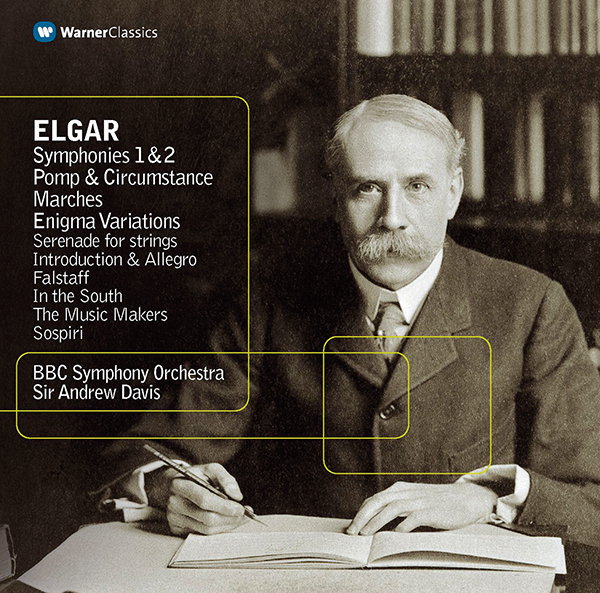
Not everything in Andrew Davis’s first version, cited in our list of Essential Recordings [right], comes together, but it still scores over the boxily recorded remake, live with the Philharmonia in 2007 [Signum Classics]. Where Davis stands above most of his colleagues is in the colouring of the mystical episode at the heart of the first movement’s development section: ‘a sort of malign influence wandering thro’ the summer night in the garden’, in the composer’s words.
There are shades here of Klingsor’s realm from Parsifal, both in word and sound, and it returns to dominate the climax of the third-movement Rondo (the climax of the whole symphony, really) in a terrifying ostinato. Elgar compared this nightmare vision to some words from Tennyson’s poem Maud, the words of a dead man cast into a shallow grave beneath a roadway: ‘And the hoofs of the horses beat, beat, The hoofs of the horses beat, Beat into my scalp and my brain’.
Clarity and drive
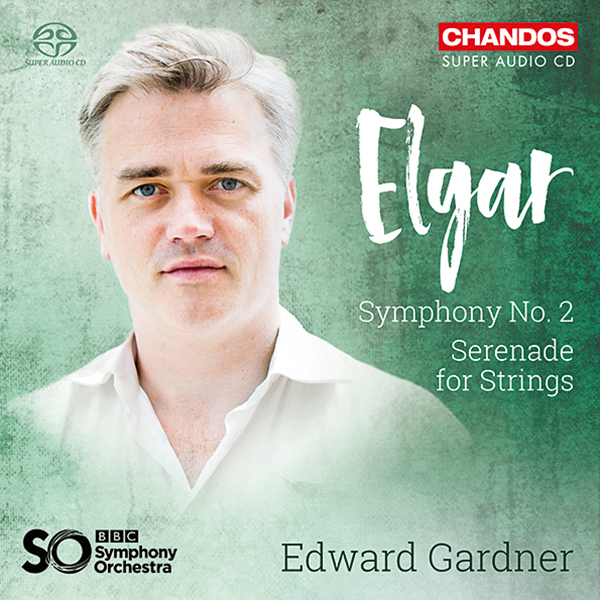
So much for the much-vaunted ‘Spirit Of Delight’ – but Davis also lends satisfying, symphonic coherence to the tricky finale. Elgar’s friend Rosa Burley recalled the composer improvising the finale’s first theme while at an Italian holiday home in 1903, and it can sound rather ordinary unless the conductor brings out all its hidden Brahmsian qualities of instability. Again with the BBCSO, Edward Gardner is second to none here.
Given my recent Classical Companion on Sir Charles Mackerras [HFN Jul ’25], my enthusiasm for his Argo version may be predictable. But the conductor somehow satisfies imperatives of clarity and drive, pathos and erotic yearning, authentically flexible phrasing and studio precision, which elsewhere often act against one another. Listening to Mackerras’s version, who would not set Elgar’s Second alongside the likes of Mahler’s Ninth and Sibelius’s Seventh?
Essential Recordings
London Symphony Orchestra/Elgar (1927)
Naxos 8.111260
Capturing the spirit of the score more than the letter, in the bluff tempi and ‘Edwardian’ playing full of expressive slides.
BBC Symphony Orchestra/Boult (1944)
Beulah 5PD15
An HMV recording made at Bedford School, the orchestra’s home in exile from London, seething with wartime intensity.
BBC Symphony Orchestra/A Davis (1991)
Warner Classics 2564621992 (5CD)
Not so emotive as older versions but still marked by deep feeling in the Larghetto and a sense of Elgar’s Wagnerian heritage.
Royal Philharmonic Orch/Mackerras (1993)
Argo 4433212
Presently only available as a CD from Presto or on streaming. Good on ‘period’ playing but also spacious modern sound.
Royal Stockholm PO/Oramo (2011)
BIS BIS1879
The most analytically detailed of Seconds, rising to peaks of ferocious violence in the Scherzo and finale.
BBC Symphony Orchestra/Gardner (2017)
Chandos CHSA 5197
The warm, Chandos-style engineering complements Gardner’s affectionate phrasing and lightly textured direction.











 SPONSORED VIDEO






| Equipment Reviews |  |
Music Reviews Awards | |
Latest News Features | |
Resources Newsletters | |
Subscriptions |
WHERE TECHNOLOGY BECOMES ENTERTAINMENT
 © 2026 Hi-Fi News
AVTech Media Ltd
All rights reserved