A walk down memory lane
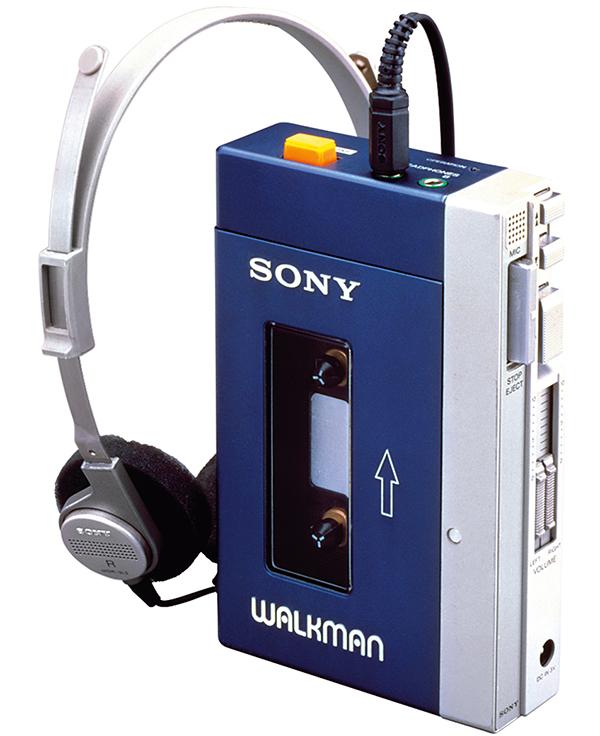
When Barry Fox met Sony CEO Akio Morita to discuss the launch of the Walkman, he had little idea how successful the portable music player would be – or the legal battle it would create
When a reader recently made mention of the Sony TC-D5M professional portable cassette deck [Sound Off, HFN Feb ’26], it triggered memories of a visit I made to Tokyo in the early 1980s.
I was there to meet Sony boss Akio Morita. His assistant was horrified to see I was using a Marantz recorder to tape the interview. He ran off and came back with a TC-D5M so that his boss would be talking into a Sony deck. After that I carried it around the world many times, interviewing other company bosses and making music recordings. And I still use it today to occasionally play cassettes through a modern system.
Origin story
Morita told me how the Sony Walkman was born. He was regularly flying all over the globe and hated listening to someone else’s choice of music, in lo-fi through rubbish airline headphones. Carrying his own TC-D5M was impractical because it was heavy and ate big batteries. He told his engineers to make him a stripped-down play-only version that only used headphones and ran for several hours on a couple of AA cells.
Sony’s R&D team duly came up with the Walkman. The media laughed at the idea of a recorder with a silly name that didn’t record. How wrong we were – the Walkman changed the way the world listened to music and, in 1986, became a word in the Oxford English Dictionary.
It was around the time of my Sony visit that a chap called Andreas Pavel pointed out that he had patented a belt-worn ‘stereophonic reproduction system’ in the UK in 1977 (UK 1 601 447), two years before Sony first launched. Naturally, Pavel wanted to sue Sony and the other electronics companies selling personal audio players.
Later, in the early 1990s, the issue came to the UK’s new Patents County Court, where Pavel shrewdly used a lower-paid patent agent to plead his case, instead of employing highly paid legal counsel. Eventually the court decided against him, as did the Court of Appeal a few years later. [In the early 2000s, Pavel and Sony reached an undisclosed out-of-court settlement.]
Back to Sony. It might surprise you to learn that the Japanese company had never patented the Walkman. The reason, however, is quite straightforward – and useful to know for anyone thinking of patenting their own big new hi-fi idea.
Patents have to describe something workable that’s new and not obvious in the light of what already exists (in this case, small portable recorders like the TC-D5M). The patent must describe how the new thing is constructed and how it works. It cannot be an armchair claim for a ‘rocket that flies to the moon’ – it needs to also explain re-usable booster stages.
Risky business
Drafting your own patent application is like taking out your own appendix. Potentially very risky. If you specify components too tightly, a smart competitor can design an array of different devices that do the same job.
Patent office examiners may initially reject iffy applications as ‘inadequate’. But in my experience they can also buckle under pressure, and let the patent through because they know that if the inventor sues for infringement, the court can just chuck it out. Before writing about patents, I drafted patents for a living and argued the toss in government patent offices in London, Washington DC and Tokyo. Most applications needed only some careful compromise wording.
Sony knew its portable cassette player wasn’t a single invention. Rather, it was an evolution of earlier technologies, a combination of some clever engineering solutions, such as shock-proof mechanics, low-drain electronics and lightweight hi-fi headphones that relied on new high-strength magnets. But it did register the trademark name, which meant that competitors all had to call their portable players something other than Walkmen.
































 SPONSORED VIDEO






| Equipment Reviews |  |
Music Reviews Awards | |
Latest News Features | |
Resources Newsletters | |
Subscriptions |
WHERE TECHNOLOGY BECOMES ENTERTAINMENT
 © 2026 Hi-Fi News
AVTech Media Ltd
All rights reserved