Think before you ink
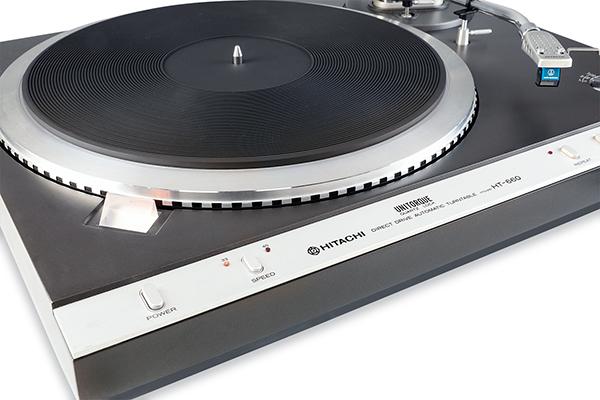
From pen-knife engravings to felt tip pen, Adam Smith has become used to discovering traces of previous ownership on his secondhand hi-fi buys. If you must mark it, do it somewhere discreet...
I’m sure many readers will be familiar with the police advice to ‘mark your valuables’ in order to deter any ruffians and ne’er-do-wells who might like to part them from you. When I was a student at uni, the police would regularly come along to stamp the frame of your bicycle so it could be instantly recognised and hopefully traced if someone stole it.
This appears to be still very much a thing. The UK Police website has an entire section devoted to making ‘your valuables less attractive to thieves by using a police-approved forensic marking solution only visible under ultraviolet light’.
Shine a light
All very admirable, but I’ll wager that many fans of secondhand hi-fi equipment are less keen on this fine security step, and I include myself as one of them. This is for the simple reason that, once you’ve experienced ‘security’ graffiti scribbled all over a secondhand acquisition and battled for hours to try and remove it, all to no avail, it seems like a less good idea.
Police guidelines recommend using a pen or marker that is only visible under UV light. However, many owners ignore this – I’ve had items with all sorts of strange identification words, phrases and symbols scrawled in all sorts of places. Not to mention paint liberally plastered across cabinets and even postcodes gouged on top of cases with a penknife.
I’ve also experienced more than a handful of markings in a strange kind of semi-luminescent clear ink. A bit of research has revealed that this is probably ‘invisible’ ink. Apparently, many older inks designed for viewing under UV light don’t actually stay invisible as they grow older, thanks to exposure to sunlight.
Yet sometimes the level of ingenuity is actually quite impressive. Our HFN colleague Tim Jarman would be very keen for a chat with the Mr or Mrs Henderson who used a vibrating engraving pen to write their name and postcode across the front of a Sony CDP-10 he acquired. Even more astounding was Tim’s Sony radio/cassette recorder where the previous owner had milled their postcode using a series of very precise and neat paint-filled dots right across the front of the cassette compartment! This was workmanship beyond reproach but, still...
By comparison, most of my encounters have simply been thanks to the good old black marker pen. Usually a postcode scrawled somewhere obvious, standing out like a sore thumb. Sadly, despite the usual reliable standbys of IPA (the neat alcohol, not the beer...) and Ambersil Label Remover, said markings inevitably resist all attempts to eradicate them and are still glaring me in the face every time I use the equipment. And their presence also raises another issue.
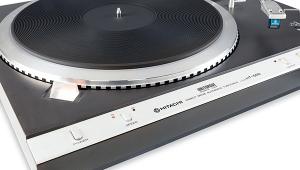
One of my recent purchases, via eBay, was a turntable which I collected from the owner as it wasn’t too much of a journey from where I live. I only noticed the postcode graffiti when I returned home but, crucially, the postcode from which I collected the deck was not the postcode scrawled on it. Have I been had? Should I inform the police?
To be fair, the turntable was 50 years old, the amount of money I paid for it was modest, and the seller was very personable. So I’m confident I wasn’t the victim of some elaborate scam.
Heard but not seen
If you really want to mark your precious new hi-fi acquisition, as per police guidelines, may I suggest that invisible ink is probably the least objectionable option. If you decide to use a normal pen, put markings somewhere that is not obvious (ideally inside, but at least on the underside), because one day in the future you might decide to sell your amplifier, turntable, etc, to a vintage enthusiast such as myself. And please – step away from the milling machine!






























 SPONSORED VIDEO






| Equipment Reviews |  |
Music Reviews Awards | |
Latest News Features | |
Resources Newsletters | |
Subscriptions |
WHERE TECHNOLOGY BECOMES ENTERTAINMENT
 © 2026 Hi-Fi News
AVTech Media Ltd
All rights reserved