Is the switch-off on again?
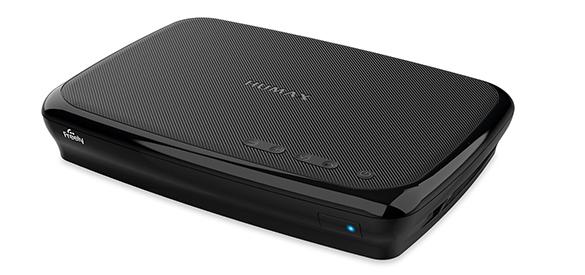
Freeview, the UK’s over-the-air digital TV platform for close to a quarter of a century, could be jettisoned in favour of broadcasting via the Internet. As usual, Barry Fox has many questions...
Remember how broadcast planners wanted to switch off FM radio and go all-digital with DAB by 2015? We were saved by the planners’ incompetence. They didn’t understand that the factory-fitted aerial amplifiers in millions of cars actively blocked the DAB band.
The planners now want to avoid escalating energy bills for digital terrestrial transmission by switching off Freeview TV and radio by 2034, and rely entirely on IP-based (Internet) broadcasting. The BBC likes the idea because it is strapped for licence cash. There is also talk of bringing back the licence to listen to radio – and presumably podcasts too.
New kid on the block
The big difference between the FM/DAB fiasco and the potential Freeview/IP car crash is Freely – aka ‘the organisation leading the evolution of free TV in the UK’. Freely is also the hybrid broadcast/streaming technology developed by Everyone TV (formerly Digital UK) which is backed by the BBC, ITV, Channel 4 and 5.
I think there are questions to ask about Freely before it is allowed to oust simple off-air reception. But whereas Digital UK saw the need for clear tech talk when it launched Freeview in 2002, trying to talk hard fact with Freely is a slog. The smart people are hidden behind a fog of fluffy PR. For instance, ask ‘what is Freely?’ and you’ll learn that ‘TV has had a serious glow up and it’s kind of a big deal. No dish, no need for an aerial. All you need is Wi-Fi’. So I set myself the task of squeezing facts from the Freely stone, regarding both hardware and software.
Many buyers will encounter Freely when buying a new TV, as the necessary receiving technology is built into new models from brands including Panasonic, Hisense and TCL. But what about those who aren’t buying a new television? The BBC saw the obvious need for a simple add-on streaming device, like an Amazon Fire Stick, that converts an existing non-Freely set by connecting to an HDMI socket. There are now several add-ons, but all are more expensive than Amazon’s Fire Stick. Netgem’s Pleio ‘puck’ costs £100, largely due to gaming features unlikely to interest HFN readers.
There are myriad free-to-air TV channels on Freely, but the radio selection is mainly made up of BBC stations. I asked Freely about data rates for BBC Radios 1, 2, 3 and 4, but got no facts back. Netgem said, ‘Can you clarify what you mean by data rates?’ – I explained but again got no response.
British company Manhattan, which sells the £70 Freely Aero device, was a lot more on the ball and confirmed that ‘all four national BBC radio stations use the same 320kbps high-quality stream on Freely (with AAC coding) by default’.
The Freely Aura EZ Recorder from Humax costs £249 and records up to four channels while watching a fifth. The DTG (Digital Television Group) heralds it as a ‘2TB device [which] integrates Freely via Wi-Fi, offering access to live channels and on-demand services in one interface’.
But recording is via the aerial only, not Freely via Wi-Fi. You cannot record Freely channels. Humax is trying hard to explain this but I fear people will be confused.
Hopping hopes
The biggest issue, I predict, will be the delay heard and seen when switching between Freely programmes. We are used to near-instant hopping between linear broadcast channels. IP streamers process incoming channels in buffer memory. The amount of memory and processing power is fixed at the factory.
I asked Freely what its target delay is for channel hopping but could not get an answer. I also asked if it could assure people who buy first-generation Freely devices that they will not suffer increased channel-switching delays as more channels are added, but didn’t get an answer to that either.
Why does this matter? Because I have a drawer full of not-very-old Amazon Fire Sticks which are obsolete because their circuitry cannot handle newer content. Freely hardware, which is often more expensive, must avoid the same fate.

















 SPONSORED VIDEO






| Equipment Reviews |  |
Music Reviews Awards | |
Latest News Features | |
Resources Newsletters | |
Subscriptions |
WHERE TECHNOLOGY BECOMES ENTERTAINMENT
 © 2026 Hi-Fi News
AVTech Media Ltd
All rights reserved