Shine a light
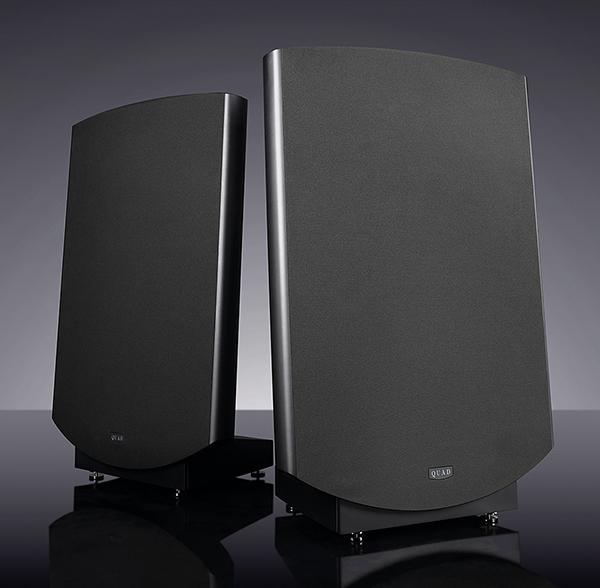
Setup of some loudspeakers requires a tape measure, but in the case of Quad’s ESLs, Jim Lesurf recommends wearing a torch on your head. Here he explains the method in his madness
One of the ‘tricks’ I’ve employed over the years whenever I’ve setup my main hi-fi system has been to sit and look at the loudspeakers... with an electric torchlight strapped to my head! This has been very useful in helping me position the cabinets. Sadly, it’s a trick that only works for some specific loudspeaker designs. In particular, for some of the versions of the Quad ESL-63, and the improved descendants of that model.
Head-on hi-fi
Members of the ESL-63 ‘family’ all use a thin-plane sheet of material as the loudspeaker diaphragm. The drive to this is applied by a series of concentric pairs of audio-transparent conducting areas, which get tailored versions of the input. In general terms, the higher the incoming audio frequency, the smaller the size of the diaphragm area that is subject to its influence. This results in a much better controlled sound for a listener who sits with their head on the ‘axis’ of the resulting beam of sound. Benefits are optimised phase coherence, a flatter frequency response, etc.
Back in the 1980s, 1990s and 2000s my ‘day job’ moved from an audio focus to ‘millimetre wave optics’, etc. But the work I was now doing helped me realise just how ingenious was Quad’s ESL-63 design. Particularly if the listener could arrange things so their head was positioned on the ‘beam axis’.
It was around this time that I noticed that the internals of the ESL-63 tended to also act as a mirror for visible light. That made me realise that if I used an electric torch held just in front of my nose, I could move around, shining this torch at one of the ESL-63s until I could see a faint reflection of it from the internals of the speaker. That then helped me to adjust both the left and right cabinet positions to get their beam centre-lines to cross at the location of my head when I was sitting in my favourite listening chair.
Ghostbuster
The result in a decent room was that I could then check with ‘anti-phased L/R’ sounds and find I only then heard a sort of ‘ghostly echo’ of the sound when sitting in that location. In effect the anti-phase L/R sounds almost cancelled at my ears, leaving the effects of room reflections! This implied that with normal music, the positioning of the two speakers was maximising their sound quality.
Unfortunately, if you buy a model which has a darker-coloured grille fabric it can become difficult to see these tell-tale light reflections. In this case, you’ll need a very bright torch to be able to try this trick for yourself. But if you can, I’d say it is worth the effort. Just make sure there’s no one else in the house at the time, or be prepared for some funny looks. And listening to ‘torch songs’ while you do so is optional.
Something else which was highlighted by my work on millimetre-wave optics is the way that Quad’s ‘phased array’ approach in the ESL-63 provides another benefit. It tends to reduce any frequency-dependent phase shifts and helps reduce phase dispersion of the audio you hear. But there’s no light trick to reveal this!
















 SPONSORED VIDEO






| Equipment Reviews |  |
Music Reviews Awards | |
Latest News Features | |
Resources Newsletters | |
Subscriptions |
WHERE TECHNOLOGY BECOMES ENTERTAINMENT
 © 2026 Hi-Fi News
AVTech Media Ltd
All rights reserved