Quad’s new 33/303 pre/power amps
Having worked on and used hi-fi equipment over many decades, I often encounter various examples of the question: ‘Should I “upgrade” what I’ve been using?’. It’s a question that tends to pop up in the mind of hi-fi enthusiasts almost from the moment they’ve bought, installed and started to listen to their initial audio system. And there’s no doubt that the electronic devices, designs, and manufacturing methods have all improved since the long-past days when, say, the first issue of Hi-Fi News appeared!
Perfect partners?
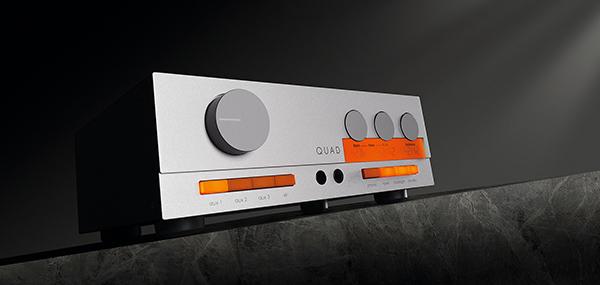
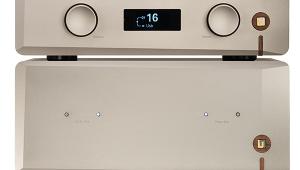
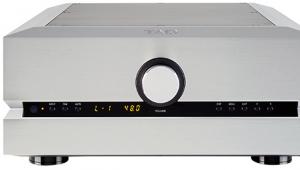
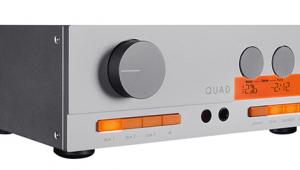
The question cropped up again for me when I learned about Quad’s new versions of its 33/303 pre/power amplifiers [HFN Jan ’25]. After some consideration I decided to buy a new 303 power amp. However, this then raised an issue: should I also ‘retire’ my old Quad 34 preamplifier and replace it with the 33 preamp that is intended to accompany the new 303? The obvious advantages are that both units have clearly been engineered to work optimally well together, and have improved specifications in various ways over the original designs.
Having pondered this question for a while, I decided to stay with my old 34. Why? Mainly because I’ve modified it to provide better tonal compensation for the overall system and listening room set-up. I’ve tweaked the behaviour of its ‘tone controls’ and some other circuit details to give me what I think is a performance that is better ‘tailored’ to the behaviour of my listening room’s acoustic and my own position within it. I am a fan of the unusual tone controls of the Quad 34 and regard them as an improvement over the traditional ‘Baxandall’ approach.
Copies of the old 34’s service manual gave me all the circuit details that I needed, and the actual changes were easy enough for me to implement. In addition to getting a better sound balance and stereo effect at the optimum listening position, it let me ensure that in normal use the volume control setting was optimised for precise gain adjustment and the best level for dodging audible background noise or clipping.
Perhaps I could have eventually done something similar with Quad’s new 33. But as things stand I’d be reluctant to fiddle with one in the absence of detailed circuit diagrams. And, of course, any attempt to modify a new item would bust the warranty! In addition, my ‘skills’ with a soldering iron are based upon ancient days when you didn’t need an electron microscope to see the capacitors, resistors, etc. Previous experiments meant I already knew my way around the innards of the old 34, so I opted to stay with it.
Hence in my case the familiar ‘old versus new’ question was, I decided, better regarded as the advantage being in favour of ‘old plus new’! And, yes, I’m pleased with the result. It sounds fine and I can just enjoy the music.
Happy days
Stepping back, it made me realise that we often get faced with the ‘new versus old’ conundrum when in practice we might find that ‘new plus old’ makes more sense. For example, I still play ancient LPs, CDs, and even cassette tapes, along with downloaded files and streams. And in terms of content I’m as happy enjoying old jazz recordings made about a century ago as I am with modern live high-bitrate audio recordings.
For me the object of ‘hi-fi’ isn’t based on the old approach the record companies sometimes adopted when stereo was fresh and fancy. This era often produced discs of recordings of a train thundering across your room, or ‘ping pong’ stereo. That is not the point of hi-fi – rather, it is to give the best possible reproduction of the sound material you wish to enjoy. No added audible noise or distortion or bangs, etc, just the sound of what was recorded. And if that’s achieved through a mixture of old and new hardware, so be it.

















 SPONSORED VIDEO






| Equipment Reviews |  |
Music Reviews Awards | |
Latest News Features | |
Resources Newsletters | |
Subscriptions |
WHERE TECHNOLOGY BECOMES ENTERTAINMENT
 © 2026 Hi-Fi News
AVTech Media Ltd
All rights reserved