A new level of insanity
Startled by the price tags in recent product announcements, Barry Willis believes that some quarters of the high-end audio trade are aping the shock and awe tactics of contemporary art
In September and October, 2025, a flurry of new product announcements and reviews convinced me that some of audio’s high-end has followed the contemporary art community into the stratosphere of insanity.
That’s a mighty big statement about a niche of the technological market long noted for faith in miracles. For years, cynics among the audiophile community have joked about components rendered from ‘pure unobtanium’ and exotic hi-fi enhancements ‘made by a blind monk on a mountaintop under the full moon’. Yet such jokes have now lost their edge, because an increasingly prominent segment of the audio industry is serious about rolling out products that leave humour in the dust.
Million-dollar cart
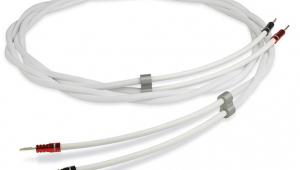
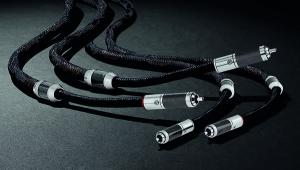
In the course of three weeks, I received promotional pitches about a $52,000 2m power cable, a $68,000 1m interconnect, a $75,000 tonearm, and a $150,000 2m loudspeaker cable.
These numbers are not exaggerations nor typographical errors. They’re all actual retail prices for products launched during a substantial economic downturn. And then there’s Swiss audio marque darTZeel, which announced a couple of years ago it has plans to manufacture a phono cartridge with a one million dollar price tag (albeit, as founder Hervé Delétraz told HFN, as a ‘completely crazy project – extravagant, extreme, and ultimate all at once’).
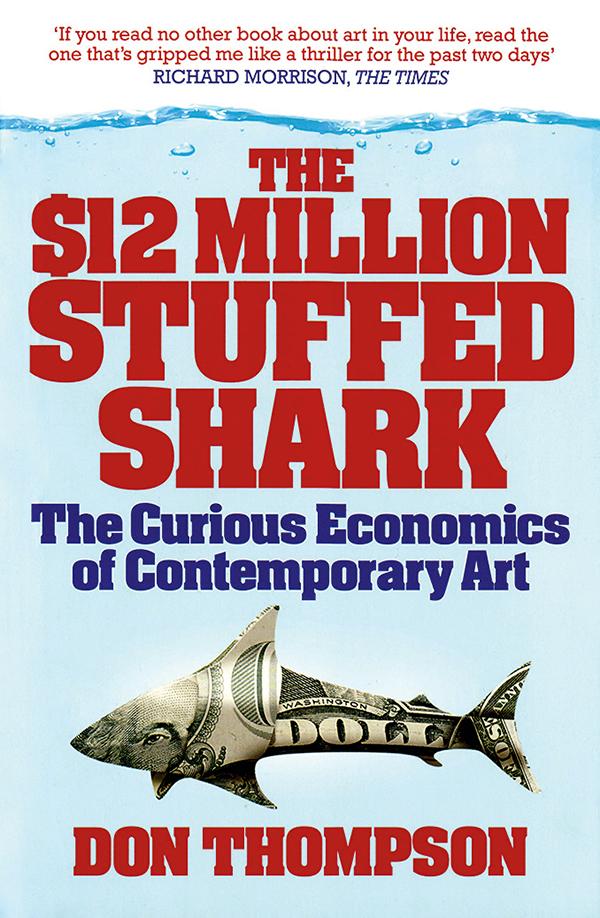
In 2008, Canadian economist Don Thompson published a wry and insightful book called The $12 Million Stuffed Shark: The Curious Economics Of Contemporary Art. We don’t normally associate economists with humour, but Thompson is an exception. The title derives from a legal case that rankled the art world – a lawsuit by American collector Steve Cohen against British artist Damien Hirst, whose preserved Australian tiger shark – The Physical Impossibility Of Death In The Mind Of Someone Living – had started to disintegrate in its glass tank of formaldehyde, on display at one of Cohen’s properties. Cohen’s attorneys insisted that Hirst supply a replacement shark for the one that was crumbling. Hirst replied that he was an artist, not a taxidermist, implying that decay was part of the process, an art-world dictum issued decades earlier by Robert Rauschenberg and echoed by other modern artists. Hirst eventually relented and arranged to have a replacement shark properly preserved and delivered to the collector.
The year before Thompson’s book appeared was also the end of my brief tenure with a US audio journal known as a proselytiser for the cost-no-object religion. One of my duties was assembling the monthly new products section, which I tried to steer toward high value rather than high price. Not all of us go weak at the knees over astronomical price tags.
Different strokes
A couple of years later, after returning from the Consumer Electronics Show in Las Vegas, an audio industry friend stayed with me for a few days. One morning I found him near my bookcase, squinting at Thompson’s book.
‘Is this real?’, he asked. I assured him that it most certainly was and explained the circumstances.
‘Wow’, he remarked. ‘Twelve million for a dead shark. That’s crazy.’
My retort: ‘You sell quarter-million audio systems. Most people would say that is just as crazy’.
‘No’, he insisted. ‘That’s different. It’s for music.’
This friend had lived for many years in New York City, where art of all kinds permeates the atmosphere. By unavoidable proximity, he had been exposed to the excesses and absurdities of the art scene, a phenomenon he had long dismissed – especially its disdain for practicality and durability, its fascination with shock and outrage, and its fatuous worship of celebrity.
However, as a successful entrepreneur, he had also made a conceptual leap that the high purpose of music exempts the high-performance audio industry from the usual guiderails of rationality, value, and return on investment. And apparently some of his colleagues and competitors in the audio business have done likewise.



















 SPONSORED VIDEO






| Equipment Reviews |  |
Music Reviews Awards | |
Latest News Features | |
Resources Newsletters | |
Subscriptions |
WHERE TECHNOLOGY BECOMES ENTERTAINMENT
 © 2026 Hi-Fi News
AVTech Media Ltd
All rights reserved