Métronome DSS 2/DSC mini streamer and outboard DAC Lab Report

The miniature hi-fi trend continues – those short of space or simply seeking an inconspicuous yet high-performance set-up can rejoice. The new arrivals here come in the form of the £4200 DSS 2 network transport and £4300 DSC mini DAC from French company Métronome, as part of its ‘Digital Sharing’ range that also includes the £4400 DST CD transport.
There’s also a server, the £5399 DSAS, that’s a joint venture between Métronome and music software player company Audirvāna. That unit features 2TB of internal storage, expandable to 4TB, and comes complete with licences for the Audirvāna software services. It can be connected directly to the DSC mini to create a complete library/player source.
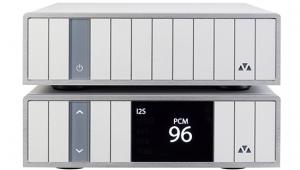
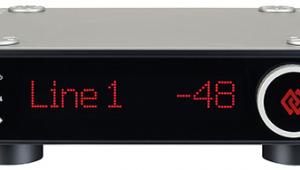
All these Métronome models fit the ‘compact’ brief perfectly, being just 25cm wide and a mere 7cm tall. They come in silver or black, and are also set apart by their simplicity, their fascias looking like they house identical unlabelled controls. In fact, this is just a styling feature in the solid machined aluminium panel. The DAC has no more than an input selector and a large, crisp display to show chosen connection and incoming sampling rate. The transport offers just a power button and a light to show the state of the network connection.
Simply does itIt’s all a little mysterious, with a slight 1970s sci-fi vibe, but in essence this duo is as simple as it looks. The DSC mini DAC just takes what it’s given in terms of digital datastreams, being capable of handling PCM up to 384kHz/32-bit, and up to DSD512, depending on the input used. Missing is the digital faffery involved with some DACs. There’s no selecting digital filters, upsampling and so on, as Métronome uses an ESS ES9026PRO DAC, and the company has elected to use just one digital filter [see PM's Lab Report].
The connection of choice between the DSS 2 and DSC mini is I2S, the UK distributor providing a short HDMI-terminated cable to link the two. Via this combination, the system can handle files up to DSD256. If you really want to go further, the DAC’s USB-B input can accept up to DSD512 from a computer, while there are also Toslink, coaxial and AES/EBU inputs. Analogue outs are fixed-level, on both unbalanced RCAs and balanced XLRs, but that’s your lot.
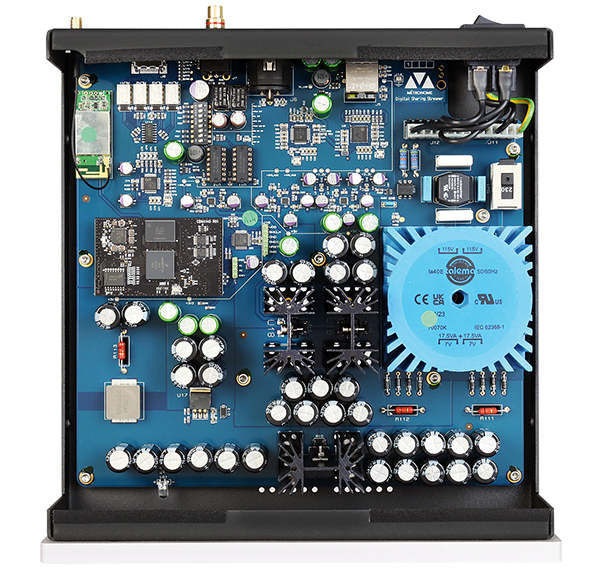
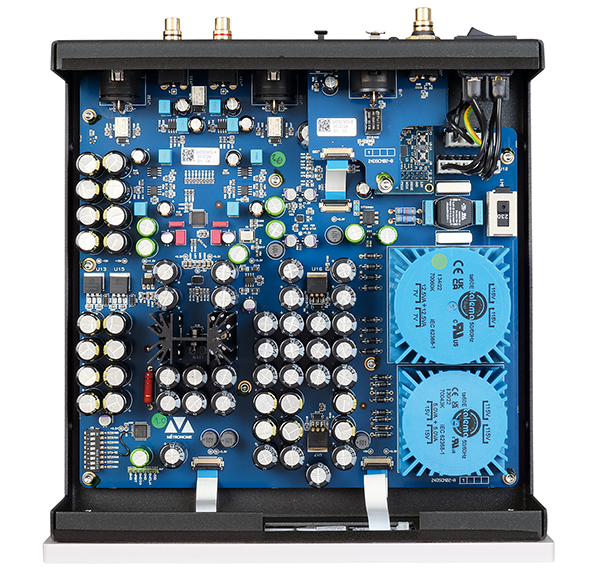
Above: DSS 2 streamer [top] and DSC mini DAC [below] both feature Métronome’s low-ESR PSUs with blue Talema transformers. The DSS 2 uses mconnect’s CDM4140 network audio module [left] while the DSC mini features an ES9026PRO DAC and balanced analogue output [top left]
Like the DAC, the DSS 2 transport is handmade in France, and has even less to show apart from that network connection indicator and power switch. Networking is via Ethernet or Wi-Fi, with a little stub antenna being provided for that purpose. The rest of its connectivity is limited to AES/EBU, S/PDIF and I2S digital outputs, plus a USB-A socket for external storage devices. Simple – but then what more do you need?
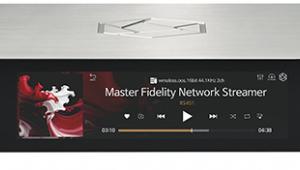
As well as DLNA/UPnP playback of files stored on local network devices, the DSS 2 will stream from Spotify Connect, Tidal Connect, Qobuz Connect, Deezer and vTuner Internet radio. Access is via the mconnect app [see boxout], below running on a smartphone or tablet, the transport having an integrated mconnect network audio module at its heart. Alternatively, the DSS 2 is compatible with both Audirvāna and Roon, the latter especially convenient provided you don’t mind paying for the Roon licence.
The internal construction of the two units is just as logical, with low-radiation power supplies, and simple, clear signal flows within. This may be the entry-level range from the company located just to the north east of Toulouse, slotting in beneath its higher-end – and full-size – Aqwo 2 and Classica lineups, but there’s every sign here of the same care and attention to detail being brought to bear in the design and construction.
Métronome, established in 1987, has always pragmatically avoided reinventing what already exists, as is clear in its co-operation with Audirvāna in the DSAS server, and mconnect in the DSS 2. Typically, it concentrates on the sound-critical elements of design – power supplies and analogue stages – based on what it describes as a ‘constant quest for absolute sound… offering audiophiles products that make technology fade away, leaving only the music’.
 Close encounters
That means that while there’s nothing unusual or hugely innovative in these two units, beyond that eye-catching styling, they certainly deliver when it comes to playing music. The sound is as punchy and dynamic as one could ever want, but also close-detailed and refined, making the most of everything from largescale rock and classical music to rather more intimate, focused recordings.
With Cyrille Aimée’s lovely Move On: A Sondheim Adventure [Mack Avenue Records MAC1144], this Métronome pairing delivered a wonderfully close-up view of the singer’s voice. Perhaps the sound was a little warm and ‘safe’, rather than hurling masses of detail at the listener, but the overall effect was hugely appealing. Easy on the ear and very enjoyable, this comfortable, generous presentation will be just the thing for those who find some hi-fi systems too brash.
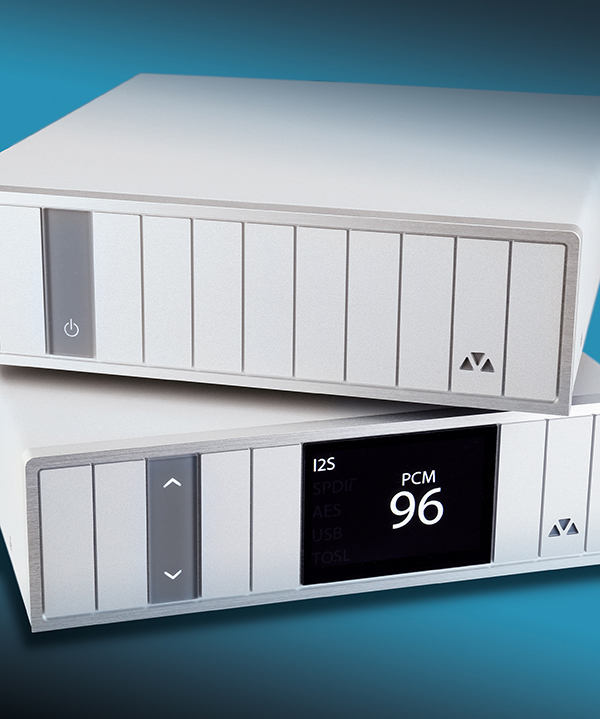
Above: DSS 2 streamer [top] and DSC mini DAC [bottom] share the same compact steel casework with alloy fascia. The vertical ‘slats’ are cosmetic only but the up/down icons on the DAC select the digital input
The same qualities were also much in evidence with Anna Fedorova’s light-touch take on Gershwin’s ‘Rhapsody In Blue’ on her recent Liberté album [Channel Classics CCS48825], where the balance between the orchestra and the solo instrument is managed extremely well, offering scale and speed. Again, this was a totally undemanding listen, but both involving and attractive, with a good sense of space and ambience into the bargain.
It’s not just state-of-the-art files that come up well via the Métronome duo. SOMM’s recent release of classic Elgar recordings, restored and remastered from early 1920s sessions with the composer [Elgar From The Archives, Vol.1; Ariadne 5046], is of course mono, and a little thin-sounding. Yet it was impressive how solid the DSS 2/DSC mini made it sound, keeping up with Elgar’s impressive driving of the orchestra through the Enigma Variations. Moreover, this was a fascinating insight into how the composer thought his work should be heard.
Auditioned in two systems – at the HFN Reference Listening Room and in my own more modest Naim/PMC rig – this Métronome set rapidly established itself as a force to be reckoned with in digital music playback. With Otis Taylor’s take on ‘Hey Joe’, from his Recapturing The Banjo [Telarc Blues CD-83667], the focus on offer was superb, with all the instrumental strands apparent. Even more striking was the sense of liveness and warmth, with both the eponymous instrument and Taylor’s raw voice rendered in captivating fashion.
Magic mayhemThis is an album with real presence to match its excellent musicianship, and it shone through the DSS 2/DSC mini. But the system can play it rough and dirty too, including with the explosive opening of ‘The Devil’ from Motörhead’s Bad Magic [UDR/Motörhead Music UDR 057P18]. Lemmy may have been working on getting a little cleaner by the time this 2015 album was recorded, but the Kilmister/Campbell/Dee lineup could still deliver its familiar, hard-charging sonic intensity.
Apparently Queen’s Brian May is guesting in there somewhere, but his trademark guitar sound is subsumed in the onslaught. The album ends with a suitably slammed version of ‘Sympathy For The Devil’, with Mikkey Dee thumping the wossname out of his kit, and a slightly weary-sounding Lemmy conjuring up the Satanic one.
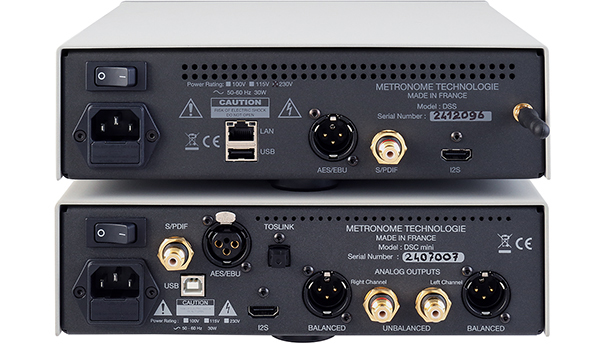
Above: The DSS streamer [top] has a Wi-Fi stub antenna, RJ45 network connection and USB-A port for external drives, and outputs on AES/EBU, coaxial and HDMI/I2S (to 384kHz/DSD512). The DSC mini DAC [bottom] has USB-B, coax/optical, AES/EBU and HDMI/I2S digital inputs alongside analogue outs on RCAs and balanced XLRs
It’s big, messy and magnificent – perhaps not what the French designers had in mind for their network player system, but there’s no doubt it can rise to the occasion. I restored some sense and purity with Linda Ronstadt’s ’Round Midnight box set [Elektra 960 489-2], which collects together the three albums of standards she recorded with the inestimable Nelson Riddle and his orchestra in the 1980s.
Riddle me thisThe Métronome player and DAC relished the impeccable sound, with its warm, rich arrangements underpinning the singer’s voice. Both Ronstadt and Riddle’s band are on fine form, creating a vintage sound with superb production, and masses of detail brought out by Doug Sax’s mastering.
What’s more, this duo was equally convincing with online streaming and even Internet radio, its balance serving well everything from spoken word to live Radio 3 concerts. That slight warmth to the sound suits typical BBC mixes, especially with close-miked continuity announcers. As an all-round listening companion, Métronome’s DSS 2/DSC mini takes some beating at this price.
Hi-Fi News Verdict
Not the most forcefully revealing network player you can buy, but there’s much to like in this minimalist French duo. It has everything one could need in its sensible configuration, allied to a sound with scale, substance and insight in equal measure. Its ‘locked down’ configuration may not appeal to the digital fiddlers, but it’s all the better for that when it comes to simply enjoying music – what more can we ask?Sound Quality: 86%
 | |||||||||||

|
|
| |||||||||











 SPONSORED VIDEO






| Equipment Reviews | |
Music Reviews Awards | |
Latest News Features | |
Resources Newsletters | |
Subscriptions |
WHERE TECHNOLOGY BECOMES ENTERTAINMENT
 © 2026 Hi-Fi News
AVTech Media Ltd
All rights reserved