Believe the hype
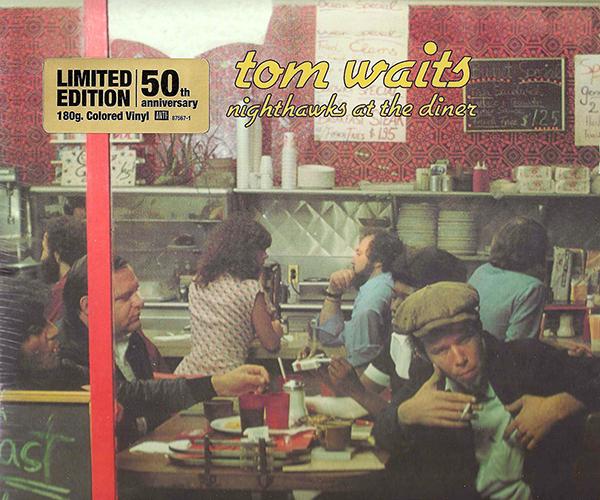
It started with Elvis... Mike Mettler attaches himself to the perceived value of the hype sticker on LPs, and why some people – including himself – would never just unpeel and throw away
Oh, you do that too? I thought I was the only one.’ That was a comment directed at me by producer/engineer Rob Fraboni (Bob Dylan, The Band, The Rolling Stones) back in June 2007. We had convened at a mutual colleague’s house in Connecticut for a multi-format critical listening session, and he had just picked up my copy of Capitol’s 30th anniversary edition CD for Pink Floyd’s The Dark Side Of The Moon, one of five different versions of that seminal album I had brought with me that day. Inside the portion of the CD case where the booklet resides, I had placed the circular hype sticker I carefully scissored off the shrink wrap because, well, I keep everything.
Stuck together
Once Fraboni admitted he had been doing the same thing himself for decades, it was akin to having verbalised our version of the secret handshake, for now we were hype sticker brothers for life. And it appears we’re not the only ones, as you can find hype sticker collector threads on Reddit forums and elsewhere on the Internet. But how did we get here?
Credit Craig Braun for the hype sticker phenomenon. Before he began his career designing album packaging in earnest in the 1960s – one of his claims to fame was figuring out how to get an actual working zip on the cover of The Rolling Stones’ 1971 opus Sticky Fingers – LPs were shrink-wrapped bare, sans any information. Braun came up with the idea of adding a ‘contains the hit singles’ sticker to the cover of an Elvis Presley LP.
In numerous interviews, Braun has since posited the belief that, ‘If you had a sticker on the upper-third of an LP’s shrink wrap, it sold a lot more albums’. He may be right about that. Pre-Internet, a hype sticker was one of the few ways at the point of purchase for customers to find out more about what they were buying.
Hype stickers have since evolved to be more informational and less carnival-barking. They now often proclaim technical stats about the source material and how the release at hand has been mastered and/or remastered. Less hype, more filling – I most heartily approve.
Early on in my collecting days – before I could afford to buy protective plastic outer sleeves in bulk – I would simply leave the shrink wrap on my LPs to preserve those stickers as best I could. Now I either put them inside the protective sleeves or stick them directly on the front covers – as long as they don’t cover up any key words or important artwork elements, that is.
Telling the story
In April 2026 at AXPONA in Schaumburg, Illinois [HFN Jun ’26], I found out first-hand the modern power of the hype sticker – or lack thereof. I had been sifting through the LP bins of music retailer Acoustic Sounds in the Expo Hall when I landed on a 180g 45rpm 2LP version of The Velvet Underground’s 1970 release Loaded (which features ‘Sweet Jane’ and ‘Rock And Roll’). One of the clerks observed, ‘We haven’t sold one copy of that LP, and I don’t know why’. I offered, ‘The cover art doesn’t tell the story, and there’s no sticker that tells you what’s on it if you’re not familiar with it’.
Soon after, I came upon a 180g pressing of Eddie Money’s self-titled 1977 debut, an album I didn’t even know the company had released (under its audiophile Analogue Productions label). I went over to Acoustic Sounds’ CEO Chad Kassem to express my wonderment. Again I was told they’d hoped the album would have sold more.
While its shrink wrap did indeed sport two separate stickers affirming this LP was borne from ‘100% analog masters’, it did not have a sticker mentioning it also contained big hits like ‘Two Tickets To Paradise’ and ‘Baby Hold On’. Perhaps in this case, I suggested, the Braun corollary could have helped move more units.
Sometimes, you really do need the hype to sell the aural merits.
















 SPONSORED VIDEO






| Equipment Reviews |  |
Music Reviews Awards | |
Latest News Features | |
Resources Newsletters | |
Subscriptions |
WHERE TECHNOLOGY BECOMES ENTERTAINMENT
 © 2026 Hi-Fi News
AVTech Media Ltd
All rights reserved