EQ controls
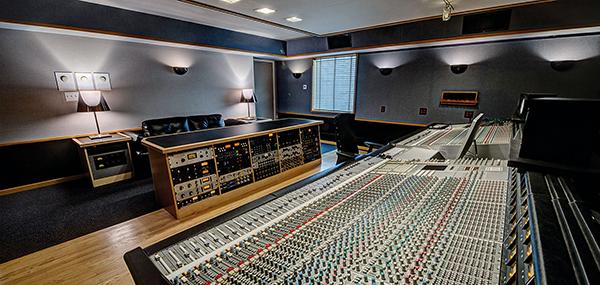
EQ controls are a vital part of any mixing console but have fallen out of favour in hi-fi – leaving Barry Willis stumped when audiophile friends ask for help in fine-tuning their system sound
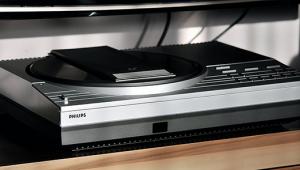
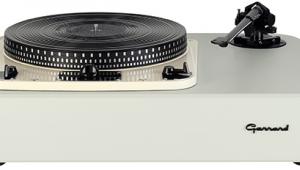
A friend with three turntables is baffled as to why they all sound different. One is a relatively recent direct-drive with a mid-priced Ortofon cartridge. The other two are rebuilt vintage Swiss machines, one with a stock tonearm and a still robust Shure V-15 Type III cartridge. Its look-alike mate sports a ’60s-era Ortofon arm with a Sumiko Blue Point at the business end. All three have been properly setup – arm and cartridge alignment tweaked to perfection, tracking force dialled in, speed set correctly. They would all pass muster with any vinyl fan, but each has its own sonic signature. Not a night-and-day distinction, but still noticeable.
Getting the hump
My friend asked if I had a calibrated test record so that he could compare the frequency responses of the three players. I explained that all I have remaining for turntables is a universal arm alignment jig. He was disappointed by this, as he described one turntable as ‘very midrange-y’ while emphasising its frequency hump with a hand gesture.
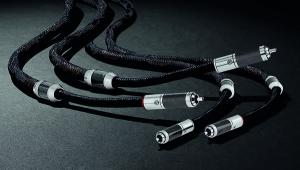
The same afternoon I got a call from the rarest of rare birds – a female audiophile – seeking advice about upgrading speaker cables in her secondary system, something that might add a bit of zip to the top end.
My initial reaction to both of these friends was ‘that’s what tone controls are for’ until I realised that high-end gear doesn’t generally have them.
This is not a new trend, of course. Tone controls began disappearing from high-performance gear in the 1980s, on the pretext that their use somehow besmirched the purity of recordings. Also on the chopping block went other really useful features such as the balance control and mono switch – the latter useful when pulling in weak FM radio stations or listening to old recordings. The reasoning behind this still eludes me, but I think its roots lie in the elitist assumption that no audio purist would ever want to play sonically impaired material through their high-end system.
Looking for a solution, audiophiles went on a spending spree, upgrading loudspeaker cabling and interconnects to get the desired effects. The audio industry was happy to oblige. Want more top-end detail? More midrange warmth? More bass impact? Don’t simply dial it in – that’s crude and unsophisticated. Try this instead.
Tone deaf
An annoyingly common cliché today is ‘we can do this the easy way or the hard way’. You’ll hear it repeated ad infinitum on television crime dramas and by bloviating politicians. And audiophiles seem to have an inherent need to do everything the hard way.
Try suggesting that an equaliser might provide everything they want at far lower cost than upgrading every cable in their system and see how quickly you will be dismissed as an untutored rube. This is despite the fact that equalisers are ubiquitous in recording studios. They’re built into every mixing console ever made. Why is an essential piece of gear de rigueur for recording but verboten in playback? Does this make any sense?
There are many well-designed audio production software packages available for download, some free-of-charge. Incorporating one into a playback system would of necessity involve looping the audio signal through a laptop or PC – another sin, despite the fact that computer functions are at the core of most contemporary electronics.
Ironically, among the most lusted-after pieces of high-performance gear is the Cello Palette [HFN Nov ’85], a ‘zero phase shift’ five-band equaliser made in very small quantities in the 1980s. There’s no explaining any of it.
















 SPONSORED VIDEO






| Equipment Reviews |  |
Music Reviews Awards | |
Latest News Features | |
Resources Newsletters | |
Subscriptions |
WHERE TECHNOLOGY BECOMES ENTERTAINMENT
 © 2026 Hi-Fi News
AVTech Media Ltd
All rights reserved