No filter
As digital equipment offers an increasing range of setup options, Andrew Everard says ‘enough is enough’. He wants to buy what the designers believe in, not do half the work himself
There are two kinds of hi-fi user. Those who take delight in tweaking, fettling, adjusting and generally messing around under the bonnet of their system, and those who simply want it to work to the peak of its performance without the need for endless user input.
I understand the benefits of a considered setup, and would always recommend buyers put care into loudspeaker positioning, proper support, and the sensible layout of equally sensible cabling. But I strongly believe that installing and using a hi-fi system shouldn’t be a challenge. Neither should that system require constant check-ups and minor adjustments to cope with everything from a change in the style of music being played to a slight alteration in the local climate or the time of day.
Switch it out of standby, hit ‘play’, and done – that’ll suit me, thank you. Is this heresy? As a full-time hi-fi reviewer, surely I should delight in exploring every possible option a product offers, and going through a range of ‘what ifs’?
Development hell
Well, up to a point, Lord Copper. While it’s important that I explore all the facilities a product offers, to find sonic differences between the various inputs on an amp or the effect of placing speakers in a range of positions in the room, there are times when it feels like I am being asked to carry out the last stages of the development of the product. As are you.
I’m not talking about those early glitches or oddities revealed in the reviewing process inevitably addressed by a sheepish manufacturer via a firmware revision. Nor am I concerned with the almost inevitable requirement to update the firmware of just about everything within a sniff of being computerised before a review can be carried out. Although it’s annoying to have completed listening only to receive an email saying, ‘There’s this update we’ve just released, and it brings both operability and performance upgrades.’
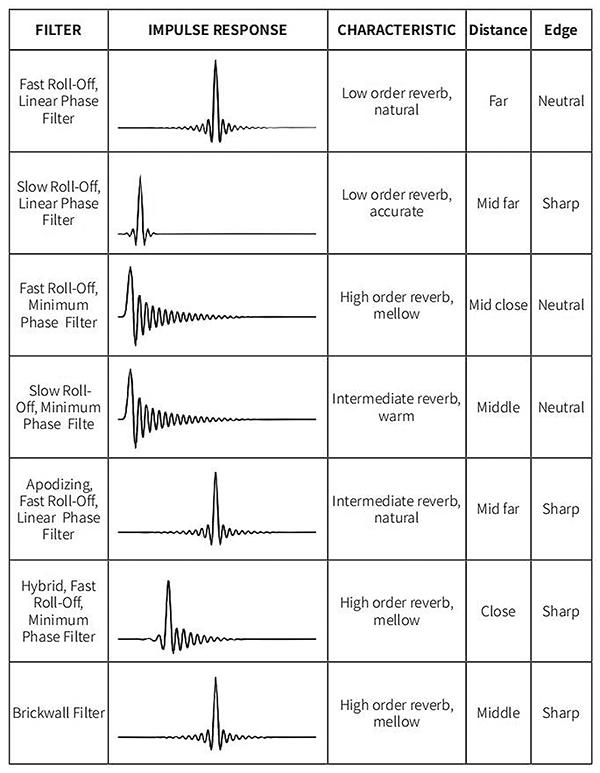
However, what really gets my goat is the need to experiment with multiple settings deep in the menus of a product in the search for optimal performance, and above all fiddling about with endless digital filters. At the very least this will require multiple tracks and musical styles being played, and endless switching and listening before one settles on a preferred setting.
At worst one might end up with a list of settings for certain genres, formats or even specific recordings.
Actually, that isn’t the worst – the real nadir is when you find yourself listening to some music, and wondering whether it might just sound better with a different setting. At which point, you’re not using your system for the reason you bought it – the enjoyment of music – but as a means of experimentation.
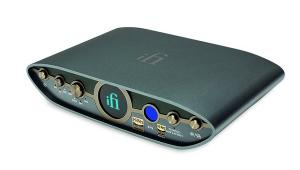
The problem is that many of the most popular digital-to-analogue converter options available off the shelf to hi-fi manufacturers offer a range of built-in digital filter options, often running to half a dozen or even more. These can be accessed and selected in software, and in some cases further customised to add even more options.
All well and good, but the way manufacturers implement these choices is where the real problem arises. Too many give the user access to all the settings, often – I suspect – to make their products appear more advanced, more ‘technical’.
I’m all for choice, but one can have too much. I’d rather a digital designer did the experimentation for me, set the product to deliver the sound they believed is correct, then locked things down. Or bypassed all those on-chip filter choices and implemented their own.
When you buy a pair of loudspeakers, they don’t come with a separate box of alternative drive units because the designers couldn’t quite make up their mind. So why should a digital product arrive in a kind of half-done form?
















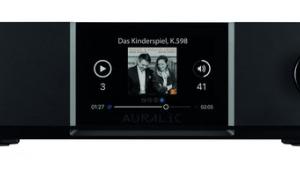
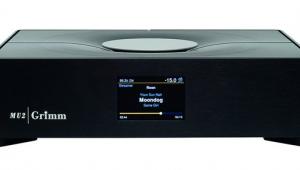
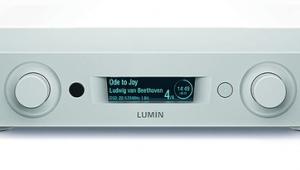

 SPONSORED VIDEO






| Equipment Reviews |  |
Music Reviews Awards | |
Latest News Features | |
Resources Newsletters | |
Subscriptions |
WHERE TECHNOLOGY BECOMES ENTERTAINMENT
 © 2026 Hi-Fi News
AVTech Media Ltd
All rights reserved