Vinyl fascination
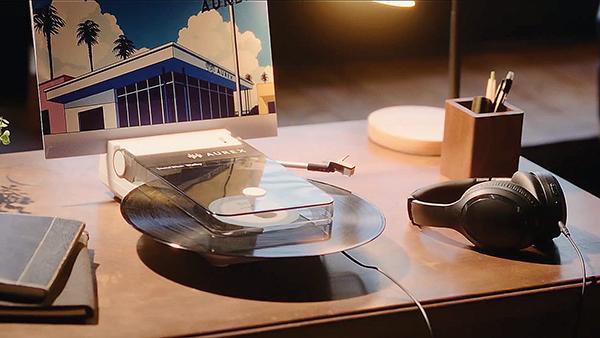
Barry Willis says a ‘worshipful hysteria’ surrounds the analogue format, evidenced by luxury turntables. But does that mean he’d recommend Toshiba’s new cheap ’n’ cheerful portable?
One recent weekend I listened to Steve Earle’s programme on satellite radio. A gravelly voiced Nashville artist, he talked about punk rock’s effect on country music, in a sort of taxonomic analysis of splinter genres, with code names such as ‘alt-country’ and ‘cow-punk’.
Earle also mentioned having started a record company with a friend, and waxed nostalgic about hand-delivering lacquer masters to a pressing plant, to be made into metal stampers for vinyl records. There was a note of pride when he said that after facing near extinction, vinyl production was back in full operation. It’s a fascination shared by many across the wide spectrum of music lovers.
System building
Just a few days before Earle’s broadcast, I had run into a roadblock trying to help a retired professor friend who wanted to revisit his small collection of old jazz and classical recordings. This friend hadn’t owned a turntable in decades.
I had access to a direct-drive Pioneer PL-510S from the late 1970s and a more recent Rega P3 belt-drive. I also had an inexpensive phono preamp, and other borrowed gear, to put together a decent little system for him. Projected cost for all was a few hundred bucks, to which he replied: ‘I was hoping to find something cheap’.
Judging by his hodge-podge of electronics, more than likely he hadn’t paid attention to audio products ever – simply not among his interests. It fell to me to give him a quick tutorial on one of hi-fi’s enduring truths: ‘cheap’ and ‘decent’ are usually mutually exclusive.
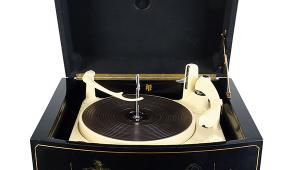
My take was turntables come in several price categories: temptingly low-cost, moderately affordable, moderately extravagant, extravagant, expensive, insanely expensive, and insane. Low-cost units masquerading as old-school console radios are an insult to everyone’s intelligence and budget. They are horribly designed, poorly built, sound terrible, and begin to malfunction almost immediately.
‘Moderately affordable’ means gently used pieces such as the Pioneer and Rega decks I recommended. Almost everything else on the market starts in the mid-three figures and goes skyward from there. Entry-level DJ tables are close to a grand; really good ones such as Technics’ reissued SL-1200 [HFN Sep ’24] are much more. That pattern also applies to audiophile decks intended for less abusive environments.
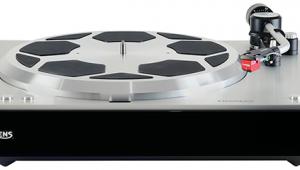
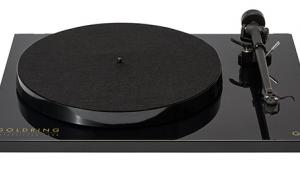
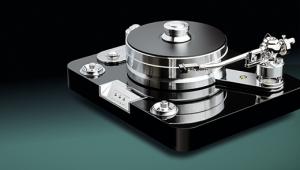
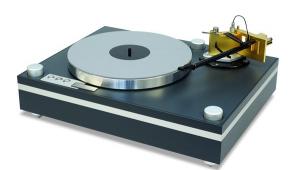
Typical music lovers would be astounded to learn that there are turntables in the six- and seven-figure range, many priced higher than some of the world’s most advanced high-performance cars. It’s all about the worshipful hysteria surrounding vinyl, as if it’s some sort of holy reliquary of recorded music, as if another hundred thousand dollars will extract details long buried in the old format. It’s an inexplicable phenomenon.
Music made easy
After listening to Earle’s monologue, I had lunch with an industry veteran and friend just returned from the AXPONA hi-fi show in Chicago. He’d taken lots of photos and notes about cost-no-object audio, and been both impressed and baffled.
Then there’s the other end of the scale. In late April came a press release about Toshiba’s new portable record player, the Aurex AX-RP10, a diminutive battery-powered device with a short arm and a platter so small that it barely covers an LP’s label. The rechargeable deck features Bluetooth connectivity, has a headphone output and a slot to stand a record jacket on display while listening. The whole affair fits in a little carry bag (when most of us were kids, ‘portable record player’ meant a suitcase with detachable lid and fold-out speakers). Apparently set to sell for $200, maybe this is what my friend is looking for...



















 SPONSORED VIDEO






| Equipment Reviews |  |
Music Reviews Awards | |
Latest News Features | |
Resources Newsletters | |
Subscriptions |
WHERE TECHNOLOGY BECOMES ENTERTAINMENT
 © 2026 Hi-Fi News
AVTech Media Ltd
All rights reserved