Sphinx Audio Element 3 loudspeaker Passive active
Clearly, the Sphinx Element 3 is neither a conventional passive speaker, nor what we understand as an active design that might ordinarily be equipped with a line-level XLR in. Instead, the Element 3 and 5 models use what the company calls a ‘Passive Active Crossover’ design, with concepts trickled down from Siltech’s massive Symphony speaker. Describing it as a ‘passive filter with an active buffer’, Sphinx uses a simple series of (inductor-free) RC networks for each arm of the crossover, these feeding into three Hypex Class D amp channels that are direct-coupled to the three drivers.
Each stage in the RC network adds to the output impedance driving the Hypex modules so the network’s input impedance must be kept as low as possible. Sphinx has aimed for ~16ohm, which ensures compatibility with a plethora of solid-state and tube amps, but such is the sensitivity of these speakers [see PM's Lab Report] the input also falls within the compass of a good headphone preamp with a low ~1ohm source impedance! In practice, Sphinx is bypassing the Hypex amp’s input stage and driving the switched output directly, but this still amounts to 12dB of gain added to that of the partnering integrated/power amp. Depending on your choice of amplifier, care may well be needed with the volume control...

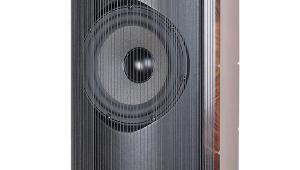
That crossover, meanwhile, combines first- and second-order acoustic filters, with the crossover points set at 170Hz between the bass and midrange sections, and 1.85kHz between the midrange and tweeter. The bass arm consists of a second-order low-pass coupled with a first-order high-pass filter to limit driver excursion at infrasonic frequencies. Remember, the Sphinx’s 150mm ‘woofer’ might easily be a midrange driver in another application.
As a further precaution this little unit also has a dedicated protection circuit, activated via a Hall-effect current sensor. Bass signal level is restricted before overload, the drop in level offering a gentle warning to the owner. On safer ground, the midrange section operates via a bandpass network – a first-order high-pass paired with a second-order low-pass – integrating with the tweeter’s second-order, high-pass arm. PM | |||||||||||

|
|
| |||||||||












 SPONSORED VIDEO






| Equipment Reviews | |
Music Reviews Awards | |
Latest News Features | |
Resources Newsletters | |
Subscriptions |
WHERE TECHNOLOGY BECOMES ENTERTAINMENT
 © 2026 Hi-Fi News
AVTech Media Ltd
All rights reserved