In praise of tone controls
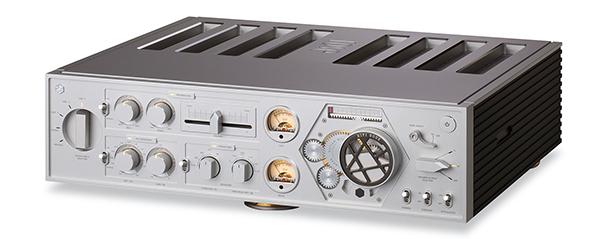
As the sight of tone controls on hi-fi hardware becomes rarer, Jim Lesurf salutes their use in making his music listening more enjoyable. Some recordings just need a little helping hand...
It makes sense for a hi-fi/audio magazine like Hi-Fi News to include reports on recordings that offer outstanding audio quality – be that from LP, digital discs, downloads, or whatever ‘media’ suits the listener. Enthusiasts can then build a collection of LPs, etc, which deliver great music in top-class audio quality, and also confirm the performance their hi-fi set-up can deliver. However, there is, of course, another side to this: how to deal with less-than-ideal recordings of otherwise superb music?
From hi-fi to low-fi
This came to my mind a few days ago when I played a particular sequence of source material. I started off listening to some transfers of jazz and ‘popular’ music originally recorded onto ‘V-Discs’. These were produced during WW2 for free distribution to USA military personnel. In essence they’re ‘live takes’ of a range of some of the best musicians of the time. Given the age of the discs, effects of wear from past use, and the technology of that era, the audio quality isn’t always what you might wish. But when de-clicked, etc, the results can still be great to hear.
A short time after that I was listening to two budget-priced CD box sets. One of performances by sitar legend (and George Harrison pal) Ravi Shankar, originally released in 1962 on three LPs, the other an assortment of 1950s and 1960s instrumental tracks by artists ranging from The Shadows and Joe Brown to The Krew Kats and The Moontrekkers.
The recordings of Ravi Shankar are excellent, but many of the instrumentals are, well, ‘poor audio quality’ to put it politely! Some are badly clipped because they were made at too high a level. Others range in sound from ‘muddy muddle’ to ‘screamingly shrill’.
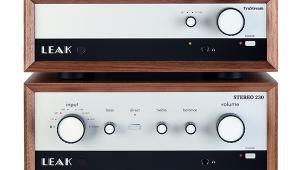
Now, I’m something of an old-fashioned engineer so you might have guessed that at this point I chose to deploy ‘tone’ controls. Modern, high-spec hi-fi hardware often omits these on the basis that they are better avoided as a potential cause of degrading the sound quality. I’d agree this is a risk. But my own view is that in an imperfect world, having them available for use can make it easier to bring the ‘best’ out of less-than-ideal recordings.
Indeed, having taken this approach for decades I do wonder at times if the way many people these days tend to avoid tone controls – or even the humble balance control – means they miss out on being able to enjoy a wider range of music. Most of the time when I play well-recorded material I can leave the controls ‘flat’. But when the source material seems to need it, I tweak to suit.
Is it perhaps that others tend to focus on specific types of music, and look for the best recordings in terms of their faithful rendering of what was performed? Is it that many people tend to focus on one or two specific genres of music, and may therefore setup a system ideal for, say, heavy metal, but not for Chopin – or vice versa?
Taste test
I am curious about any relationships readers have between the types of music they prefer and their choice of audio hardware. Certainly, when I look around the web the impression often given is that some enthusiasts tend to enjoy one or two specific types of music, and will hence assemble a sound system that suits those particular types of recordings. If so, then tone controls may well be at best a waste of their money. But when the potential range is much more varied (including recordings of steam locomotives, street organs, or music boxes, anyone?) they can prove handy.
When I play a lousy/ancient recording of something special in terms of performance, I think it can be useful to boost or cut the treble and bass, simply to make it more ‘listenable’, but I wonder what Hi-Fi News readers make of this. Should tone controls – bypassable, of course – be more popular?

















 SPONSORED VIDEO






| Equipment Reviews |  |
Music Reviews Awards | |
Latest News Features | |
Resources Newsletters | |
Subscriptions |
WHERE TECHNOLOGY BECOMES ENTERTAINMENT
 © 2026 Hi-Fi News
AVTech Media Ltd
All rights reserved