Blast from the past
While vintage hi-fi hardware remains cherished by enthusiasts, repair and refurbishment relies on access to technical information that can be increasingly hard to find, says Jim Lesurf
This magazine reports on the sheer quality of modern hi-fi equipment, from the entry-level to the high-end. Being able to appreciate excellent design – in electronics as well as appearance and ergonomics – adds to the enjoyment of the user. I’ve taken an interest in hi-fi since the 1960s, and it really is wonderful to have watched just how far it’s come.
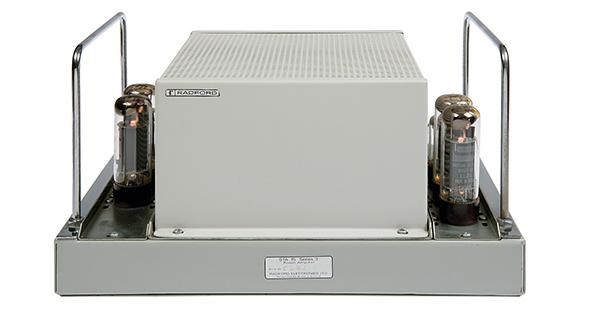
But alongside this there have also been a number of examples of old designs which continue to offer enthusiasts both the pleasure of good sound and pride of ownership. The most well-known examples perhaps being the status of kit like the original 1957 Quad ESL loudspeakers (and, indeed, the ‘ESL63s’), and amplifiers like those developed by Radford – even though these older designs might sometimes be best suited to specific types of music and the preferences of their proud owners.
A cry for help
Recently I was pleasantly surprised to get an email from an engineer who was restoring an example of audio kit that has largely been forgotten. This was the Armstrong PCU 25 valve preamplifier. These days, some readers may well recall the later 600 range and perhaps the 700 amps. Sadly, the PCU 25 has largely been forgotten. Yet here was one that its owner wished to have restored to good working condition. I was contacted because the amplifier had been ‘improved’ by someone else, and the new owner wanted information about how it could be returned to the original design.
My ‘filing system’ (sic) being as it is, I had to spend some time, spread over many days, searching through old folders, boxes, etc, to see what I could find. Alas, I didn’t locate all the details, but I found enough to be helpful, I think.
Information gap
This set me wondering again about a concern I’ve had for many years. Specifically, how much information has been lost – and continues to be lost – because museums, etc, seem to have little interest or willingness to collect and conserve this kind of data for future access by engineers (as well as academics or audio enthusiasts)? With the critical guarantee that, yes, they will keep the information and ensure it is available into the future, and not quietly ‘weed it out’ and discard it at some point because it is ‘no longer of interest’.
The web does in some ways look like bypassing that problem. Hence the foundation of the UK Hi-Fi History Society website [https://ukhhsoc.torrens.org], for example. But even websites depend on someone, somewhere, continuing to fund or support their continuing availability – information may disappear simply because it ceased to be maintained. Also, ‘web standards’ change and old pages may cease to be available. Computer languages used to generate webpages, such as HTML, have evolved over the years, and this can mean up-to-date software may either not display correctly – or even access – sites with ‘outdated’ construction. Some modern software designed to block malware may then even decide to limit access for ‘safety’ reasons.
Even when available, relevant technical data frequently requires the reader to have a prior understanding of the engineering involved. For ‘data’ to become ‘knowledge’ the reader has to have the necessary experience or background to make sense of it. Otherwise it can become a language that no one now can read. And this in turn may mean that even museums and libraries never realise what they have allowed to fade away.





















 SPONSORED VIDEO






| Equipment Reviews |  |
Music Reviews Awards | |
Latest News Features | |
Resources Newsletters | |
Subscriptions |
WHERE TECHNOLOGY BECOMES ENTERTAINMENT
 © 2026 Hi-Fi News
AVTech Media Ltd
All rights reserved