Astell&Kern A&ultima SP4000 digital audio player
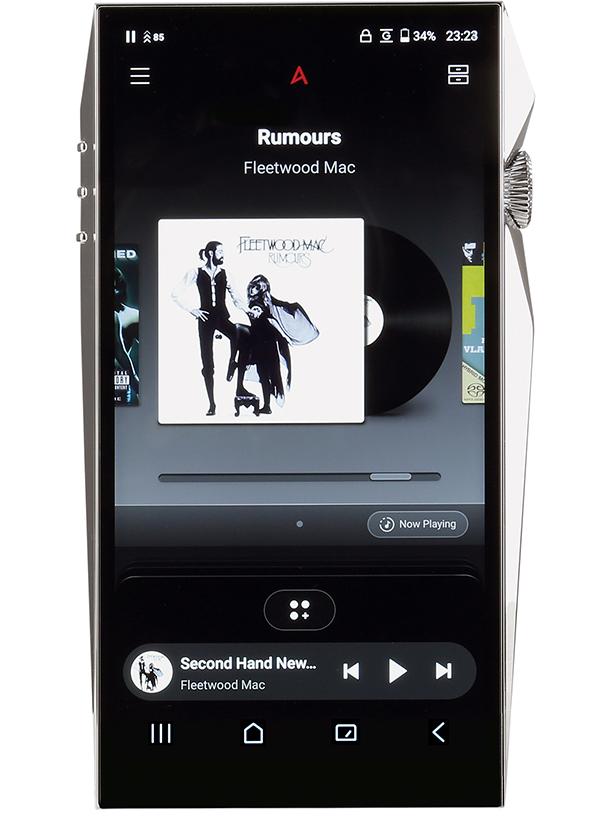

If Apple’s now-discontinued iPod is the spiritual forebear of all portable digital players, what’s available on the market in 2026 has progressed light years beyond Jony Ive’s original. This new flagship model from Korean brand Astell&Kern is also portable – but its size and 651g weight won’t see you casually sliding it into a coat pocket. The £3799 price tag might make you think twice about brandishing the SP4000 while commuting on the Tube, in any case...
This top-tier A&ultima model doesn’t stop at playing music files while on the go. The SP4000, like the SP3000 it replaces, is extremely versatile. Appealing to head-fi enthusiasts, it sports a built-in headphone amp which promises to drive just about any pair of cans [see boxout], but it will also take on the role of a streaming DAC source for a ‘full-sized’ hi-fi set-up. The built-in software is multifaceted, including apps from streaming services and supporting Roon for remote control. So there’s more to the SP4000 than meets the eye – at first it appears to be a premium-priced iPod homage, but in reality it’s a do-it-all device dressed in black or silver stainless steel.
Naked attraction
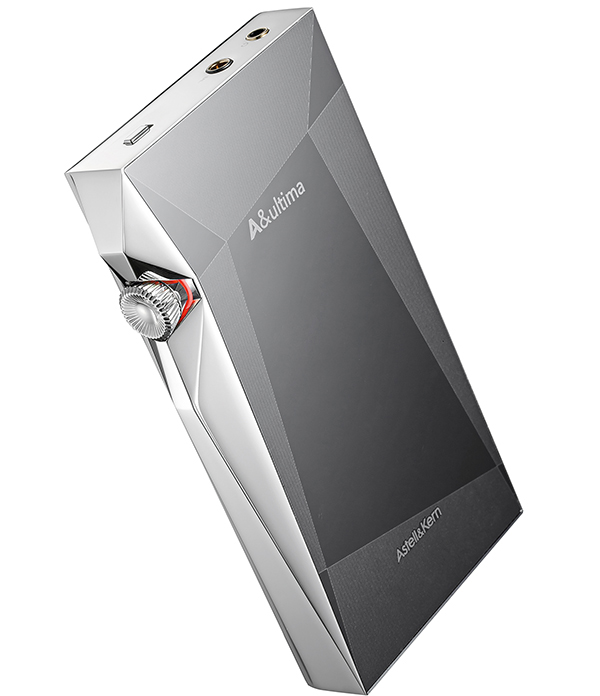
A&K has always loved a bold design. Even its affordable kit strays from traditional rectangular boxes framing a screen, introducing angles and broad chamfers which are not strictly necessary but increase the sense of refinement. The chunky SP4000 doesn’t break that mould; compared to rival flagship DAPs, such as FiiO’s M27 or the iBasso DX340, it radiates elegance. Most will probably slip this deluxe player into the soft leather case, crafted by Germany’s Perlinger, that it is bundled with [see pic, p79]. But holding it in the hand nakedly – the device, that is – is a very satisfying experience, too. Astell&Kern understands that tactile feedback is part and parcel of luxury goods.
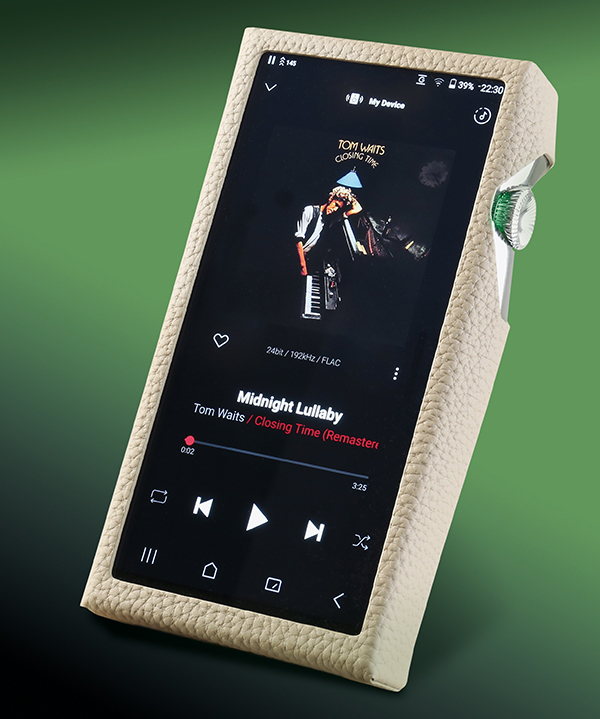
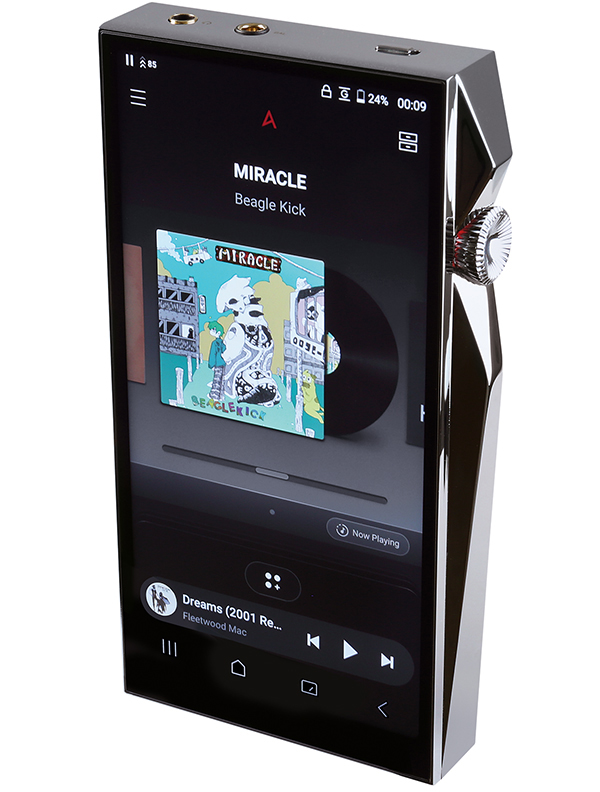
The 6in 2K screen is a looker, but the crown dial at the side and the chassis’ grip-friendly bulges are also pleasing. The LED ring around the crown changes colour depending on the playback bit depth (not sample rate). This power/volume knob can easily be rotated when slipping the SP4000 in a pocket, so the lock button on top is very useful. The lack of further playback buttons could be read as an indication that A&K sees the SP4000 as a transportable rather than portable player.
Like most DAPs nowadays, this unit runs on Android, the ubiquitous OS which probably drives your smartphone. In the past A&K used a stripped-down version, which worked with certain approved apps. The SP4000, however, is its first product to run a ‘full’ Android OS. The manufacturer then adds its own features, such as ADP (Astell&Kern Direct Path) to bypass the Android sampling limitation for bit-perfect playback. There’s also a crossfeed function with adjustable parameters for speaker-like playback via cans, and ‘Advanced DAR’ to upsample PCM to DSD.
Access to Google’s Play Store means installing streaming music apps is easy, and you’ll also receive updates to these apps promptly. Adding a memory card with your own files to augment the built-in 256GB of storage isn’t a must, but as offline, interruption-free listening is a main selling point, presumably some will. Support for Qobuz Connect, Roon Ready and A&K’s own AK Connect app also makes the SP4000 suitable for lean-back listening when the unit is hooked up to your hi-fi system.
Differential dacs
Astell&Kern doesn’t only market the SP4000 as an ultimate luxury product, it pledges spectacular audio performance and technical excellence too. A major upgrade compared to its dual-DAC SP3000 predecessor is the inclusion of a quad-DAC configuration of four AKM4191 processors, each connected to a separate AKM4499EX DAC in differential mode. It’s a remarkable set-up, even if you might question the subjective advantage of four AKM chipset solutions over a single or double implementation [see PM's Lab Report]. The quad-DAC array outputs to what Astell&Kern calls ‘Terraton’, an analogue architecture that incorporates no fewer than eight op-amps, with proprietary ‘ESA technology’ promising to eliminate group delay along the way.
 Music to your ears
Even in the head-fi community, which is distinct from hi-fi, big ticket players are a bit niche. This might be why I’ve heard from various sources that top-tier DAPs are habitually paired with boutique IEMs from specialist brands. Taking that to heart, I at first used the SP4000 with the Odin MKII from Empire Ears, a complex multidriver in-ear with 24k gold detailing. Again, perhaps not something to flash on the Tube.
Yasmine Hamdan’s I Remember I Forget [CRAM323CD] was one of the most fascinating electronic releases of 2025, but as she hails from Lebanon it was often shelved under the catch-all ‘world music’ category. The SP4000 highlighted her beautiful, slightly mournful vocals, but also had no trouble driving the Odin MKII IEMs. The monotone beat underpinning ‘HON’ appeared full-bodied, and this opening track’s airy layering and spatial character (there are effects that move into the foreground before fading away) were artfully rendered, with no bleed-over from the bassline into the singing or percussion sounds.
Switching over to the EISA Award-winning The Composer from Austrian Audio meant moving from in-ears to open-back over-ear ’phones. The Composer has an inherently analytical sound, but the addition of the A&K player injected some warmth to make for a more relaxed presentation. Not too much though – the title track from jazz drummer Yussef Dayes’ Black Classical Music [Brownswood; 48kHz/24-bit] sounded fresh and exciting here, the SP4000 communicating the piece’s rapid, enticing rhythms.
Some flighty piano runs and the more emphasised dramatic solos of Dayes’ band members were equally engaging, showing excellent control over The Composer’s drivers. Even if the SP4000 doesn’t aim for a completely neutral performance in terms of tonal colour, the nifty drumming and synths during the finale of ‘Turquoise Days’ felt authentic, making the whole piece gel brilliantly.
Also, the player’s DSD upsampling is easily engaged by swiping down during playback and pressing the DAR icon – it’s well worth trying out. Turning it on and off during Dayes’ ‘Raisins Under The Sun’, and listening through these very revealing headphones, showed subtle differences between the two modes. The trombone and trumpets had more weight to them with DAR on, and the presentation seemed a little smoother overall.
True grit
Still, while the SP4000 undoubtedly has its own sonic character, with scope for tweaking, the impact of the headphones themselves is just as important. Switching from the Odin MKIIs to The Composer and some other models (including the eccentric but intriguing Charybdis from Slovenia’s Erzetich Audio) proved it was all about the pairing. Good news, then, that A&K’s premium player is capable of driving them all, just as the low source impedance of both single-ended and balanced outputs should ensure you hear the true character of your headphones.
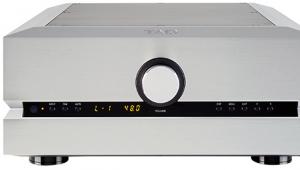
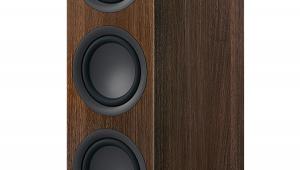
As the SP4000 has an analogue line-out connection, and you can transform the 3.5mm output to a digital optical out with the right cable, incorporating the DAP into a conventional hi-fi system is possible. Doing exactly that, I hooked up the SP4000 over a balanced Pentaconn-to-dual XLR cable to a PA 3100 HV integrated amplifier [HFN May ’17] and a pair of Solitaire S 530 loudspeakers [HFN Mar ’25], all from T+A. Considering the mass of the T+A amplifier, the Astell&Kern player appeared puny indeed, but it showed itself the equal of far larger rivals when conveying the rich production of Gospel/R&B singer Mavis Staples’ Sad And Beautiful World [Anti-; 88kHz/24-bit, via Roon].
Spooky sounds
The Solitaire floorstanders, with their ‘magnetostatic’ HF drivers, are nimble performers, a character the SP4000 didn’t curb during playback of Who Is The Sky? [Matador digital download; 96kHz/24-bit], the latest album from former Talking Head David Byrne. ‘Everybody Laughs’ starts with a strummed acoustic guitar, then segues into a full-blown performance from Brooklyn’s Ghost Train Orchestra, and A&K’s flagship delivered it all with crisp mid/treble detail and plenty of separation.
Like many of the 12 tracks on the album, this is a sophisticated production with subtle use of layers and overdubs that you might not notice when listening on a less insightful system. But that was not the case here, with the SP4000 providing a clear picture through the T+A amp and speakers, smartly lifting the xylophones from the main melody and brass backing. It’s a typical oddball composition from Byrne, and I didn’t feel shortchanged hearing it in this way.
There was again a palpable sense of resolution during the militaristic but cheerful ‘III.The March Of The English’ on Akademie Für Alte Musik Berlin’s Paul Wranitzky: Symphonies album [Deutsche Harmonia Mundi; 96kHz/24-bit]. The woodwinds appeared full of character, the flute particularly light and nimble. At the same time, the ‘cannon shot’ effect from the bass drum had real force and impact. Yes, the mighty power reserves of the PA 3100 HV amplifier were key to this dynamic highlight, but as a source A&K’s SP4000 certainly delivered the goods.
Hi-Fi News Verdict
A&K really pushed the boat out when designing and building the SP4000 – maybe further than strictly required. It ticks a lot of boxes, offering excellent performance on the go, but also transitioning effortlessly into a hi-fi streamer capable of besting full-sized rivals. There’s no faulting the fit and finish, and it delivers an engaging, crisp listen with great spatial character, however you choose to use it.Sound Quality: 88%
 | |||||||||||

|
|
| |||||||||










 SPONSORED VIDEO






| Equipment Reviews | |
Music Reviews Awards | |
Latest News Features | |
Resources Newsletters | |
Subscriptions |
WHERE TECHNOLOGY BECOMES ENTERTAINMENT
 © 2026 Hi-Fi News
AVTech Media Ltd
All rights reserved